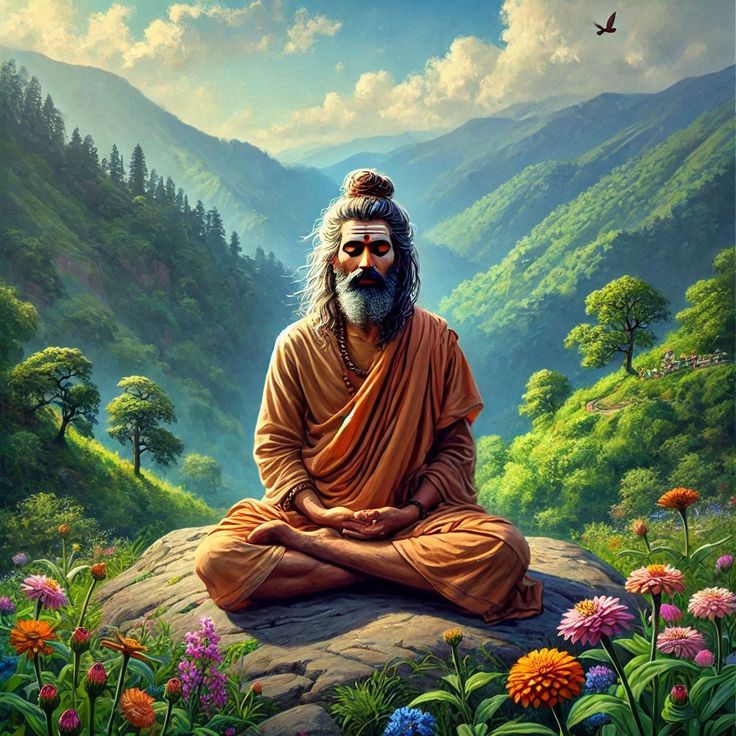
Chapter 8 – Akshara Brahma Yoga (The Yoga of the Imperishable Absolute)
Introduction:
Akshara Brahma Yoga, the eighth chapter of the Bhagavad Gita, focuses on the eternal nature of the Supreme (Brahman) and the process of transcending the material world through devotion and knowledge. Krishna answers Arjuna’s questions about the nature of Brahman, Karma, the Self, and the ultimate destination of the soul after death. Click Here To Access Bhagavad Gita Notes & Summary.
Key Themes of Chapter 8 – Akshara Brahma Yoga
1. Understanding the Supreme Reality (Verses 1-7)
- Krishna defines Brahman (the eternal, unchanging reality), Adhyatma (the individual self), and Karma (action).
- He explains that remembering Him at the time of death ensures liberation.
- Key Verse (8.5):
“Whoever remembers Me at the time of death, without distraction, surely attains My abode.”
2. Paths of the Soul After Death (Verses 8-16)
- Krishna describes the Path of Light (Liberation) and Path of Darkness (Rebirth).
- A yogi who constantly meditates on the Divine merges with Brahman and escapes the cycle of rebirth.
- Key Verse (8.15):
“Those who attain My abode never return to this temporary world of suffering.”
3. The Power of Devotion and Meditation (Verses 17-28)
- Krishna reveals the cosmic cycles of creation and dissolution.
- He emphasizes that Bhakti (devotion) is the simplest way to attain liberation.
- Key Verse (8.22):
“The Supreme Being can be attained only through exclusive devotion.”
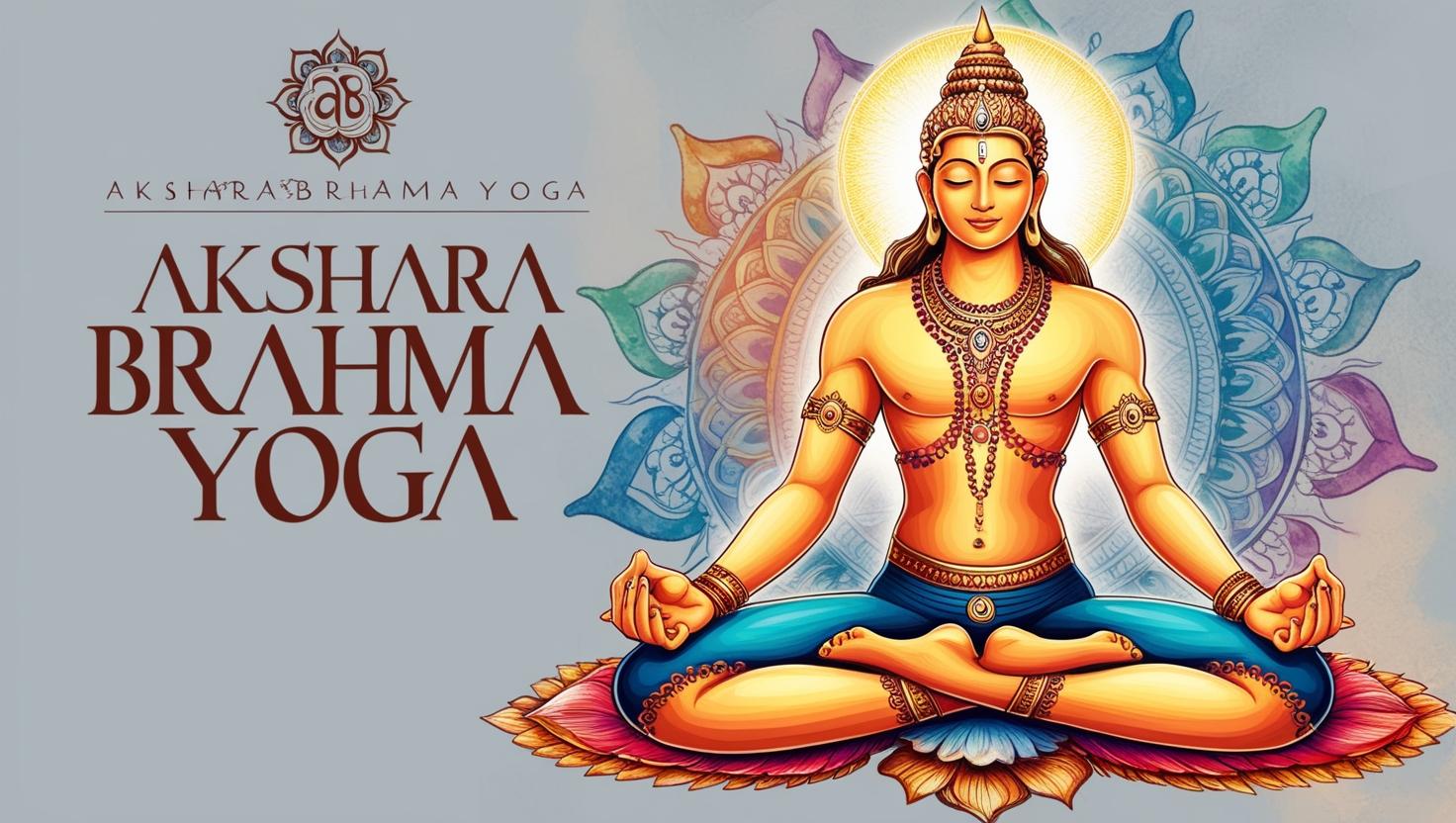
Key Teachings of Akshara Brahma Yoga
Definition of Brahman – The eternal, imperishable Supreme reality.
Karma & Adhyatma – Actions and the individual self’s journey.
Remembering God at Death – Leads to liberation and unity with the Divine.
Two Paths After Death – The Path of Light (liberation) & Path of Darkness (rebirth).
Importance of Bhakti (Devotion) – The easiest way to attain Moksha.
Cosmic Cycles – Creation and dissolution of the universe.
Practical Applications of Akshara Brahma Yoga
Mindful Living: Cultivate constant awareness of the Divine in daily life.
Meditation on the Supreme: Practice unwavering devotion and focus on God.
Overcoming Fear of Death: Develop detachment and trust in the eternal nature of the soul.
Bhakti as a Path to Liberation: Strengthen faith in devotion as the ultimate means to Moksha.
Key Slokas from Chapter 8 – Akshara Brahma Yoga
1. Remembering God at the Time of Death (8.5-6)
Sanskrit:
“Anta-kāle ca mām eva smaran muktvā kalevaram,
Yaḥ prayāti sa mad-bhāvaṁ yāti nāsty atra saṁśayaḥ.” (8.5)
Translation:
“Whoever remembers Me at the moment of death, attains My nature without doubt.” Click Here For Chapter-8.
2. Devotion as the Supreme Path (8.22)
Sanskrit:
“Puruṣaḥ sa paraḥ pārtha bhaktyā labhyas tv ananyayā,
Yasyāntaḥ-sthāni bhūtāni yena sarvam idaṁ tatam.” (8.22)
Translation:
“The Supreme Person can only be attained through undivided devotion, as He pervades all beings.”Click Here For Chapter-8.
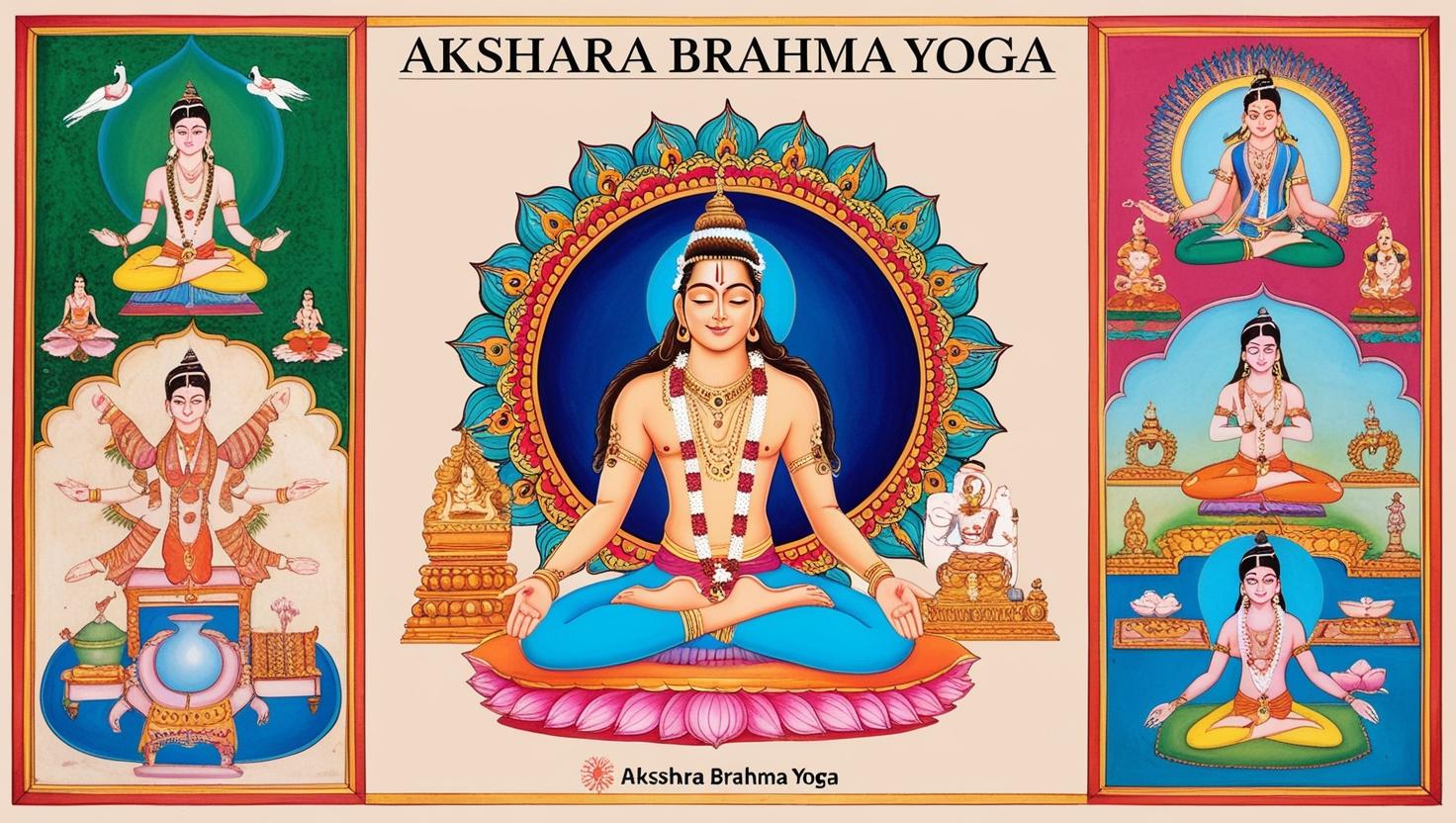
Practical Applications of Akshara Brahma Yoga (Chapter 8 of the Bhagavad Gita)
- Mindfulness of the Divine – Constant remembrance of God ensures a peaceful and spiritual transition at the time of death.
- Self-Realization – Understanding the eternal nature of the soul helps in overcoming fear and attachment.
- Living with Purpose – Performing daily duties with devotion (Bhakti) leads to spiritual growth and liberation.
- Meditation & Focus – Practicing meditation helps in attaining control over the mind and focusing on the Supreme.
- Detachment from Materialism – Realizing the temporary nature of the world encourages detachment and inner peace.
References for Akshara Brahma Yoga (Chapter 8 of the Bhagavad Gita)
- Bhagavad Gita – Chapter 8 (Original Sanskrit Text & Translations) – Various editions by Swami Sivananda, Swami Chinmayananda, and A.C. Bhaktivedanta Swami Prabhupada.
- Commentaries on the Bhagavad Gita – Adi Shankaracharya, Madhvacharya, and Ramanujacharya provide deep philosophical insights into Akshara Brahma Yoga.
- Vedanta Texts & Upanishads – The concepts of Akshara (imperishable Brahman) are elaborated in the Mundaka and Katha Upanishads.
- Modern Interpretations – Books by contemporary spiritual teachers such as Eknath Easwaran, Paramahansa Yogananda, and Swami Vivekananda offer practical applications.
- Academic & Research Papers – Studies on the Bhagavad Gita’s influence on spirituality, philosophy, and psychology.
Benefits of Akshara Brahma Yoga (Chapter 8 of the Bhagavad Gita)
- Understanding the Eternal Reality – Teaches the imperishable nature of the soul (Akshara Brahman), leading to inner peace and spiritual clarity.
- Freedom from Fear of Death – Explains the transition of the soul after death, providing assurance and reducing anxiety about mortality.
- Path to Ultimate Liberation (Moksha) – Guides practitioners on how to attain union with the Supreme Being through unwavering devotion and focus at the time of death.
- Strengthens Devotion & Surrender – Emphasizes Bhakti (devotion) and surrender to the Divine as the highest means of salvation.
- Enhances Focus & Mind Control – Encourages meditation on the Divine Name and Form, leading to better concentration and inner stability.
- Leads to a Fulfilling Life – Helps in living a dharmic life by prioritizing spiritual wisdom over material pursuits. Click Here For Chapter-8.
Conclusion
Akshara Brahma Yoga guides one to liberation through devotion, meditation, and surrender to the Divine. Krishna teaches that focusing on the Supreme at death frees one from rebirth, leading to eternal peace. This chapter emphasizes the soul’s imperishable nature, unwavering faith, and spiritual discipline. Through meditation, selfless devotion, and righteous actions, one transcends worldly attachments and realizes the eternal truth, attaining Moksha.
Join Our Classes:
The Bhagavad Gita is more than just a book—it’s a guide to living with balance and peace. Our classes make its deep wisdom easy to understand and apply in everyday life. Join us to explore the teachings and see the world in a new light!
Explore More Text Join Our Classes
1.Watch Chapter-8 YouTube Video
2.Watch Chapter-8[Verses 10&28] YouTube Video