The Subtle Self and the Power of the Mind
In these verses, Yama deepens the teaching about the nature of the Self (ātman), describing it as subtle, all-pervading, and beyond sensory perception. He explains that this Self is hidden within the body and mind, elusive to ordinary senses and the intellect. Yama highlights the vital role of the mind (manas) as the key to approaching the Self, emphasizing control and focus. The restless mind, when disciplined, can reveal the eternal Self. The teaching stresses the need for internal purification and self-control as essential steps toward realizing the ultimate reality beyond physical existence. For More Information Click Here
The Inner Subtlety of the Self and the Role of Mind
Verse 11
Yama says the Self is subtle beyond all subtle things, smaller than the smallest, and hidden deep within the heart.
Verse 12
The Self is covered by layers of ignorance, making it difficult to see. It cannot be perceived by ordinary senses.
Verse 13
Though unseen, the Self is the inner ruler of the body, controlling the senses and the mind.
Verse 14
The Self is the source of life, consciousness, and bliss, yet remains untouched by birth, death, or decay.
Verse 15
The mind is restless and difficult to control, but when tamed, it becomes the tool to perceive the Self. For More Information Click Here
Verse 16
The wise should focus the mind inward, away from external distractions, seeking to calm its waves.
Verse 17
Like a lamp flickering in the wind, the restless mind must be steadied for true knowledge to arise.
Verse 18
When the mind is steady and focused, it illuminates the path to the Self, revealing its eternal nature.
Verse 19
Those who control the mind and senses attain liberation by merging their consciousness with the Self.
Verse 20
Yama encourages Nachiketa to cultivate this inner discipline as the foundation for realizing the ultimate truth.
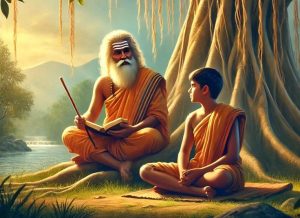
Adi Shankaracharya’s Insights – Mind as the Gateway to Self-Realization
Adi Shankaracharya elucidates that this passage reveals the core Advaita Vedanta doctrine—the Self (Ātman) is Brahman, the non-dual, eternal reality beyond all dualities of birth and death, pleasure and pain. He emphasizes that the Self is nirguna (without attributes) and nirvikalpa (beyond all distinctions), and cannot be grasped by sensory knowledge or intellectual speculation. Shankara points out that ignorance (avidya) causes the individual to identify with the body and mind, resulting in suffering. True knowledge arises only when the ego dissolves, and one abides as the Self, beyond all change. The Self’s realization leads to liberation (moksha), freeing one from the cycle of samsara. The grace of the teacher and the Self itself are indispensable for this awakening. For More Information Click Here

Conclusion
This section deepens the seeker’s understanding of the eternal Self by stripping away common misconceptions about life, death, and identity. Yama’s teaching directs Nachiketa—and through him, all seekers—to look beyond transient appearances and realize the immutable, blissful Self. The wisdom shared here is foundational to Advaita Vedanta, highlighting that liberation is attained not through external rituals but through direct inner knowledge of the Self’s true nature. This prepares the seeker for the more detailed exposition that follows in the Upanishad.
Join Our Classes:
The Upanishads are more than just ancient texts—they are timeless guides to living with clarity, balance, and inner peace. Our classes make their profound wisdom easy to understand and apply in everyday life. Join us to explore these teachings and discover a new way of seeing yourself and the world!