The Profound Essence of Om: An Introduction to the Mandukya Upanishad
The Mandukya Upanishad is the shortest but one of the most profound Upanishads, consisting of just 12 mantras. It explores the nature of the Self (Ātman) through the symbol Om (Aum) and reveals the highest truth through the analysis of waking, dreaming, deep sleep, and the transcendent state. The Upanishad begins by declaring that Om is all-pervasive, representing past, present, future, and even that which transcends time. It then identifies the Ātman as Brahman, the ultimate reality, and introduces the concept of the fourfold Self. These aspects of the Self provide a map to spiritual realization. This Upanishad forms the basis for the teachings of Advaita Vedanta, especially as elaborated by Adi Shankaracharya. For More Information Click Here
Mandukya Upanishad — Mantra 1 & 2: The Universal Om and the Nature of Self
Mantra 1
Sanskrit:
ॐ इत्येतदक्षरमिदँ सर्वम्। तस्योपव्याख्यानं भूतं भवद्भविष्यदिति सर्वमोङ्कार एव। यच्चान्यत् त्रिकालातीतं तदप्योङ्कार एव॥१॥
Transliteration:
oṁ ityetad akṣaram idaṁ sarvam | tasyopavyākhyānaṁ bhūtaṁ bhavad bhaviṣyad iti sarvam oṅkāra eva | yac cānyat trikālātītaṁ tad apy oṅkāra eva || 1 ||
Meaning:
Om is all this (visible universe); its explanation is: the past, the present, and the future—everything is verily Om. Whatever transcends time is also, indeed, Om. For More Information Click Here
Mantra 2
Sanskrit:
सर्वं ह्येतद्ब्रह्मायमात्मा ब्रह्म सोऽयमात्मा चतुष्पात्॥२॥
Transliteration:
sarvaṁ hy etad brahmāyam ātmā brahma so’yam ātmā catuṣpāt || 2 ||
Meaning:
All this is indeed Brahman. This Self (Ātman) is Brahman. This Self has four aspects (or quarters).
Adi Shankaracharya’s Commentary on the First Two Mantras of the Mandukya Upanishad
Mantra 1:
Shankara explains that Om (Aum) is the symbolic representation of the entire universe and ultimate reality. It encompasses all that exists—past, present, and future—because time itself is contained within Om. Moreover, even beyond time (the eternal, changeless reality), Om remains the supreme sound and symbol. Thus, Om is not just a word or sound but the very essence of all existence.
Mantra 2:
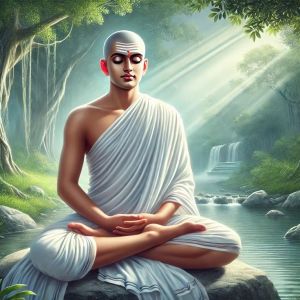
Shankara elucidates that the Self (Ātman) and Brahman (the Absolute) are one and the same. The verse introduces the idea of the fourfold nature of the Self, which Shankara interprets as four states or aspects of consciousness that help a seeker understand the nature of reality and transcend individuality. These four quarters will be further elaborated in the subsequent mantras, revealing the path to liberation through knowledge of the Self. For More Information Click Here
Conclusion
The first two mantras of the Mandukya Upanishad lay the foundation for understanding the ultimate reality through the sacred syllable Om. Adi Shankaracharya’s commentary reveals that Om is not merely a sound but the essence of the entire cosmos, transcending time itself. Identifying the Self (Ātman) with Brahman highlights the non-dual nature of existence. The introduction of the fourfold Self guides seekers toward deeper self-realization. These insights emphasize that true knowledge arises from recognizing the unity behind all diversity. Thus, the Mandukya Upanishad offers a concise yet profound path to spiritual liberation.
Join Our Classes:
The Upanishads are more than just ancient texts—they are timeless guides to living with clarity, balance, and inner peace. Our classes make their profound wisdom easy to understand and apply in everyday life. Join us to explore these teachings and discover a new way of seeing yourself and the world!