Foundations of Advaita Vedanta: The Self in Mandukya Upanishad Karikas 27 to 33
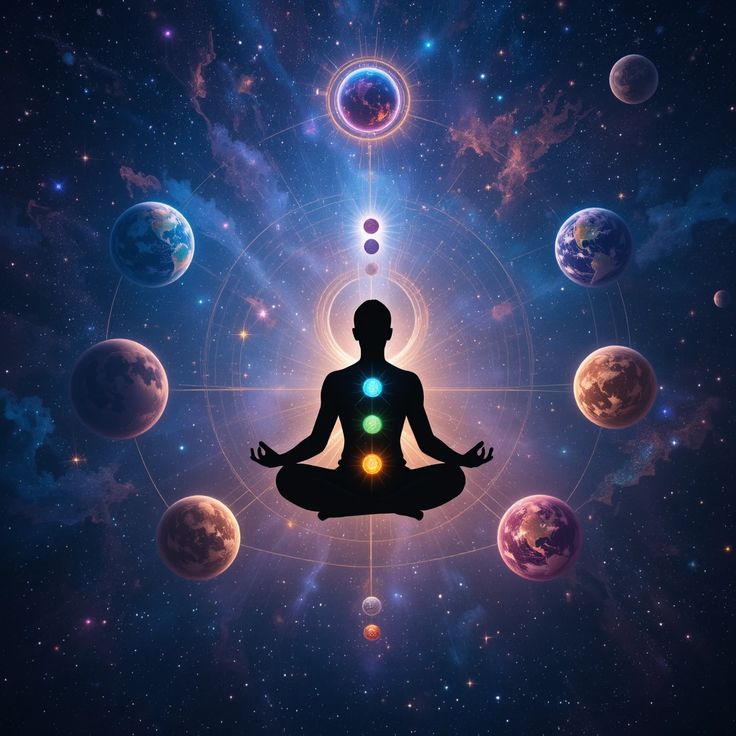
These verses from Gaudapada’s Karikas on the Mandukya Upanishad reveal the profound nature of the Self (Atman) as beyond all dualities. They emphasize that creation, destruction, bondage, and liberation are ultimately illusory concepts in the highest reality. The Self is one, unchanged across waking, dreaming, and deep sleep, and transcends these states as the Turīya — the fourth reality. This supreme Self is birthless, deathless, infinite, and untouched by time or change. Through this realization, the wise understand the non-dual, eternal essence that pervades all existence. These teachings form the core of Advaita Vedanta philosophy, guiding seekers towards liberation. For More Information Click Here
Exploring Mandukya Upanishad Chapter 3 Karikas 27-33: The Eternal, Immutable Self
Karika 27
Sanskrit:
Na nirodho na cotpattir na baddho na ca sādhakaḥ |
Na mumukṣur na vai mukta ity eṣā paramārthatā ||
Translation:
There is no cessation (of the world), no origination, no bondage, no one seeking liberation, no seeker, and no liberated soul. This is the absolute truth.
Explanation:
In the highest reality (paramārtha), all dualities disappear. The very ideas of creation, bondage, or liberation are only apparent; in truth, the Self alone is.
Karika 28
Sanskrit:
Ekaḥ eva atma mantavyo jāgratsvapnasuṣuptiṣu |
Sthāna-traya-vyatitāśeṣaṁ turīyaṁ tam vidurbudhāḥ ||
Translation:
The Self should be known as one and the same in waking, dream, and deep sleep. The wise know it as the fourth (Turīya), beyond these three states.
Explanation:
The Atman remains the same through all states. The truly wise realize Turīya—the transcendental, unchanging reality underlying all experiences.
Karika 29
Sanskrit:
Bhāvābhāvau hi bhāvānāṁ na vidyete kudācana |
Ātmaiva bhāvito bhāvaḥ so’bhāvo bhāvito yathā ||
Translation:
Existence and non-existence of entities never truly occur. The Self alone is imagined as all existence and non-existence, like a thing imagined as absent.
Explanation:
All phenomena are projections upon the Self. The notions of presence or absence are themselves appearances in the one Self.
Karika 30
Sanskrit:
Ātmādhyeṣo hyayameṣa saṁvṛtirnāma kevalā |
Ātmanā hyabhidhīyante dharmāḥ sarve manasvinām ||
Translation:
This illusion, based on the Self alone, is called “appearance” (saṁvṛti). All attributes are imagined on the Self by the mind.
Explanation:
The entire phenomenal world is a projection upon the Self, appearing only due to ignorance (saṁvṛti). The mind imposes attributes that do not truly exist.
Karika 31
Sanskrit:
Ajātiḥ sarvabhūtānāmātmāyaṁ pravibhāvyate |
Tattvaṁ tattvavidāṁ dhīrairākāśeneva gocaraḥ ||
Translation:
This Self is declared by the wise as birthless and unborn in all beings. It is perceived as the Truth, like space—subtle and formless.
Explanation:
Just as space remains untouched and indivisible, the Atman is beyond birth and change. The enlightened recognize this formless, immutable nature.
Karika 32
Sanskrit:
Tasmānnodeti no yāti na kṣīyate na vardhate |
Sa eva nityaḥ sarvajñaḥ sarvagah sarvasaṁsthitaḥ ||
Translation:
Therefore, it neither arises nor departs, neither decreases nor increases. The Self alone is eternal, all-knowing, all-pervading, and remains in all.
Explanation:
The Self is changeless—beyond all movement or transformation. It is the underlying reality of everything, not subject to any modification. For More Information Click Here
Karika 33
Sanskrit:
Turyam nirdvaitamadyantaśūnyaṁ praśāntam amṛtam ajaram |
Anantam avyayam ātmānaṁ vijānīyāt svayaṁ dhīraḥ ||
Translation:
The wise realize the Self as Turīya—non-dual, without beginning or end, peaceful, immortal, ageless, infinite, and undecaying.
Explanation:
This concluding verse glorifies the Self. It is beyond time, death, and change. Knowing this leads to liberation and ultimate peace.
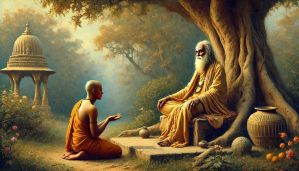
Adi Shankaracharya’s Insights on Mandukya Upanishad Chapter 3 Karikas 27–33
-
Ultimate Reality is Beyond Dualities
Shankara explains that the notions of bondage and liberation, creation and destruction, are all illusory (Māyā). The Self (Atman) is pure consciousness, unborn and eternal, beyond all changes and dualities. These concepts exist only in the realm of ignorance (Avidya). -
Non-Duality of the Self (Advaita)
He stresses the oneness of the Self across all three states—waking, dream, and deep sleep—and introduces Turīya as the pure consciousness underlying and transcending these states. This fourth state is beyond the three-fold empirical experience and is the true reality. -
Illusory Nature of Phenomena
Shankara elucidates that all empirical phenomena (names and forms) are mental constructs superimposed upon the Self. The Self itself is changeless and unaffected, like space that remains the same irrespective of what occupies it. -
The Self is Birthless and Deathless
He emphasizes the eternal, imperishable nature of the Atman, which neither arises nor ceases. This truth is known by the wise who realize the Self as infinite, all-pervading, and immutable. -
Realization of the Self as Turīya
Shankara points out that the supreme Self is non-dual, beyond time, without beginning or end, and beyond all attributes like birth, death, and decay. Knowing this leads to liberation (Moksha), the highest peace and bliss For More Information Click Here
Conclusion
In conclusion, these karikas reveal the profound truth that the Self is eternal, unborn, and beyond all dualities of existence. The apparent distinctions of birth, death, bondage, and liberation dissolve when one realizes the non-dual Turīya—the pure consciousness underlying all states. This ultimate reality is changeless, infinite, and the source of all phenomena. Understanding this leads to liberation from all suffering and illusion. Adi Shankaracharya’s insights further clarify that this realization transcends intellectual knowledge, requiring direct experience of the Self. Thus, the teachings guide seekers toward the supreme peace and freedom inherent in the Self.
Join Our Classes:
The Upanishads are more than just ancient texts—they are timeless guides to living with clarity, balance, and inner peace. Our classes make their profound wisdom easy to understand and apply in everyday life. Join us to explore these teachings and discover a new way of seeing yourself and the world!