Introduction to the Three States and Turiya in Mandukya Upanishad
The Mandukya Upanishad is one of the shortest yet most profound Upanishads, focusing on the nature of the Self and consciousness. Gaudapada’s Kārikās provide a philosophical commentary that deepens the understanding of this text. In the first five Kārikās, Gaudapada explains the three states of consciousness—waking, dreaming, and deep sleep—and introduces the concept of Turiya, the fourth state beyond all dualities. These verses emphasize that the apparent differences in these states arise from the mind’s activities. Ultimately, Gaudapada reveals the non-dual nature of reality, where only the Turiya is the absolute truth. This foundation sets the stage for Advaita Vedanta’s teaching on the unity of existence. For More Information Click Here
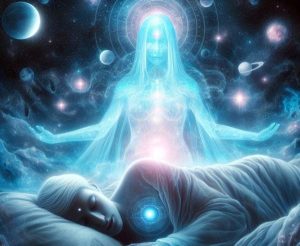
Mandukya Upanishad Chapter 1: Explanation of Kārikā 1 to 5 by Gaudapada
Kārikā 1
Jñeyaḥ sa triṣu dhāmeṣu citta-saṅghāta-vartinaḥ |
bhedān pratyavamarśañ ca bījam atra vidhīyate ||
Meaning:
The Self (Atman) is to be known in the three states (waking, dream, and deep sleep), as it functions within the aggregate of mind. The seed (cause) of multiplicity lies in the mind’s perception of difference among these states.
Kārikā 2
Gauṇasthānāni caitāni trīṇy evāha turīyakam |
sarvāvasthā-vihīnaṁ tad guṇair yo na nibadhyate ||
Meaning:
These three states are secondary (gauṇa) and belong to the Self. The Turiya, the fourth, is that which is free from all states and unbound by their qualities. It is pure Consciousness.
Kārikā 3
Nāsty ekasya dvitīyatvaṁ yatra tatra na vidyate |
yatra yatra tu dvitīyaṁ syāt tan nāsty advayadarśanāt ||
Meaning:
Where duality is absent, there is no second entity. But wherever a second appears, non-dual vision is absent. The truth is non-dual, and duality is only apparent.
Kārikā 4
Jāgrad-dvaitaṁ tu bāhyārthaṁ manasaḥ spandanodbhavam |
svapna-dvaitaṁ tu vijñeyaṁ antararthasya kalpitam ||
Meaning:
The duality experienced in the waking state arises from external objects and is a result of mental agitation. The dream-state duality is created by the mind itself, projecting internal objects.
Kārikā 5
Ubhayam tāvad evaitad dṛśya-mānatayā sthitam |
advaitam eva satyaṁ yat tato’nyan mithyā-mucyate ||
Meaning:
Both waking and dream experiences are unreal, as they are perceived (i.e., objects of experience). Only non-duality (Advaita) is the truth; everything else is called illusory (mithyā). For More Information Click Here

Adi Shankaracharya’s Insights on Mandukya Upanishad Kārikā 1–5
Adi Shankaracharya, in his commentary on the Mandukya Upanishad, highlights the essential teaching that the individual self (jiva) is ultimately identical with the universal Self (Brahman). He explains that the three common states of consciousness—waking (jagrat), dreaming (svapna), and deep sleep (sushupti)—are merely apparent and transient modifications of consciousness, involving duality and limitation. The fourth state, Turiya, transcends these three and is the pure, undivided consciousness beyond all mental fluctuations and distinctions.
Shankara emphasizes that the waking and dream states involve the mind’s projection of dualities, while deep sleep represents a state where duality temporarily ceases but the underlying Self remains unaware of the world. However, Turiya is the true nature of the Self—unchanging, eternal, and free from all distinctions and limitations. This realization leads to liberation (moksha), where one abides in the non-dual reality, recognizing the Self as the sole truth beyond all apparent differences. For More Information Click Here
Conclusion
In conclusion, the first five Kārikās of the Mandukya Upanishad reveal the nature of the Self through the three states of consciousness and the transcendent Turiya. Adi Shankaracharya’s commentary clarifies that while waking, dreaming, and deep sleep are temporary and limited experiences, the Turiya is the eternal, unchanging reality. Realizing this non-dual consciousness is key to spiritual liberation. The apparent world and its differences are understood as mental projections, not ultimate truths. Thus, the Mandukya Upanishad, supported by Shankara’s wisdom, guides seekers beyond illusion to the experience of pure Being. This understanding forms the foundation of Advaita Vedanta philosophy.
Join Our Classes:
The Upanishads are more than just ancient texts—they are timeless guides to living with clarity, balance, and inner peace. Our classes make their profound wisdom easy to understand and apply in everyday life. Join us to explore these teachings and discover a new way of seeing yourself and the world!