An Introduction to Mandukya Mantra 12 and Gaudapada’s Karikas (19–29)
The Mandukya Upanishad is one of the shortest yet most profound Upanishads, offering a deep inquiry into the nature of the Self and consciousness. Mantra 12 highlights how the Atman (Self) is the knower of all three states — waking, dreaming, and deep sleep — and remains untouched by their changes. This mantra sets the stage for a deeper philosophical discussion on the unity behind these diverse experiences. Gaudapada, the great Advaita philosopher, expands on this idea in Karikas 19 to 29, explaining how the Self appears to operate through these states but is truly beyond them. He emphasizes that the Atman is the constant witness, unaffected by the illusions created by ignorance. Through right knowledge, one can realize this non-dual Self and attain liberation. For More Information Click Here
Three States, One Self: Mandukya Upanishad Mantra 12 with Gaudapada’s Karikas
Mantra 12 (in Sanskrit):
“अमात्रश्चतुर्थोऽव्यवहार्यः प्रपञ्चोपशमः
शिवोऽद्वैत एवॐकारात्मैव
संविशत्यात्मानाऽऽत्मानं य एवम् वेद ॥१२॥”
Transliteration:
Amātraścaturtho’vyavahāryaḥ
prapañcopaśamaḥ śivo’dvaita eva om̐kāra ātmāiva
saṃviśatyātmanā ’ ātmānaṃ ya evaṃ veda
Meaning:
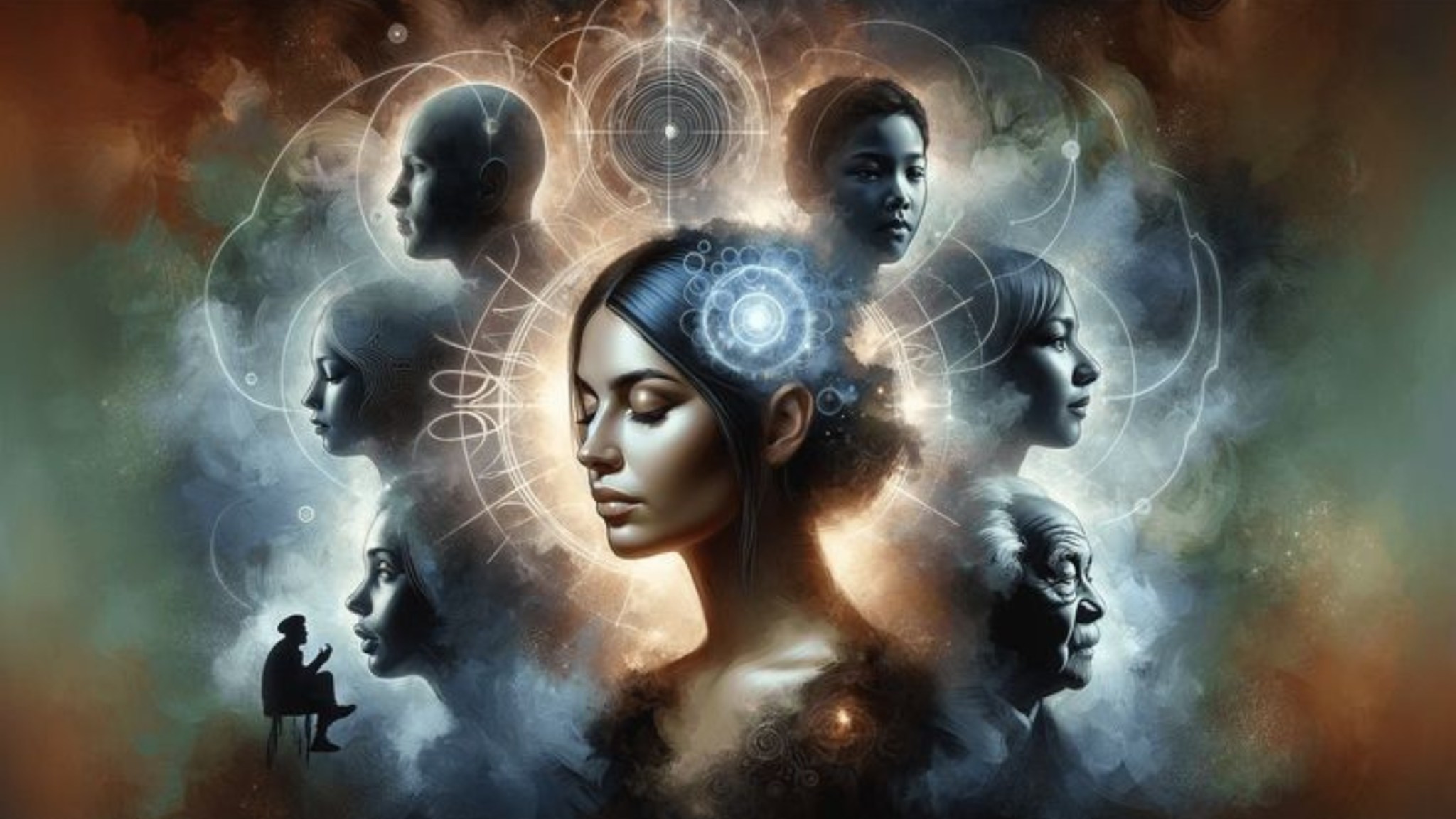
This Atman (Self) knows or comprehends three kinds of beings (prajās):
-
Prajā (Beings) who know others (prajānāti) — The waking state, outward knowledge.
-
Prajā who do not know others (prajāna-prajānaḥ) — The dreaming state, inner knowledge.
-
Prajās who neither know others nor themselves (prajānāṃ ca prajane ca) — The deep sleep state, ignorance or unconsciousness.
The Atman, however, knows itself (ātman) in all these states. It comprehends these three levels of beings and consciousness.
Summary of the Mantra:
The Self (Ātman) is the knower of all three states of consciousness — waking, dreaming, and deep sleep — where beings are known differently. It transcends these states by knowing itself in all. For More Information Click Here

Gaudapada Karika (Kārikā) Verses 19 to 29 — Commentary on this Mantra
These verses explain the nature of the three states of consciousness and the Atman which is the substratum underlying all.
Verse 19:
The three states of consciousness — waking, dreaming, and deep sleep — are the three modes or aspects of the Self (Ātman). The Self appears as different states but is itself one.
Verse 20:
The waking state is outward cognitive experience; it perceives external objects, different from the other states.
Verse 21:
The dream state is inward cognitive experience; the mind creates its own objects, not external, but the Self still witnesses.
Verse 22:
The deep sleep state is where there is neither outward nor inward experience, yet a subtle awareness persists. This state is undifferentiated bliss.
Verse 23:
The three states are experienced due to ignorance (Avidya), but the Self itself is untouched by these changes; it is the constant witness.
Verse 24:
The three states are not different from the Self; the Self is beyond all distinctions and dualities.
Verse 25:
The Self in the waking state identifies with the body and senses, but this is only apparent; the true Self is unchanging.
Verse 26:
Similarly, in the dream state, the Self experiences mental images, but it remains unchanged and independent.
Verse 27:
In deep sleep, the Self is blissful and devoid of duality, but even here, the Self remains unaltered by ignorance.
Verse 28:
When the ignorance that causes these states is removed, the Self shines forth in its true nature as pure consciousness, free from all limitations.
Verse 29:
Realization of the Self as the immutable witness of all three states leads to liberation (moksha), as one transcends all duality and suffering.
Summary of Karika 19-29:
Gaudapada explains that the Atman manifests as three states of consciousness but remains itself unchanged and pure. The waking, dreaming, and deep sleep states are modes of ignorance, but the Self is the eternal witness. Liberation comes by realizing this oneness and transcendence.
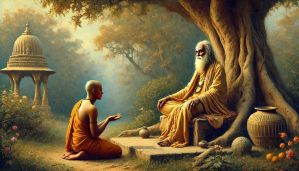
Adi Shankaracharya’s Insights on Mandukya Upanishad Mantra 12 and Gaudapada’s Karikas 19–29
Adi Shankaracharya, though he did not write a direct commentary on the Mandukya Upanishad, revered Gaudapada’s Karika as a foundational Advaita Vedanta text. He upheld and taught the philosophy reflected in these verses, especially the non-dual nature of Atman and its independence from the three states of experience: waking, dreaming, and deep sleep.
Mandukya Upanishad – Mantra 12 (verse 12)
Sanskrit (Devanāgarī):
अमात्रश्चतुर्थोऽव्यवहार्यः प्रपञ्चोपशमः शिवोऽद्वैत एवमोङ्कार आत्मैव संविशत्यात्मनाऽऽत्मानं ये एवं वेद ॥ १२ ॥
Transliteration:
amātraścaturtho’vyavahāryaḥ prapañcopaśamaḥ śivo’dvaita evamoṅkāra ātmaiva saṃviśatyātmanā”tmānaṃ ya evaṃ veda || 12 ||
English Translation (common rendering):
“That which has no parts (soundless), incomprehensible (with the aid of the senses), the cessation of all phenomena, all-bliss and non-dual Aum, is the fourth and verily the same as the Ātman. He who knows this merges his self in the Self.” For More Information Click Here
On Gaudapada’s Karikas 19–29:
Shankara regarded Gaudapada’s teaching as perfectly aligned with his non-dual philosophy:
-
Verse 19–22: These describe the three states and how the Self appears in them. Shankara would stress that this appearance is due to māyā — the illusory power that creates distinctions.
-
Verse 23–24: The Atman is the same in all states. Shankara would say that just as the same space appears different when enclosed in different pots, the Self appears to differ only due to the body-mind complex.
-
Verse 25–27: The individual’s identification with the body, dream images, or ignorance in deep sleep is false. The Atman remains untouched. Realizing this breaks the bondage of samsāra.
-
Verse 28–29: With the dawn of right knowledge (jñāna), one realizes that there is no duality — only the Self exists. Liberation is recognizing that one was never bound.
Key Insight:
Shankara would affirm that liberation (moksha) is not something newly attained but the realization of what is always already the case — that the Atman is non-dual, eternal, and free. The apparent experiences of waking, dreaming, and sleep do not affect the Self, just as clouds do not stain the sky.

Conclusion
In conclusion, Mandukya Upanishad Mantra 12 and Gaudapada’s Karikas 19–29 reveal the profound truth that the Self remains ever-present and untouched through all three states of consciousness. While waking, dreaming, and deep sleep seem different, they are mere appearances upon the one, non-dual Atman. Adi Shankaracharya’s Advaitic insight emphasizes that bondage exists only due to ignorance of this truth. When one recognizes the Self as the unchanging witness, all illusion falls away. Liberation is not a journey but the recognition of what is always real. This understanding leads to inner freedom and abiding peace.
Join Our Classes:
The Upanishads are more than just ancient texts—they are timeless guides to living with clarity, balance, and inner peace. Our classes make their profound wisdom easy to understand and apply in everyday life. Join us to explore these teachings and discover a new way of seeing yourself and the world!