Essence of the Muktikopanishad: The Path to Liberation through Self-Knowledge
The Muktikopanishad is a late Upanishadic text that presents a dialogue between Lord Rama and Hanuman, focusing on the nature of liberation (moksha). It declares that self-knowledge through the study of the Upanishads is the highest path to liberation. The text uniquely lists 108 Upanishads, highlighting them as essential scriptures for spiritual awakening. It emphasizes Advaita Vedanta, stating that realization of the non-dual Self (Atman) as Brahman leads to freedom from the cycle of birth and death. The role of a qualified guru and deep meditation on the teachings is stressed for genuine understanding. Ultimately, it assures that liberation is attained not by rituals but by direct realization of the Self. For More Information Click Here

Overview of the Muktikopanishad: Structure, Content, and Significance
The Muktikopanishad is a minor Upanishad associated with the Shukla Yajur Veda and is one of the later Upanishads, composed in the medieval period. It is unique and significant because:
- It presents a dialogue between Lord Rama and Hanuman, where Hanuman asks about the nature of liberation (moksha) and the path to attain it.
- Lord Rama responds by explaining different types of liberation and declares that study of the 108 Upanishads leads to moksha.
- This Upanishad is the source of the canonical list of 108 Upanishads, which is widely accepted in traditional Vedantic circles.
Structure:
- The Muktikopanishad has 2 chapters.
- 125 Verses in total, distributed as:
- Chapter 1: 49 verses
- Chapter 2: 76 verses
The text focuses on Jnana Yoga (the path of knowledge) and Advaita Vedanta, emphasizing the importance of Self-realization as the means to liberation.

Core Teaching of the Muktikopanishad
The central teaching of the Muktikopanishad is that liberation (moksha) is attained through Self-knowledge (Atma Jnana), and the study of the 108 Upanishads is the most direct and authentic path to this realization. It emphasizes that Advaita Vedanta, the philosophy of non-duality which asserts that the individual self (Atman) is identical with the supreme reality (Brahman), is the highest truth. Rituals, pilgrimages, and austerities are considered secondary or preparatory; true freedom comes from understanding the non-dual nature of the Self through deep inquiry, reflection, and guidance of a realized Guru. For More Information Click Here
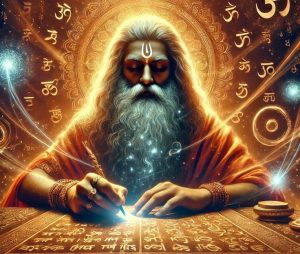
Authorship and Philosophical Perspective of the Muktikopanishad
The Muktikopanishad does not have a known individual author. Like most Upanishads, it is traditionally considered to be apauruṣeya—not of human origin—and is believed to have been revealed to sages (ṛṣis) through deep meditation and spiritual insight. However, the dialogue format between Lord Rama and Hanuman gives it a unique narrative style compared to other Upanishads.
Authorial Voice and Thoughts in the Muktikopanishad :
Though anonymous, the spiritual perspective presented in the Muktikopanishad reflects Advaita Vedanta and suggests the author’s strong belief in:
- Self-realization through knowledge (Jnana Yoga) as the supreme path to liberation.
- The authority and sanctity of the Upanishads, especially the list of 108 Upanishads as the ultimate spiritual scriptures.
- A clear preference for inner renunciation and contemplation over external rituals or devotional practices.
- The essential role of a qualified Guru and scriptural study (śravaṇa, manana, nididhyāsana) for attaining moksha.
In essence, the unknown author of the Muktikopanishad positions the Upanishadic wisdom and Advaitic realization as the timeless, universal method for freeing oneself from the bondage of samsara (the cycle of birth and death).
Significance of the Muktikopanishad in the Pursuit of Liberation
The Muktikopanishad holds a special place among the Upanishads due to its practical and comprehensive guidance on the path to liberation (moksha). Its importance can be understood through the following key aspects:
- Canonical Source of 108 Upanishads:
It is the only Upanishad that provides a complete list of 108 Upanishads, forming the traditional canon followed by many spiritual lineages. - Emphasis on Self-Knowledge:
The text highlights Jnana Yoga (path of knowledge) as the supreme means to attain liberation, echoing the teachings of Advaita Vedanta. - Dialogue between Rama and Hanuman:
The use of this sacred dialogue format gives the teachings divine authority and makes it accessible to seekers devoted to both wisdom and devotion. - Practical Spiritual Advice:
It offers a clear road map for seekers, including the need for a Guru, study of scriptures, and inner detachment to attain the highest state. - Synthesis of Upanishadic Wisdom:
By referring to all the major Upanishads, it serves as a gateway text, encouraging the study of the broader Upanishadic tradition. - Bridges Devotion and Non-duality:
While grounded in non-dual philosophy, it respects the role of Bhakti (devotion) and ethical living as preparatory stages on the spiritual path.
In essence, the Muktikopanishad stands as a spiritual guidebook, emphasizing that liberation is accessible to all through sincere inquiry, disciplined study, and inner realization. For More Information Click Here

Conclusion
The Muktikopanishad serves as a profound spiritual roadmap for seekers aspiring for liberation (moksha), emphasizing that Self-knowledge through the Upanishads is the highest path to freedom. Through the sacred dialogue between Lord Rama and Hanuman, it establishes the authority of the 108 Upanishads and promotes Advaita Vedanta as the ultimate truth. By valuing inner realization over external rituals and stressing the role of a guru and scriptural study, the text offers timeless wisdom for spiritual awakening. Its relevance endures as it bridges devotion and knowledge, guiding aspirants toward the eternal realization of the Self.
Join Our Classes:
The Upanishads are more than just ancient texts—they are timeless guides to living with clarity, balance, and inner peace. Our classes make their profound wisdom easy to understand and apply in everyday life. Join us to explore these teachings and discover a new way of seeing yourself and the world!