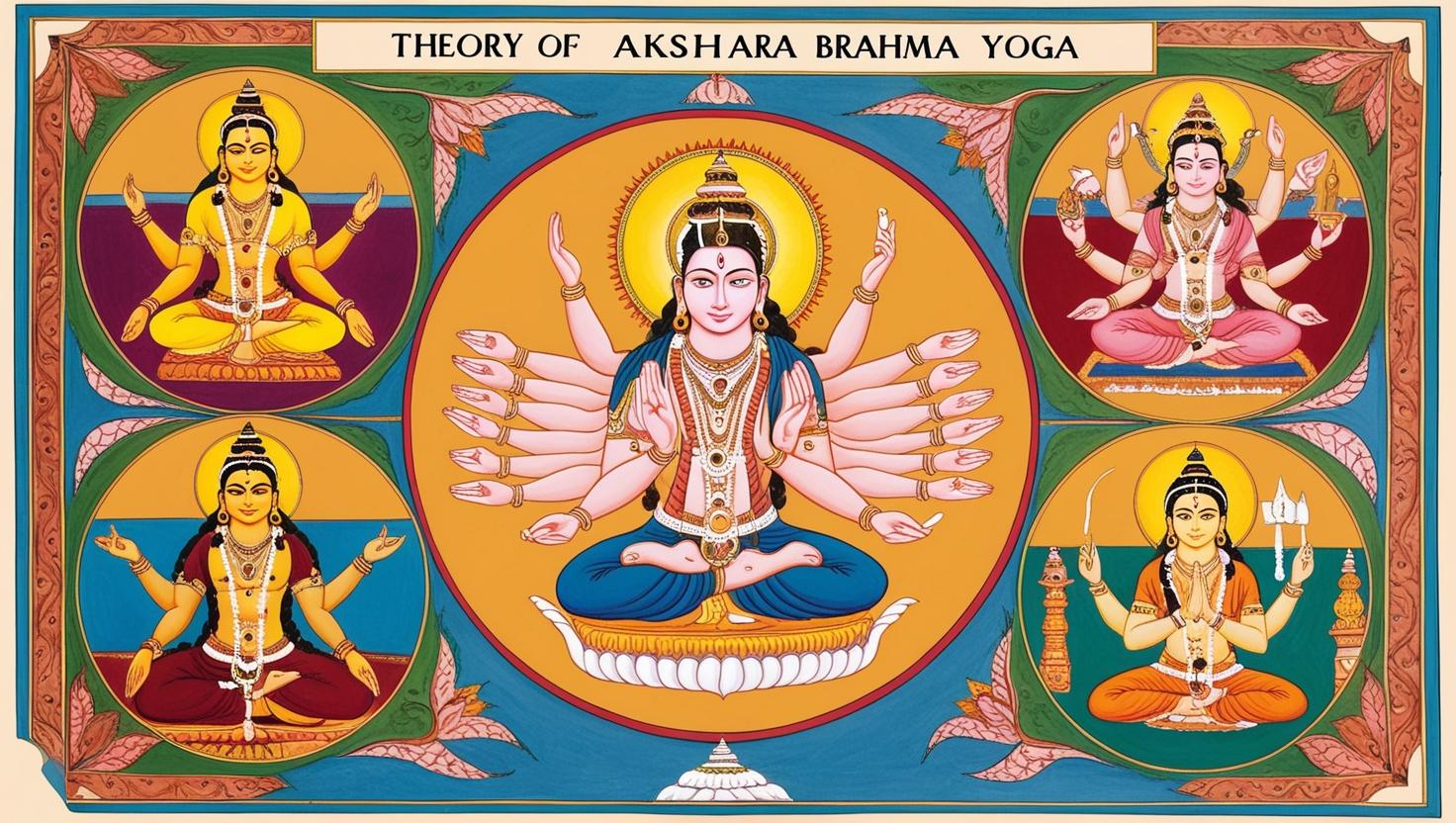
Introduction
This fifth chapter of Panchadaśī forms the culminating discourse of the Viveka Pañcakam, the five chapters dedicated to viveka (discriminative analysis). Here, the central theme is the exposition of the Mahāvākyas—the “Great Sayings” drawn from the Upaniṣads—that encapsulate the core vision of Advaita Vedānta. Click Here To Access more other text.
The Mahāvākyas, representing the essence of the four Vedas, are:
- Prajnānam Brahma – “Consciousness is Brahman” (Aitareya Upaniṣad, Ṛg Veda)
- Aham Brahmāsmi – “I am Brahman” (Bṛhadāraṇyaka Upaniṣad, Yajur Veda)
- Tat Tvam Asi – “That Thou Art” (Chāndogya Upaniṣad, Sāma Veda)
- Ayam Ātmā Brahma – “This Self is Brahman” (Māṇḍūkya Upaniṣad, Atharva Veda)
Each pair of verses in this chapter offers a comprehensive treatment of one Mahāvākya, revealing its philosophical depth and soteriological purpose. This chapter not only interprets the textual meaning but also emphasizes anubhava—direct realization—as the culmination of Vedantic inquiry. Click view PDF.
Themes of the Chapter
Unity of Jīvātma and Paramātma
The primary purport of the Mahāvākyas is to assert the non-duality between the individual self (Jīvātma) and the supreme self (Paramātma). The chapter consistently refutes dualistic conceptions and leads the seeker to the recognition of the essential oneness of existence.
Analysis of the Mahāvākyas
Each Mahāvākya is subjected to a meticulous analysis. The semantic and syntactic components are unfolded to arrive at their Lakṣyārtha (implied meaning), transcending mere literal interpretation. This process helps in discerning the ultimate teaching: the Self (Ātman) is Brahman. Click view PDF.
Role of Consciousness (Cit or Caitanya)
The substratum of all experience—Caitanya, pure consciousness—is upheld as the only reality. Body, mind, and intellect are seen as inert and dependent, whereas consciousness is self-revealing, eternal, and independent. Realization lies in identifying with this ever-present awareness.
Method of Superimposition and Negation (Adhyāropa-Apavāda)
The traditional pedagogical approach of Adhyāropa (intentional superimposition) and Apavāda (subsequent negation) is employed. This leads the student from a mistaken identity with the body-mind to Self-knowledge, by first assuming and then negating provisional ideas until only the non-dual Self remains.
Primacy of Direct Experience (Anubhava)
Scriptural study (śravaṇa), reflection (manana), and meditation (nididhyāsana) are advocated as necessary steps. However, liberation (mokṣa) results not from mere intellectual grasp, but from direct intuitive experience (anubhava) of the non-dual Self. Click view PDF.
Why Study Chapter 5?
This chapter provides:
- Clarity of Vision: It sharpens understanding of key Vedantic doctrines, especially the non-duality between Jīva and Brahman.
- Support for Self-Enquiry: The Mahāvākya-based analysis strengthens inner inquiry (ātma-vicāra), the central means to liberation.
- Foundation for Meditation: It forms the conceptual and practical base for Vedantic meditation aimed at Self-realization.
- Resolution of Doubts: It systematically dissolves existential and metaphysical doubts regarding reality, identity, and bondage.
Through repeated study and contemplation, the seeker internalizes these insights, making them a living truth in his experience.
Frequency of Study
Given its profound subject matter, multiple readings of this chapter are recommended. Like mirror-polishing, each reading removes fresh layers of ignorance. Studying under the guidance of a realized teacher (śrotriya-brahmanistha) enhances assimilation and guards against misinterpretation. Click view PDF.
Conclusion
The fifth chapter of Panchadaśī is both philosophical and soteriological in scope. By unfolding the Mahāvākyas, it leads the seeker from conceptual knowledge to direct realization. The teachings converge in asserting the Self to be limitless, non-dual consciousness (Brahman), the substratum of all appearances.
Through the rigorous yet compassionate guidance of Swami Vidyāraṇya, this chapter becomes a light of wisdom, dissolving the darkness of ignorance and directing the seeker to liberation through knowledge (jñāna-mokṣa).