Introduction to Sections 2 & 3: The Rise of Deities and the Embodiment of the Self
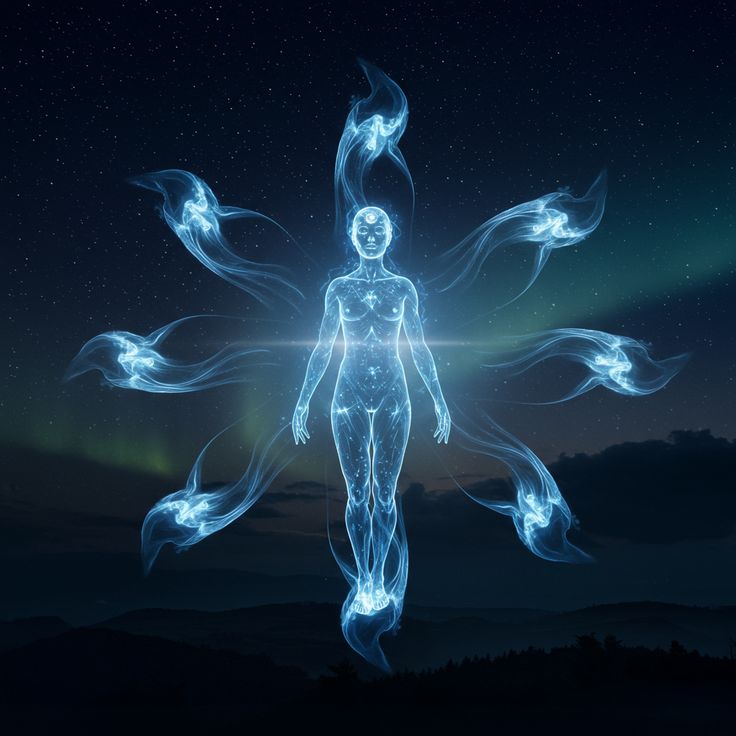
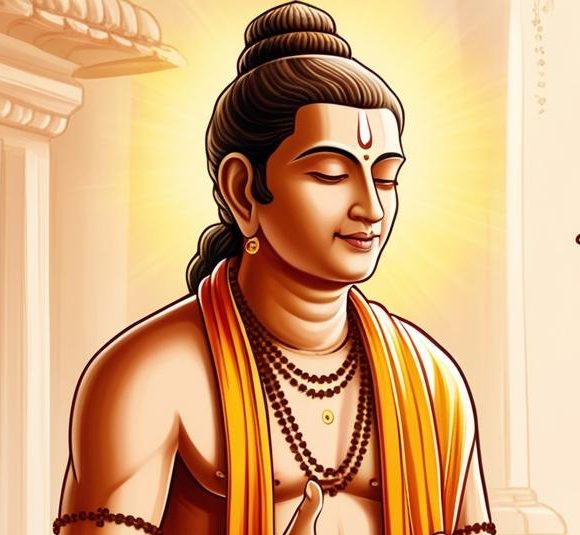
Following the creation of the worlds, the Self continues the cosmic process by projecting divine forces (devas) and senses (indriyas) to govern these realms. Then, the Self seeks a suitable abode (body) to enter and experience the worlds it created. These sections beautifully illustrate the manifestation of life, culminating in the Self identifying with the body as the experiencer. Yet, through Shankara’s commentary, we understand that this entry is figurative—the Self remains untouched and ever-free. For More Information Click Here
Chapter 1 – Section 2: Creation of Deities and Organs
Verse Summary:
The Self created the deities (divine powers) and assigned them to their respective places:
- Fire (Agni) as speech in the mouth
- Air (Vāyu) as breath in the nose
- Sun (Āditya) as sight in the eyes
- Directions (Dik) as hearing in the ears
- Trees and herbs as hair on the skin
- Moon (Chandra) as mind in the heart
- Death (Mṛtyu) as life-force in the navel
- Waters (Āpaḥ) as reproductive energy in the loins
Each deity is given a seat in the human body, and the body becomes the field through which these functions manifest. For More Information Click Here

Chapter 1 – Section 3: The Self Enters the Body
Verse Summary:
Having created the body and assigned roles to the deities, the Self wondered, “Without me, how can this body function?” The Self then entered the body through the gateway of the head. This entry enabled perception, speech, thought, and experience. The Self’s presence made the body a living being.
This section ends by describing how the deities quarrelled over which of them was supreme. To settle this, the Self tested them by withdrawing one by one. When the prāṇa (life-force) remained and others failed, it was declared the chief among the gods.

Shankara’s Non-Dual Perspective: The Self as the Silent Witness Behind All Manifestation
In his commentary, Adi Shankaracharya reveals that the acts of creating deities and assigning them to organs are symbolic descriptions of how the unmanifest Self expresses itself in the realm of experience. Each sensory organ and life-function is governed by a corresponding cosmic force, yet none of these forces function autonomously. Their power and presence depend entirely on the underlying Self (Ātman), which remains ever-unaffected.
The so-called “entry” of the Self into the body is not a physical movement but a figurative expression for the rise of individual consciousness (jīva)—a mistaken identification due to ignorance (avidyā). Even in embodiment, the Self remains untouched, like space in a pot. Shankara also highlights the supremacy of prāṇa, not as the Self itself, but as the chief function through which life is sustained. Ultimately, all movement, life, and experience are merely reflections of the Self’s presence, not actual transformations of it. For More Information Click Here

Importance of Aitareya Upanishad – Chapter 1, Sections 2 and 3
Sections 2 and 3 of Chapter 1 in the Aitareya Upanishad are profoundly significant because they present the emergence of life and consciousness in the human form, revealing the non-dual relationship between the cosmic Self and the individual being.
- Microcosm–Macrocosm Connection:
These sections highlight how the human body reflects the universe. The assignment of cosmic deities (like Fire, Sun, Moon) to specific organs reveals that the body is a temple of the cosmos, sanctified by consciousness. - Symbolic Entry of the Self:
The Self’s “entry” into the body symbolizes the awakening of individuality and perception. Without the Self, the body is inert—consciousness alone gives life to all functions. This affirms the Upanishadic teaching that life and awareness come from within, not from external sources. - Supremacy of Prāṇa:
By showing that all functions cease when prāṇa is withdrawn, the Upanishad emphasizes prāṇa as the chief sustaining force of life. It teaches that even speech, sight, and thought rely on the subtle force of vitality governed by the Self. - Foundation for Self-Inquiry:
These sections set the philosophical groundwork for advaita (non-dual) realization—that the Self, though appearing to enter the body, remains untouched and ever-liberated. This becomes essential in understanding who we truly are beyond the body and mind. - Preparation for Liberation:
The knowledge in these sections gradually leads the seeker to disidentify from the physical body and its parts, guiding them toward Self-realization and liberation (mokṣa).
In essence, these sections teach that consciousness is primary, the body is its instrument, and realizing this truth is the purpose of human life. For More Information Click Here
Conclusion
Sections 2 and 3 extend the Upanishadic vision from cosmic creation to individual embodiment. The body, with its organs and functions, is not random—it is a sacred arrangement animated by the Self. Shankara’s commentary helps us see that while the body, senses, and deities operate on the surface, the unmoving Self alone makes perception and life possible. This prepares the seeker to go beyond identification with the body and realize their nature as the changeless witness—Ātman.
Join Our Classes:
The Upanishads are more than just ancient texts—they are timeless guides to living with clarity, balance, and inner peace. Our classes make their profound wisdom easy to understand and apply in everyday life. Join us to explore these teachings and discover a new way of seeing yourself and the world!