
Introduction
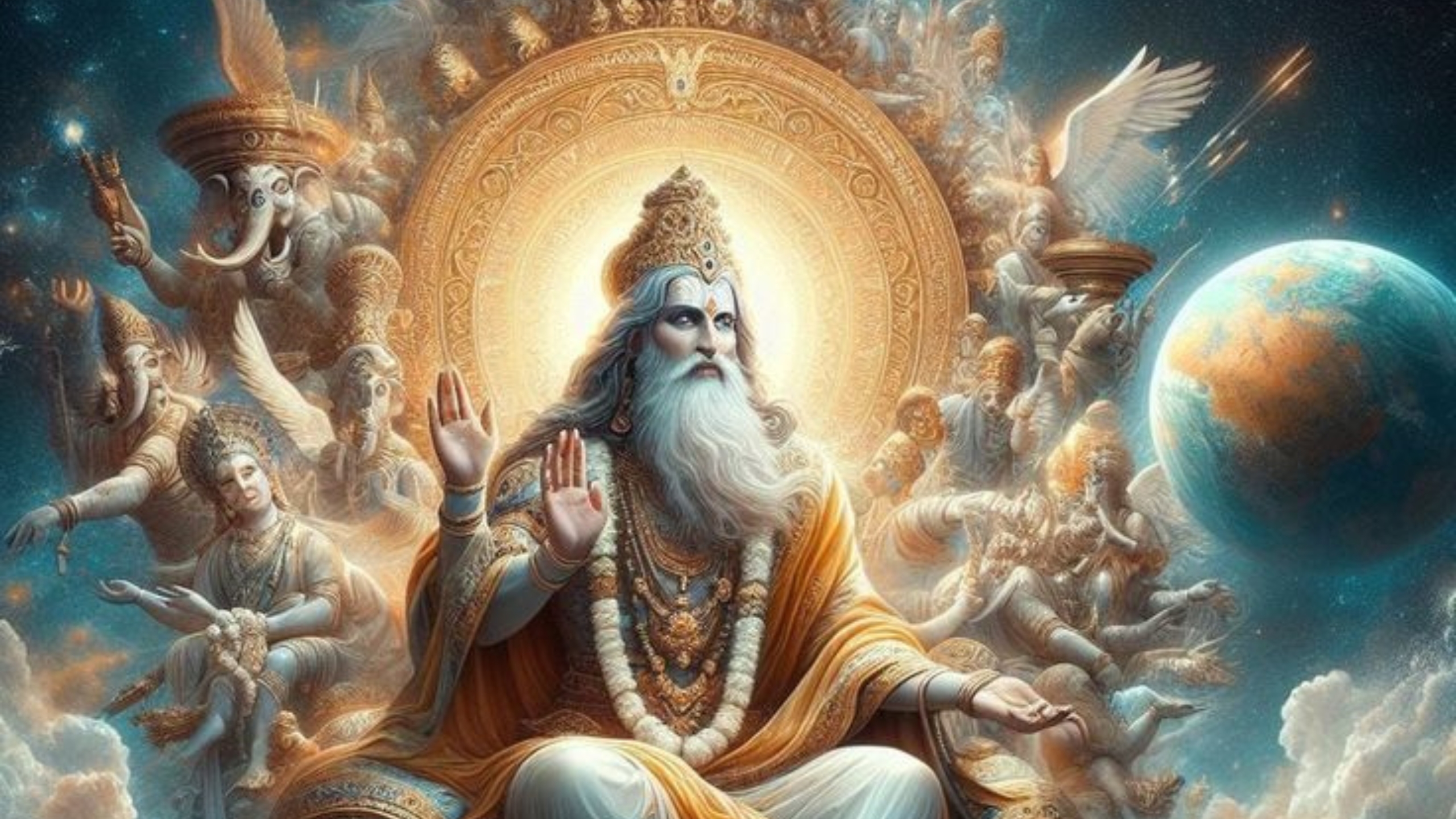
Chapter 6 is titled “Chitra‑Dīpa Prakaraṇam” (“Light on the Analogy of a Painted Picture”). It uses a rich metaphor—of a painting on a canvas—to illustrate how the one Self (Brahman) appears in various forms (jīva, Īśvara, world) through the play of Māyā and adjuncts. Verses 1‑30 lay down the foundational levels of this analogy, showing how reality appears, how the picture is formed, and how one moves from seeing the picture to recognising the canvas. The chapter is regarded as one of the most philosophically significant in the text. Click Here To Access more other text.

Benefits
Studying these first 30 verses brings:
- A deeper understanding of how appearance and reality relate—why the multiple forms (jīva, Īśvara, world) do not contradict the one Self.
- Clarity on the role of upādhi (limiting adjuncts) and superimposition (adhyāsa) in causing the appearance of difference.
- A helpful metaphor (painting on canvas) to internalise advaitic truth: the painter, the canvas, the forms, the viewer.
- Insight into method of derecognition: moving from identification with the picture to resting as the canvas.
- Strength for living spiritually: the analogy helps one detach from surface appearances and abide as the substratum. Click view PDF.
All Verses 1‑30 (Translation + Commentary)
Here is a concise summary of Verses 1‑30 with translation and commentary (based on the class‑notes).
Verses & Key Points
Verse 1:
-
-
Translation: Just as a painting has four stages, the Supreme Self has four stages of manifestation.
-
Meaning: Introduces the analogy of painting to illustrate stages of Self’s manifestation.
-
Verse 2:
-
-
Translation: Four stages: (i) clean cloth, (ii) stiffened cloth, (iii) outlined drawing, (iv) coloured painting.
-
Meaning: Maps stages of painting to levels of manifestation (pure → subtle → gross → world).
-
Verse 3:
-
-
Translation: White canvas is the base; with starch, outline, and colour, the painting is complete.
-
Meaning: Pure consciousness forms the basis; forms arise through successive manifestations.
-
Verse 4:
-
-
Translation: Pure Self = white cloth; subtle bodies = stiffened cloth; gross bodies = painted picture.
-
Meaning: Helps locate jīva/Īśvara/world within the metaphor.
-
Verse 5:
-
-
Translation: Self covered by body-mind appears as world and jīva; when uncovered, only Self shines.
-
Meaning: Multiplicity is due to coverings; remove them to see unity. Click view PDF.
-

Verse 6:
-
-
Translation: Canvas does not become painting; Self remains unchanged despite world appearing.
-
Meaning: Self is immutable; appearance of change is illusory.
-
Verse 7:
-
-
Translation: jīva and Īśvara are apparent; only Self is real.
-
Meaning: Differentiates reality (Self) from dependent appearance.
-
Verse 8:
-
-
Translation: jīva and Īśvara depend on Brahman; no independent existence.
-
Meaning: Reasserts non-duality.
-
Verse 9:
-
-
Translation: Same Consciousness called jīva, Īśvara, or world; remains one undivided.
-
Meaning: Unity underlying diversity.
-
Verse 10:
-
-
Translation: Reflections in water exist due to water; remove water → only space remains. Similarly, remove adjuncts → only Brahman.
-
Meaning: Illustration of dependent reality. Click view PDF.
-
Verse 11:
-
-
Translation: Reflections depend on pool; likewise, world depends on Brahman.
-
Meaning: Reinforces mithyā (dependent reality).
-
Verse 12:
-
-
Translation: Wash cloth → painting removed → white cloth shines; body-mind drops → Self shines.
-
Meaning: Practical sadhana: remove coverings.
-
Verse 13:
-
-
Translation: Self appears as manifold with names/forms; without them → only Self.
-
Meaning: Summarises picture metaphor.
-
Verse 14:
-
-
Translation: Don’t worship picture as cloth; see cloth behind → wise see Self behind world.
-
Meaning: Discrimination in devotion.
-
Verse 15:
-
-
Translation: Painting pleases ignorant; wise seek substratum (cloth).
-
Meaning: Prioritize reality over appearance. Click view PDF.
-

Verse 16:
-
-
Translation: Gold/jewels added to painting; canvas unchanged; forms change, Self remains.
-
Meaning: Self is changeless.
-
Verse 17:
-
-
Translation: Mirror shows many faces; mirror remains pure.
-
Meaning: Self as witness is untouched by reflected appearances.
-
Verse 18:
-
-
Translation: Forms arise/vanish; Self remains ever-present.
-
Meaning: Encouragement to abide as Self.
-
Verse 19:
-
-
Translation: Attachment arises from identifying with picture; renounce and abide as canvas.
-
Meaning: Disidentification reduces bondage.
-
Verse 20:
-
-
Translation: Mind engages with forms → ignorant identifies; wise withdraw to Self.
-
Meaning: Path: inward focus. Click view PDF.
-

Verse 21:
-
-
Translation: Painter acts; canvas not actor → Self is witness.
-
Meaning: Self is not agent.
-
Verse 22:
-
-
Translation: Realising agentless Self → ‘I do’ dissolves → only ‘I am’.
-
Meaning: Transformation of identity.
-
Verse 23:
-
-
Translation: Seeing picture as real → painter separate; knowing canvas → painter & painting non-different.
-
Meaning: From duality → unity.
-
Verse 24:
-
-
Translation: Forms remain but do not bind if Self is known → wise live free.
-
Meaning: Freedom while in world.
-
Verse 25:
-
-
Translation: Knowledge of substratum → birth, death, sorrow cannot touch; only Self remains.
-
Meaning: Fruit of realisation. Click view PDF.
-
Verse 26:
-
-
Translation: Lamp lights many forms yet remains unchanged; Self illumines world unaffected.
-
Meaning: Self as illuminating consciousness.
-
Verse 27:
-
-
Translation: Self hidden by upādhi; its nature is always there; remove cover by knowledge.
-
Meaning: Ignorance covers, knowledge uncovers.
-
Verse 28:
-
-
Translation: Remove cloth → canvas unharmed; ignorance ends → Self remains safe.
-
Meaning: Assurance of stable Self.
-
Verse 29:
-
-
Translation: Wise abide as ever-free Self, enjoy nothing, perceive all.
-
Meaning: Culmination of enquiry.
-
Verse 30:
-
-
Translation: May seekers behold world as painting; remove colours/forms → abide as one limitless Self.
- Meaning: Benediction: realization ends identification; rest in the Self. Click view PDF.
-

Why Study
- Because the “painting‑analogy” in this chapter is central: it ties together how the one Self appears as many without contradiction.
- Because it helps the seeker move beyond conceptual knowledge to experiential realisation—seeing oneself not as any form but as the substratum.
- Because it gives a clear method of derecognition: identify the upādhis, remove them with knowledge, abide as the Self.
- Because this chapter forms the bridge from theoretical discrimination to lived non‑duality—it is philosophically rich and practically vital.
- Because it supports the psychological shift from “I am the body/mind/world” to “I am the witness, the one Self.” Click view PDF.
How to Study
-
Śravaṇa (Reading/Listening): Read Verses 1‑30 carefully with translation and commentary (your PDF Volume 1). Pay attention to the metaphor of the painting and the stages (canvas, drawing, painting, finished).
-
Manana (Reflection): After each verse ask:
-
Which stage of the painting am I identified with? (canvas, outline, painting?)
-
What forms (roles, names, bodies) am I believing as “me”?
-
How would I look if I viewed myself as the canvas rather than the painting?
Write your responses. Click view PDF.
-
-
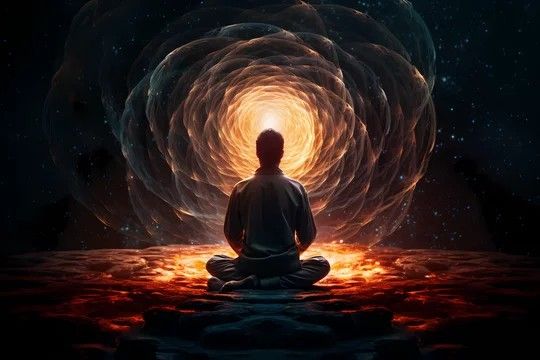
Nididhyāsana (Meditative Assimilation): Sit for 15‑20 minutes focusing on the phrase: “I am the canvas, not the painting.” When thoughts arise identifying you with a form, notice them and return to awareness.

-
Repetition Schedule:
-
First reading: once thoroughly.
-
Second reading: after ~1 week — deeper reflection on the stages and metaphor.
-
Third reading: after ~1 month — apply the metaphor in daily life and notice shifts in identification.
-
Review weekly for 3–6 months; then quarterly.
-
-
Group Study / Teacher Dialogue: Discuss the nuances of verses such as 6‑8, 10‑12, 23‑24 (the canvas metaphor, the role of upādhis). A teacher or group study helps internalise the analogy.
-
Daily Application:
-
When you feel strongly identified with a role/label (e.g., “I am a manager”, “I am weak”), recall verse 4 or 12: “The Self is the canvas; roles are painting.”
-
When you are disturbed by change, loss or death of form, recall verses 18‑20: “Forms pass; the Self remains.” Click view PDF.
-
Use the singing or visualisation: imagine dropping the painting and resting as the cloth/canvas.
-
Conclusion
Verses 1‑30 of Chapter 6 of the Panchadaśī open a profound dimension of Advaita teaching: the one Self appearing as many via the “picture” of creation. The painting analogy helps the seeker detach from superficial identification and rest in the substratum of all forms. When fully assimilated, this chapter shifts enquiry from “What am I not?” to “What am I?”—the transition from denial to recognition. It sets the stage for deeper inner work and an abiding sense of freedom: “I am the canvas, I am the Self, untouched by forms.”