Introduction
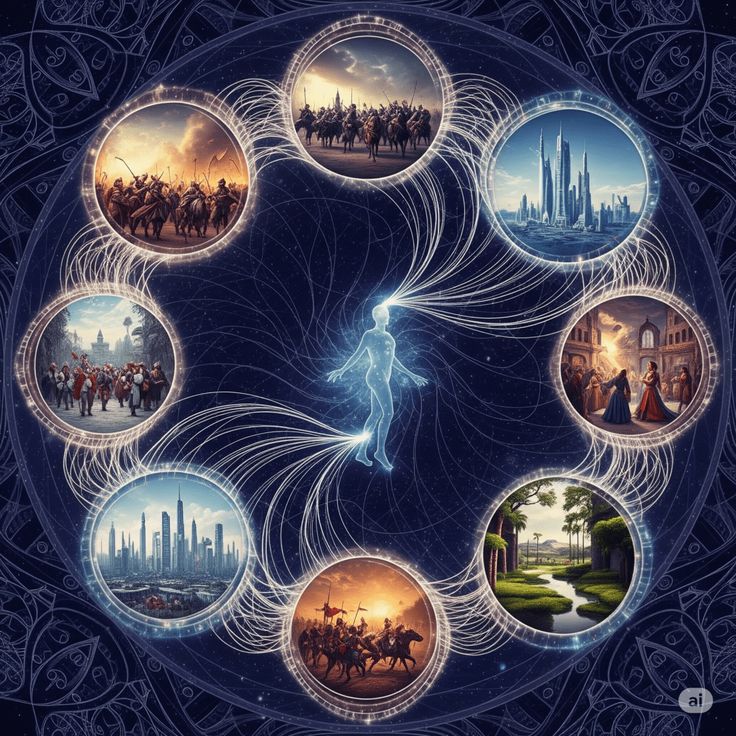
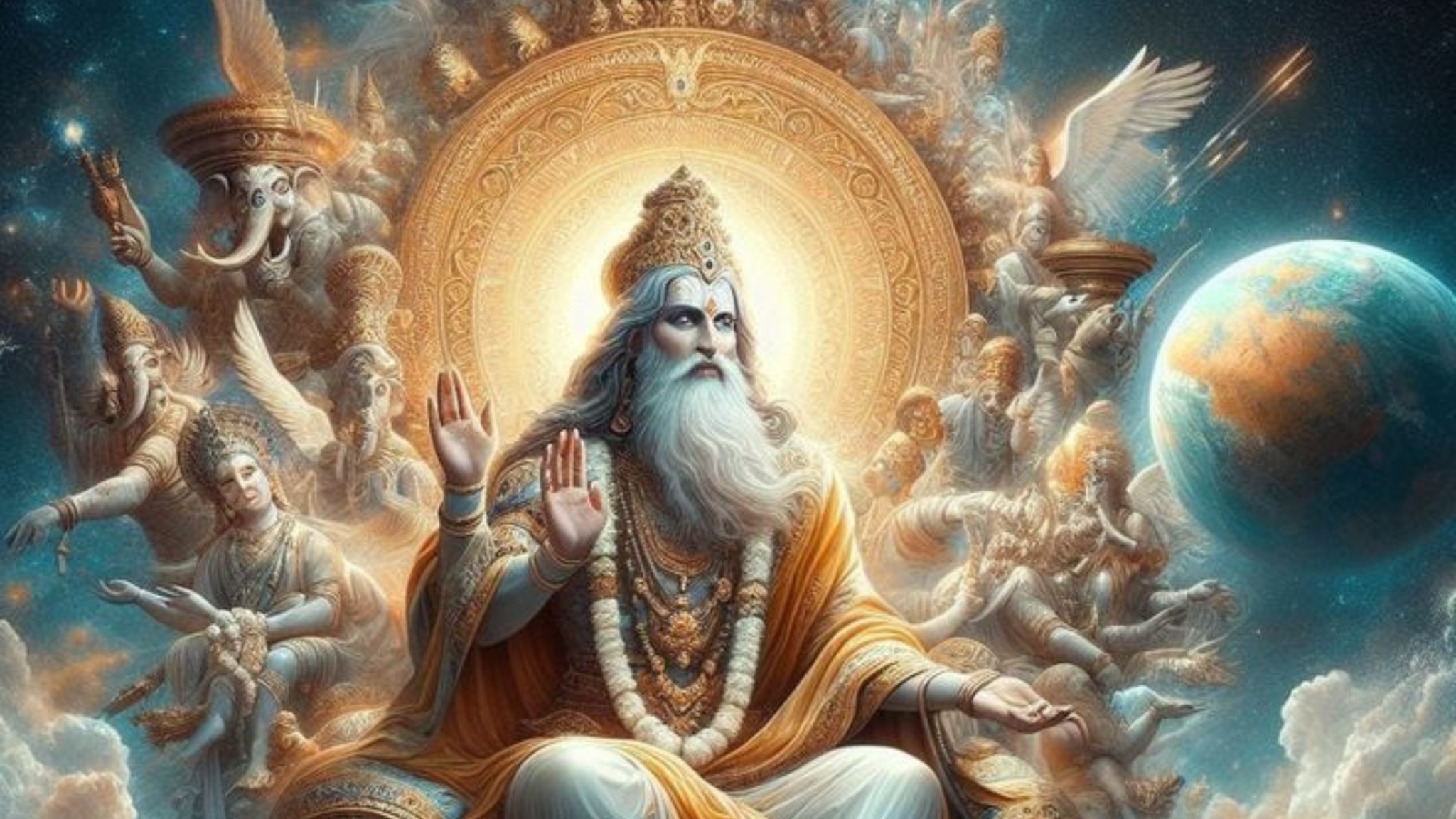
Chapter 6 (entitled “Chitra-Dīpa Prakaraṇam” — “Lamp of the Picture”) uses a rich metaphor of a painting on a canvas to explain how the one Self (Brahman) appears as jīva, Īśvara and the world, yet remains unchanged. Verses 1-30 dealt with the broad picture-analogy and the four stages of manifestation. Verses 51-80 (Volume 3) deepen the enquiry: they explore the nature of Māyā, the limiting adjuncts (upādhi), the difference between apparent and absolute realties, various philosophical views about the Self, its size and pervasiveness, and how to discriminate the real from the unreal. This segment builds the philosophical groundwork needed to resolve subtle objections and prepare for final recognition of the Self beyond all names and forms. Click Here To Access more other text.

Benefits
Studying Verses 51-80 gets you:
- A clearer understanding of the mysterious power of Māyā: how the world appears though the Self is unchanged, and how this creates the illusion of duality.
- Insight into why people hold different views about the Self’s size, nature, separateness vs unity — and how those views are resolved in non-dual teaching.
- Tools for discrimination (viveka): meaning you can begin to see “What is real?” vs “What is apparent?” — very useful in sādhanā (spiritual practice).
- Strengthened philosophical confidence: many seekers struggle with subtle objections; this section addresses them systematically.
- A firmer bridge between theory and experience: you learn not just what the Self is, but why you perceive otherwise, and how to align with the reality of Self. Click view PDF.
All Verses 51-80 (Bullet-point Summary)
Here are the verses 51 through 80 in bullet format with concise translation, meaning, and short explanation. (Note: these are summarised; for full Sanskrit text + commentary refer to your Volume 3 PDF.)
Verse 51
-
-
Translation: “Hence, like nothingness, Māyā is not a distinct stand-alone entity.”
-
Meaning: Māyā is not an independent reality — it depends on the Self.
-
Explanation: Sets the tone: power of appearance, yet not separate from the ground. Click view PDF.
-
Verse 52
-
-
Translation: “In the apparent reality also jīvas are not considered different from their abilities.”
-
Meaning: The apparent doer-enjoyer is linked to upādhis.
-
Explanation: What seems separate is only difference of adjuncts.
-
Verse 53
-
-
Translation: “The power of the earth to produce pots applies only where there is clay; similarly Māyā affects only that which has upādhis.”
-
Meaning: Māyā’s effect depends on conditions (adjuncts).
-
Explanation: Use of analogy to clarify condition-dependence.
-
Verse 54
-
-
Translation: “The Upaniṣad says: ‘Creation is only a small fraction of the infinite awareness; the remainder is self-revealing.’”
-
Meaning: Manifestation is only part; the greater part is unmanifest awareness.
-
Explanation: Helps shift focus from forms to substratum.
-
Verse 55
-
-
Translation: “In the Bhagavad Gītā the Lord says: ‘The world is sustained by a small part of Me’ — indicating the Self remains beyond the world.”
-
Meaning: Scriptural affirmation of the Self’s primacy.
-
Explanation: Uses authoritative text to support non-duality. Click view PDF.
-

Verse 56
-
-
Translation: “Though the Self is partless and undivided, the Upaniṣad speaks in terms of parts to make it easier for the dualistic mind.”
-
Meaning: Language uses provisional methods to point to unity.
-
Explanation: Acknowledges limitations of language; invites deeper enquiry.
-
Verse 57
-
-
Translation: “With awareness as its substrate, Māyā creates many objects just as an artist draws many colored pictures on a white canvas.”
-
Meaning: Universe is like painting on awareness.
-
Explanation: Reinforces the painting-canvas metaphor in this deeper context.
-
Verse 58
-
-
Translation: “Though Māyā appears, its cause is not separate from the Self; remove the upādhis and the appearance vanishes.”
-
Meaning: The world appears via adjuncts; knowledge dissolves them.
-
Explanation: Practical takeaway for discrimination.
-
Verse 59
-
-
Translation: “Some say the Self is atomic (tiny), some say it is medium size, some say it is vast like space; we refute them.”
-
Meaning: Addresses divergent philosophical opinions on Self’s size.
-
Explanation: Prepares for deeper exposition of the Self’s transcendence of size.
-
Verse 60
-
-
Translation: “If the Self were atomic or limited, it would not be the immovable substratum of all; hence it must be infinite.”
-
Meaning: Logical refutation of limited Self.
-
Explanation: Uses reason to prepare for non-dual conclusion. Click view PDF.
-

Verse 61
-
-
Translation: “The Self is beyond space, time and objects — like the sky is beyond the pot in which air appears.”
-
Meaning: The Self is all-pervasive and partless.
-
Explanation: Sky-inside/sky-outside analogy.
-
Verse 62
-
-
Translation: “Though the body, senses and mind change, the Self remains untouched — hence cannot be identified with them.”
-
Meaning: Self ≠ body/mind.
-
Explanation: Reinforces prior teaching of non-identification.
-
Verse 63
-
-
Translation: “The Self is self-luminous, witness of waking, dreaming and deep sleep; hence it is not inert.”
-
Meaning: Self is consciousness, not unconscious matter.
-
Explanation: Establishes self-luminous nature.
-
Verse 64
-
-
Translation: “Those who do not grasp this simple fact wander among theories of size and part-ness and remain deluded.”
-
Meaning: Mistakes about Self’s nature perpetuate bondage.
-
Explanation: Encouragement to stay with direct enquiry.
-
Verse 65
-
-
Translation: “It is said that the Self is subtler than the subtle; the mind cannot reach it; only direct reflection and abiding will reveal it.”
-
Meaning: Self is finer than mind; cannot be objectified.
-
Explanation: Emphasises method (neti-neti + resting as witness). Click view PDF.
-

Verse 66
-
-
Translation: “Though people search for the Self everywhere else, the only way is via discrimination of what you are not.”
-
Meaning: Method of disidentification as path.
-
Explanation: Re-emphasises method over speculation.
-
Verse 67
-
-
Translation: “The scripture says: ‘The mind is the cause of bondage and release’. Hence those who identify the Self with mind err.”
-
Meaning: Mind cannot be Self.
-
Explanation: Clarifies distinction of witness vs instrument.
-
Verse 68
-
-
Translation: “Even sleep experience shows that the Self is present though mind is inert; so Self cannot be same as mind.”
-
Meaning: Self exists in all states, mind does not.
-
Explanation: Uses sleep-analogy for discrimination.
-
Verse 69
-
-
Translation: “Hence the Vedāntin holds that the Self is partless, infinite, and the world is mithyā (dependent reality).”
-
Meaning: Summary of non-dual teaching.
-
Explanation: Brings together threads of discussion. Click view PDF.
-
Verse 70
-
-
Translation: “If some uphold that jīva or Īśvara are separate from Brahman, they contradict the Upaniṣad declarations.”
-
Meaning: Critique of dualist positions.
-
Explanation: Maintains consistency with non-duality.
-

Verse 71
-
-
Translation: “The Self alone exists; the appearance of many begins and ends in Māyā; hence one should abide as the Self beyond all names.”
-
Meaning: Final instruction.
-
Explanation: Prepares for living as the Self.
-
Verse 72
-
-
Translation: “Thus we explained how the world of forms is like paint on canvas; know this and abide as the ever-free Self.”
-
Meaning: Recap of the painting-analogy in deeper form.
-
Explanation: Connects to earlier chapters and analogy.
-
Verse 73-80
-
-
These verses further pronounce the benediction, stress the removal of ignorance (avidyā), affirm the Self’s ever-free nature, and warn against falling into debates and identifications.
-
Meaning: Strengthening of resolve, encouragement, and sealing of the method.
-
Explanation: They form devotional and motivational conclusion of the section. Click view PDF.
-

Why Study
- Because these verses address the most subtle issues: nature/size of Self, reality of world, role of ignorance and mis-identification — issues that many seekers find confusing.
- Because they provide philosophical clarity and confidence, removing doubts about “Is the Self big/small/partless?”, “Is the world real or unreal?”, “How do I know?”
- Because they deepen your practical enquiry into identity: not just what you are, but why you experience otherwise, and how to return.
- Because they reinforce method and result: disidentification, abiding as Self, living freedom — making the teaching applicable in day-to-day life.
- Because they prepare you for the culminating sections of the text where living as the Self is unmasked and stabilised. Click view PDF.
How to Study
-
Śravaṇa (Reading/Listening): Read Verses 51-80 slowly with translation and commentary (using your Volume 3 PDF). Focus on key words: Māyā, upādhi, partless, infinite, witness, void, mithyā.
-
Manana (Reflection): After each verse ask:
-
What auxiliary belief about the Self do I hold (e.g., “I am limited”, “I’m small”, “I’m separate”)?
-
How does this verse challenge that?
-
What can I do today in awareness to rest as the witness, not the formed self?
Write reflections in your journal. Click view PDF.
-
-
Nididhyāsana (Meditative Assimilation): Sit daily for 10-20 minutes and focus on a phrase such as: “I am the infinite, partless witness beyond all forms.” When thoughts of separateness or limitation arise, note them and return to the awareness. Over days you may shift from “I think I am” to “I know I am”.

-
Repetition Schedule:
-
First reading: once thoroughly.
-
Second reading: after 1 week — focus on how the world of forms is explained as dependent.
-
Third reading: after 1 month — observe how your sense of “I” begins to shift beyond roles and forms.
-
Then review monthly for 3-6 months; after stabilisation, do quarterly reviews.
-
-
Group/Teacher Discussion: Discuss subtle verses such as 59-61 (size and nature of Self), 63-68 (mind vs Self), 70-72 (abiding as Self). Dialogue helps clarify misunderstandings and deepen insight.
-
Daily Application:
-
When you feel “small”, limited or separate, recall verses 60-61 and rest as infinite.
-
When you feel disturbed by change or identification, recall verses 63-64, 66.
-
When you face philosophical doubts (“Am I one or many?”), refer to verses 69-70.
-
Use the painting/canvas metaphor (verses 57-59, 72) to help you see forms as appearances on awareness. Click view PDF.
-
Conclusion
Verses 51-80 of Chapter 6 of the Panchadāśī form a powerful deepening of the earlier metaphorical and discriminative teaching. They bring the seeker into the realm of the subtle: the truth of the Self beyond size, part-ness, identification, duality; the power of Māyā; the method of discrimination; the result — abiding as the ever-free Self. When these verses are assimilated, one begins to live not just as “I am the Self” intellectually, but to abide as the Self experientially, with less identification with roles, forms, objects. This section thus marks the turning point from enquiry to abiding reality.