Shiva as Pasupathi and the Path to Self-Realization
The Pashupata Brahma Upanishad teaches that Shiva, as Pasupathi, is the supreme Lord and the inner witness of all actions and senses. It emphasizes that the soul’s experiences and knowledge occur under His guidance, beyond the physical body and organs. Through discipline, truth, penance, and Vedantic practice, one attains wisdom and self-control. The Upanishad reveals the unity of the individual self with Brahman, showing that the world is not separate from the knower. By recognizing one’s own eternal nature within, the practitioner transcends duality and illusion. Ultimately, liberation is attained through realizing the self as the eternal, shining Brahman. For More Information Click Here
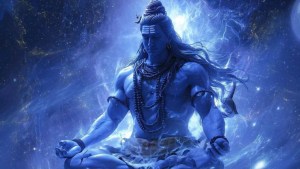
Chapter and Structure: Shiva as the Supreme Witness and Guide to Self-Realization
The single chapter emphasizes Shiva as Pasupathi (Lord of all beings), who is the ultimate witness and controller of all actions, senses, and the mind. It explains how the soul and the external world are governed by Shiva’s influence, and that true knowledge of Brahman (the Self) can be attained through discipline, truth, meditation, and Vedantic practices. The chapter guides seekers toward self-realization, showing that the enlightened person sees the world as non-different from the Self and attains peace, wisdom, and ultimate unity with Brahman.
Essential Teachings and Key Verses of Pashupata Brahma Upanishad
-
“Shiva, who is the Lord of all beings (Pashupati), is always witness for everything.”
Meaning: Shiva pervades all beings and observes every action; the soul and senses function under His guidance. -
“The minds of all people are controlled as well as sent to different topics by Him only.”
Meaning: All thoughts, desires, and inclinations arise under the influence of the Supreme Being. -
“Even other organs only perform the actions allotted to them because of Him.”
Meaning: Our body and senses are instruments of the Supreme, acting according to His will. -
“By the knowledge of the form of Brahman when the world becomes that which should be enjoyed, he eats the form which is he himself.”
Meaning: Realization of Brahman leads to seeing all existence as a reflection of the Self; the wise identify with the universe. -
“The savant who knows Brahman, whenever he sees the world does not see it as something different from himself.”
Meaning: The enlightened perceive unity in all things; duality disappears in the realization of the Self. -
“People in whom there are no faults see realistic object of self shine in their own body. Others do not see it.”
Meaning: Only the disciplined and pure-minded perceive their true Self; others remain unaware of it. -
“By having a discipline in food habits, mental discipline develops. By mental discipline, one gets wisdom.”
Meaning: Self-control and ethical living are steps toward spiritual wisdom and self-realization. For More Information Click Here
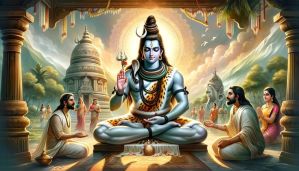
Supremacy of Shiva and the Path to Self-Realization
The Pashupata Brahma Upanishad teaches that Shiva, as Pashupati, is the ultimate witness and controller of all actions and senses. True knowledge arises through disciplined living, self-control, and meditation. By purifying the mind and following Vedantic practices, one realizes the Self within and its unity with Brahman. The world is perceived not as separate but as an expression of one’s own consciousness. Liberation comes from understanding this non-duality and transcending the illusions of the senses. Devotion, wisdom, and disciplined action lead to the direct experience of the eternal, self-luminous Brahman. For More Information Click Here
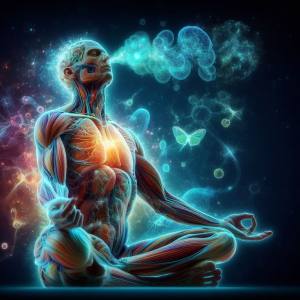
Conclusion
The Pashupata Upanishad teaches that Shiva, as Pasupathi, is the ultimate witness and controller of all beings. Self-discipline, meditation, and Vedantic practice enable recognition of one’s own eternal nature. The text emphasizes the unity of the individual self with Brahman, showing that all experiences and actions occur through Him. By seeing the world as non-different from oneself, one transcends duality and illusion. Wisdom arises gradually through ethical conduct, mental control, and devotion. Ultimately, liberation is attained by realizing the eternal, self-luminous Brahman within.
Join Our Classes:
The Upanishads are more than just ancient texts—they are timeless guides to living with clarity, balance, and inner peace. Our classes make their profound wisdom easy to understand and apply in everyday life. Join us to explore these teachings and discover a new way of seeing yourself and the world!