Composition of the Body, Senses, Mind, and the Self
The Sariraka Upanishad explains the composition of the human body as a combination of the five elements-earth, water, fire, air, and space. It describes the organs of sense and action, their functions, and the inner faculties of mind, intellect, ego, and self-consciousness. The Upanishad outlines the qualities of Sattva, Rajas, and Tamas, linking them to human behavior and spiritual evolution. It also explains the four states of consciousness-waking, dreaming, deep sleep, and the transcendental fourth state. The text details the Lingasarira, the Tattvas, and the Purusha, providing a map of the body, mind, and soul. Ultimately, it teaches the interconnectedness of body, mind, and the Self, highlighting the path to self-realization. For More Information Click Here
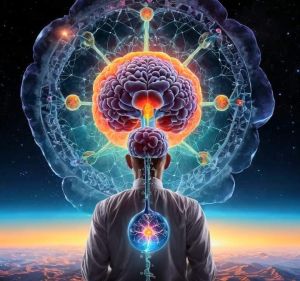
Composition of the Body, Senses, Mind, and the Tattvas
The Sariraka Upanishad is a concise Upanishad focused on the human body and its relation to the Self and the elements.
- Number of Chapters: 1
- Number of Verses: 25 verses
Simple Explanation of the Chapter:
The single chapter explains how the human body is composed of the five elements (earth, water, fire, air, and space) and describes the functions of the sense and action organs. It also discusses the inner faculties—mind, intellect, ego, and self-consciousness—and their positions in the body. The text classifies human qualities according to the three Gunas (Sattva, Rajas, Tamas) and explains the four states of consciousness: waking, dreaming, deep sleep, and the fourth state (Turiya). Finally, it outlines the 25 Tattvas, including the physical body, mind, senses, and Purusha, showing how the empirical self relates to the Supreme Self.

Key Teachings on the Body, Senses, Mind, and Self
1. “The body is a combination of the five elements…”
-
Meaning: The human body is made up of earth, water, fire, air, and ether, each contributing to its structure and functions.
2. “The organs of sense are ear etc.: the ear is in the sky (space), the sense of touch (skin) is in the air…”
-
Meaning: Each sense organ corresponds to a specific element, and their objects of perception arise naturally from these elements.
3. “Mind, Intellect, Egoism, and Self-conscious mind are the four inner senses…”
-
Meaning: The inner faculties govern thought, decision-making, and awareness, positioned in different parts of the body.
4. “Non-violence, truth, non-theft… are the qualities of Sattva; I am the doer… are of Rajas; sleep, laziness… are of Tamas.”
-
Meaning: Human behavior is influenced by the three Gunas (qualities)—Sattva, Rajas, and Tamas—which define personality and actions.
5. “First the waking state rests on the five organs of sense… Dream depends on the four inner senses… fourth state has only the soul active.”
-
Meaning: Consciousness operates in four states: waking, dreaming, deep sleep, and the transcendental fourth (Turiya), each with different faculties active.
6. “The five organs of sense and action with the five vital airs, mind, and intellect go to make the Lingasarira… the twenty-fifth is the Purusha (Self).”
-
Meaning: The body and mind constitute the physical and subtle self (Lingasarira), while the ultimate Self (Purusha) transcends all. For More Information Click Here
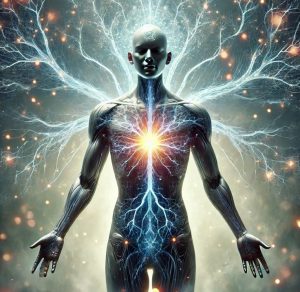
Core Teachings on the Body, Senses, Gunas, and Self Realization
The Sariraka Upanishad teaches that the human body is a composite of the five elements—earth, water, fire, air, and ether—while the senses, organs of action, mind, intellect, ego, and self-consciousness function as instruments of experience. It emphasizes the three gunas—Sattva, Rajas, and Tamas—shaping behavior, knowledge, and action. The Upanishad explains the four states of consciousness: waking, dreaming, deep sleep, and the transcendental fourth state, Turiya, where the Self alone is active. It identifies the twenty-five Tattvas, including the body, mind, senses, Prana, and Purusha, as essential to understanding human existence. Knowledge of these Tattvas leads to self-realization and liberation. Ultimately, it teaches that the true Self transcends all physical, mental, and sensory limitations. For More Information Click Here
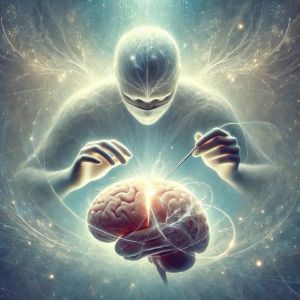
Conclusion
The Sariraka Upanishad emphasizes the intricate connection between the body, senses, mind, and the Self, showing that all arise from the five elements. It explains how the three Gunas—Sattva, Rajas, and Tamas—shape human qualities and actions. The text guides the seeker to understand the states of consciousness—waking, dreaming, deep sleep, and the fourth state of pure awareness. By recognizing the body and mind as instruments and the Purusha as the true Self, one attains detachment and clarity. Knowledge of these Tattvas leads to wisdom, self-mastery, and inner peace. Ultimately, it teaches that realizing the Self beyond all physical and mental layers is the path to liberation.
Join Our Classes:
The Upanishads are more than just ancient texts—they are timeless guides to living with clarity, balance, and inner peace. Our classes make their profound wisdom easy to understand and apply in everyday life. Join us to explore these teachings and discover a new way of seeing yourself and the world!