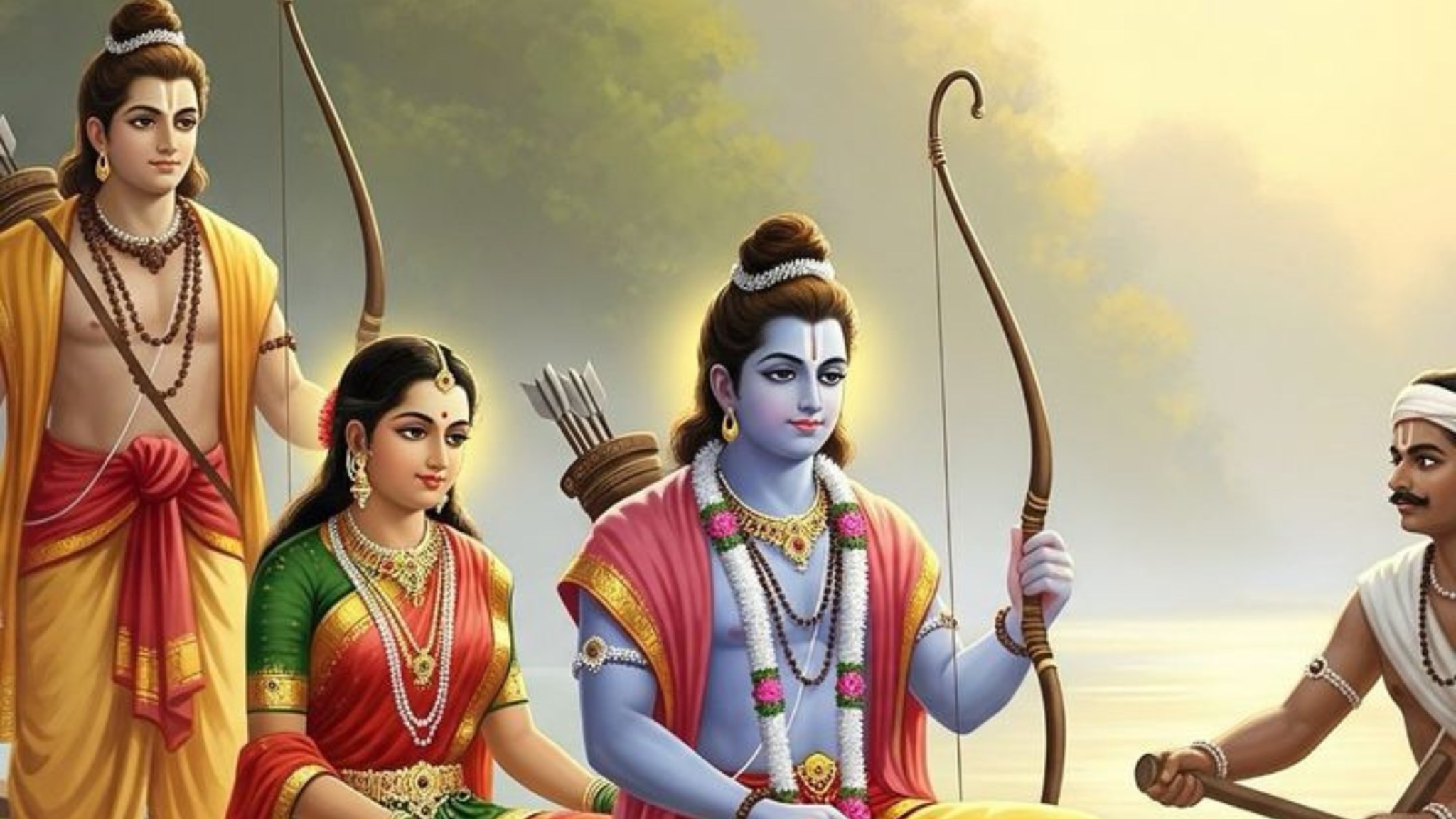
Sita as the Divine Feminine Power and Supreme Consciousness
The Sita Upanishad presents a symbolic and philosophical exposition of the Divine Feminine, identifying Sita as the embodiment of supreme consciousness. It portrays her as the eternal, all-pervading power that sustains creation and cosmic order. The Upanishad equates Sita with Sakti, inseparable from Brahman, and the inner Self present in all beings. Through this vision, devotion is elevated into non-dual understanding. The text emphasizes purity, steadfastness, and inner strength as expressions of spiritual realization. Ultimately, it reveals the feminine principle as the very essence of liberation and universal harmony. For More Information Click Here
Sita as the Supreme Sakti and Non-Dual Consciousness
The Sita Upanishad consists of a single chapter containing 37 verses, as found in traditional recensions. Though structurally brief, it presents a complete philosophical teaching centered on the Divine Feminine as the Supreme Reality. Since it has only one chapter, the Upanishad unfolds as a continuous exposition. It identifies Sita with Brahman, portraying her as the eternal, all-pervading consciousness that supports and sustains the universe. The text explains that Sita is not merely a historical or mythological figure, but the inner Self and cosmic Sakti present in all beings. Devotion to Sita is shown to mature into non-dual knowledge, where the worshipper and the worshipped are understood as one. The chapter concludes by affirming that realization of this truth leads to purity, harmony, and liberation.
Key Verses on Sita as Brahman, Sakti, and the Inner Self
- On Sita as the Supreme Reality: “I am Sita, the supreme Brahman, the source and support of all worlds.”
- Meaning: Sita is identified with Brahman, the absolute, all-pervading reality.
- On the Divine Feminine: “From me arise all beings; in me they exist; into me they dissolve.”
- Meaning: The Upanishad presents Sita as the cosmic Sakti responsible for creation, sustenance, and dissolution.
- On the inner Self: “I dwell in the hearts of all beings as pure consciousness.”
- Meaning: Sita is not external alone but the inner Atman present in everyone.
- On purity and steadfastness: “Purity, patience, and unwavering truth are my true forms.”
- Meaning: Moral and spiritual virtues are expressions of realized consciousness.
- On devotion and knowledge: “He who knows me thus crosses sorrow and attains peace.”
- Meaning: Devotion to Sita culminates in liberating knowledge, not mere worship.
- On liberation: “Knowing me as non-different from the Self, one becomes free.”
- Meaning: Liberation arises through non-dual realization of the Divine Feminine.
These verses convey the Upanishad’s central message: Sita as Brahman, Sakti as consciousness, and liberation through knowledge infused with devotion. For More Information Click Here

Realizing Sita as Brahman and the Inner Self
The Sita Upanishad teaches that Sita is not merely a historical figure but the embodiment of Brahman, the supreme, non-dual reality. It presents her as the cosmic Sakti, from whom creation arises and in whom it is sustained and dissolved. The Upanishad identifies Sita with the inner Self (Atman) present in all beings. Devotion to Sita is shown to mature into direct knowledge of non-duality. Purity, steadfastness, and truth are described as expressions of realized consciousness. Ultimately, the text affirms that liberation arises from realizing the Divine Feminine as one’s own true Self. For More Information Click Here

Conclusion
The Sita Upanishad offers a profound vision of the Divine Feminine as the very essence of reality and consciousness. By identifying Sita with Brahman, Sakti, and the inner Self, it harmonizes devotion and non-dual wisdom into a single spiritual path. The Upanishad elevates virtues such as purity, patience, and truth as natural expressions of Self-realization. It dissolves the distinction between worshipper and worshipped, guiding the seeker toward inner awakening. Ultimately, the text affirms that liberation is attained through realizing Sita not as external divinity alone, but as one’s own eternal, non-dual Self.
Join Our Classes:
The Upanishads are more than just ancient texts—they are timeless guides to living with clarity, balance, and inner peace. Our classes make their profound wisdom easy to understand and apply in everyday life. Join us to explore these teachings and discover a new way of seeing yourself and the world!