Skanda Upanishad — Q&A
A Non-Dual Message of Self-Knowledge and Oneness
1. Q: What is the Skanda Upanishad and where does it belong?
A: The Skanda Upanishad is a minor Upanishad associated with the Krishna Yajurveda and is included among the 108 Upanishads in the Muktika Canon. It is composed in the voice of Skanda (Kartikeya) — the son of Shiva and a revered deity — who addresses deep metaphysical truths about the nature of reality, the Self, and liberation. Despite its name, the text emphasizes Advaita Vedanta and the unity of all deities with the supreme Brahman. Click Here To Access more other text.
2. Q: How many verses or shlokas does the Skanda Upanishad have?
A: The Upanishad consists of 15 verses (shlokas) that convey its teachings in a compact and potent form.
3. Q: Who speaks in the Skanda Upanishad?
A: The Upanishad is narrated in first person by Skanda (Kartikeya), the Hindu god of war and son of Shiva. He speaks about the nature of reality and his own realization of Brahman as pure consciousness and the supreme reality. Click Here To Access.
4. Q: What is the central message of the Skanda Upanishad?
A: Its central teaching is non-duality (Advaita) — the supreme reality (Brahman) is one and indivisible, and all deities, including Shiva and Vishnu, are expressions of that same supreme consciousness. Liberation comes through self-knowledge and inner realization, not just external rituals.
5. Q: What does Skanda declare about his own nature?
A: Skanda proclaims that through a portion of divine grace, he is indestructible and filled with vijnana (knowledge) — the pure awareness of Brahman itself. He affirms that this knowledge is the supreme state beyond birth, change, or decay.
6. Q: How does the Upanishad describe the relationship between Shiva and Vishnu?
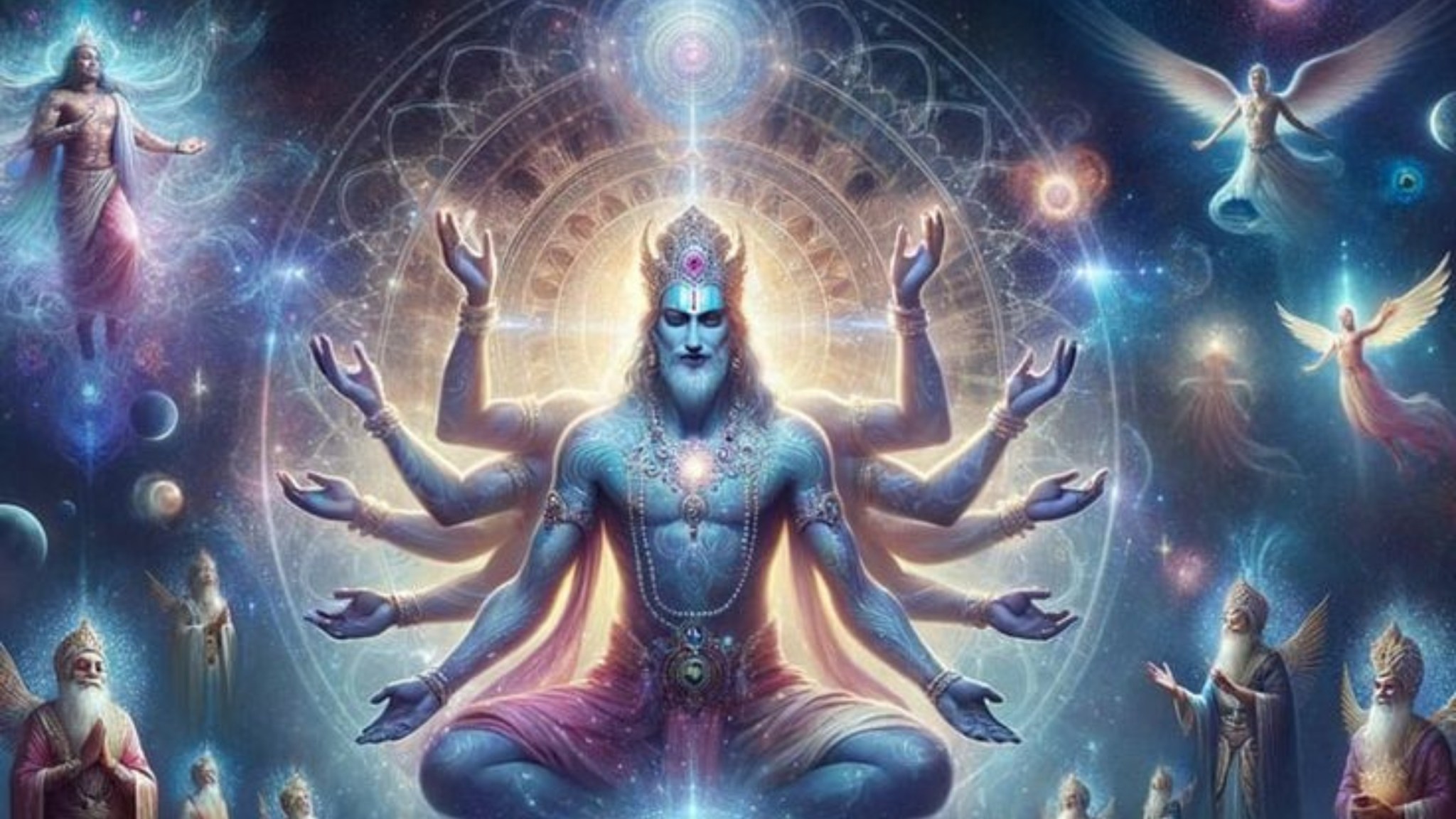
A: The text teaches that Shiva and Vishnu are not separate entities but are intimately united — Vishnu is described as the “heart of Shiva” and Shiva as the “heart of Vishnu.” This metaphor shows the essential unity of divine forms in the supreme Brahman. Click Here To Access.
7. Q: What does the Upanishad say about the body and the Self?
A: It describes the body as a temple and the Self (Atman) as the divine presence (Shiva) dwelling within it. The seeker is encouraged to see inner divinity, not just external rituals or forms.
8. Q: How does the text explain bondage and freedom?
A: It uses a metaphor of paddy and rice: when covered by the husk (symbolizing karma and ignorance), the jiva (individual soul) appears limited; when the husk is removed, what remains is pure rice — symbolizing the free, liberated Self once ignorance and karma are gone.
9. Q: What is meant by “internal organs” concealing truth?
A: The Upanishad explains that the internal organs of perception and mind, when unrefined, hide the supreme reality. When these are purified and their distractions removed, only pure samvit (consciousness) remains, revealing Brahman. Click Here To Access.
10. Q: What is samvit in the context of this Upanishad?
A: Samvit means pure consciousness or awareness — the indivisible, unbounded reality underlying all experience. The Upanishad identifies Brahman as samvit, and the knower of Brahman is also samvit.
11. Q: What advice does the Upanishad give about worship?
A: It suggests that true worship is inner devotion — seeing oneself as not different from Brahman and worshipping the Self within rather than relying only on outward offerings or rituals.
12. Q: What is the role of meditation in this teaching?
A: Meditation serves to free the mind from sensory distractions, helping the seeker see the Self directly, beyond conditioned perceptions. This inner focus brings clarity, insight, and eventual liberation.
13. Q: How are karma and liberation related here?
A: The Upanishad implies that when karmic bonds are destroyed or transcended through knowledge and self-realization, the soul returns to its natural state as Sadashiva — the forever free, unchanging consciousness. Click Here To Access.
14. Q: What does the text say about duality?
A: It rejects duality by declaring that all gods — Shiva, Vishnu, and even the soul (jiva) — are ultimately non-different from Brahman, the supreme reality. This radically non-dual vision points to unity beyond appearances.
15. Q: What does Skanda identify as the “light of lights”?
A: The Upanishad identifies Brahman — the supreme consciousness that illumines all else — as the “light of lights,” a symbol for the ultimate reality beyond all forms and names.
16. Q: How does the Upanishad address the seeker’s conduct?
A: It encourages seekers to practice inner purity, withdrawal from illusions of ignorance, and focus on the non-dual Self even while performing ordinary life activities. The wise live detached from dualistic attachments. Click Here To Access.
17. Q: What does “drink the nectar of Brahman” mean?
A: It metaphorically means to immerse oneself in the continuous awareness of Brahman, experiencing eternal bliss and freedom from sorrow and limitations.
18. Q: What does the Upanishad teach about the world of names and forms?
A: The world of forms — names, shapes, and appearances — is regarded as impermanent and not the ultimate reality. Only Brahman, the pure consciousness beyond name and form, is the eternal truth.

19. Q: What is the goal of Self-realization according to this text?
A: The goal is for the seeker to realize the identity of one’s own Self with Brahman, dissolving the illusion of separateness and abiding in unchanging awareness and eternal peace. Click Here To Access.
20. Q: What is the final message of the Skanda Upanishad?
A: Its essence is the non-dual oneness of Brahman, the supreme reality that transcends all duality, forms, and names. It teaches that liberation comes from seeing the inner divine nature within oneself and all beings, realizing that Shiva, Vishnu, Atman, and Brahman are one and the same.
Summary in Simple Life Terms
The Skanda Upanishad teaches that all divine forms — Shiva, Vishnu, and the individual soul — are expressions of one supreme consciousness (Brahman). True liberation is not attained through rituals or external worship alone but through self-knowledge, inner purity, and non-dual realization of your own divine nature.