Introduction
The Chandogya Upanishad is one of the principal or Mukhya Upanishads, belonging to the Chandogya Brahmana of the Sama Veda. It is the longest of all the Upanishads, consisting of eight chapters (adhyayas) that are embedded in the first part of the Brahmana, which primarily deals with ritual sacrifices. Moving beyond these external rites, the Upanishad gradually unfolds deeper metaphysical and philosophical teachings that emphasize inner realization over outward ritual. Among its most celebrated insights is the mahāvākya “tat tvam asi” (“That thou art” or “You are That”), a profound declaration regarded as the very essence of the Sama Veda, affirming the unity of the individual self with the ultimate reality, Brahman. Click Here To More Detail.
Themes
Based on the summary in that PDF, the main themes of Chandogya Upanishad are:
- Tat Tvam Asi – The identity of the individual Self (Atman) with the universal Brahman; realization of unity.
- Stories of seekers and teachers – e.g. the story of Satyakama Jabala, a boy born to a maidservant, who is recognized as a brahmana because of his honesty and truthfulness.
- Symbolism of Ritual – The Upanishad explains how rituals, fire sacrifices, mantras, etc., relate to inner aspects of the human being (life energy, senses, sounds, etc.) rather than being merely external rites.
- Role of Knowledge and Truthfulness – Emphasis on truth (satyam), the correct knowledge of Brahman, inner purification, and the role of the guru.
- Cosmic Creation and the Elements – Explanation of how from Brahman arises fire, water, vegetation, human beings etc. Also the interplay of the subtle and the gross, of sound and life force (prana), and the microcosm/macrocosm analogy.
- Practice, Meditation, Brahmacharya – The Upanishad teaches that conduct (especially brahmacharya), meditation (on Om, etc.), and seeing the divine in all (even in ordinary aspects of life) are essential for realizing Brahman. Click Here To Chandogya Upanishad.

How to Study It
Here are suggested steps for studying Chandogya Upanishad so as to get both intellectual understanding and experiential insight:
Read multiple translations + commentary
- Pick good translations in a language you are comfortable with; also find commentaries by teachers/traditions you resonate with (Advaita, Vishishtadvaita, etc.).
- If possible, study in the original Sanskrit for key mahāvākyas, mantras, and verses (even word by word) to catch nuanced meanings.
Understand ritual context
-
- Since the Upanishad comes from the Brahmana, rituals and sacrificial forms are important. Look at what those rituals meant in Vedic culture and how the Upanishad interprets them symbolically.
Focus on key dialogues / narratives
-
- E.g. Satyakama Jabala, Svetaketu and Uddalaka Aruni; such stories are not just illustrative but carry deep lessons about virtue, inquiry, and realization.
Identify philosophical doctrines
- Atman-Brahman identity, the means to knowledge (jnana), truth (satyam), the role of vedic sound/mantra/Om, the five elements, prana, etc.
- Observe how the text transitions from external rites to internal realization.
Meditative / contemplative practice
- Reflect on mahāvākya tat tvam asi.
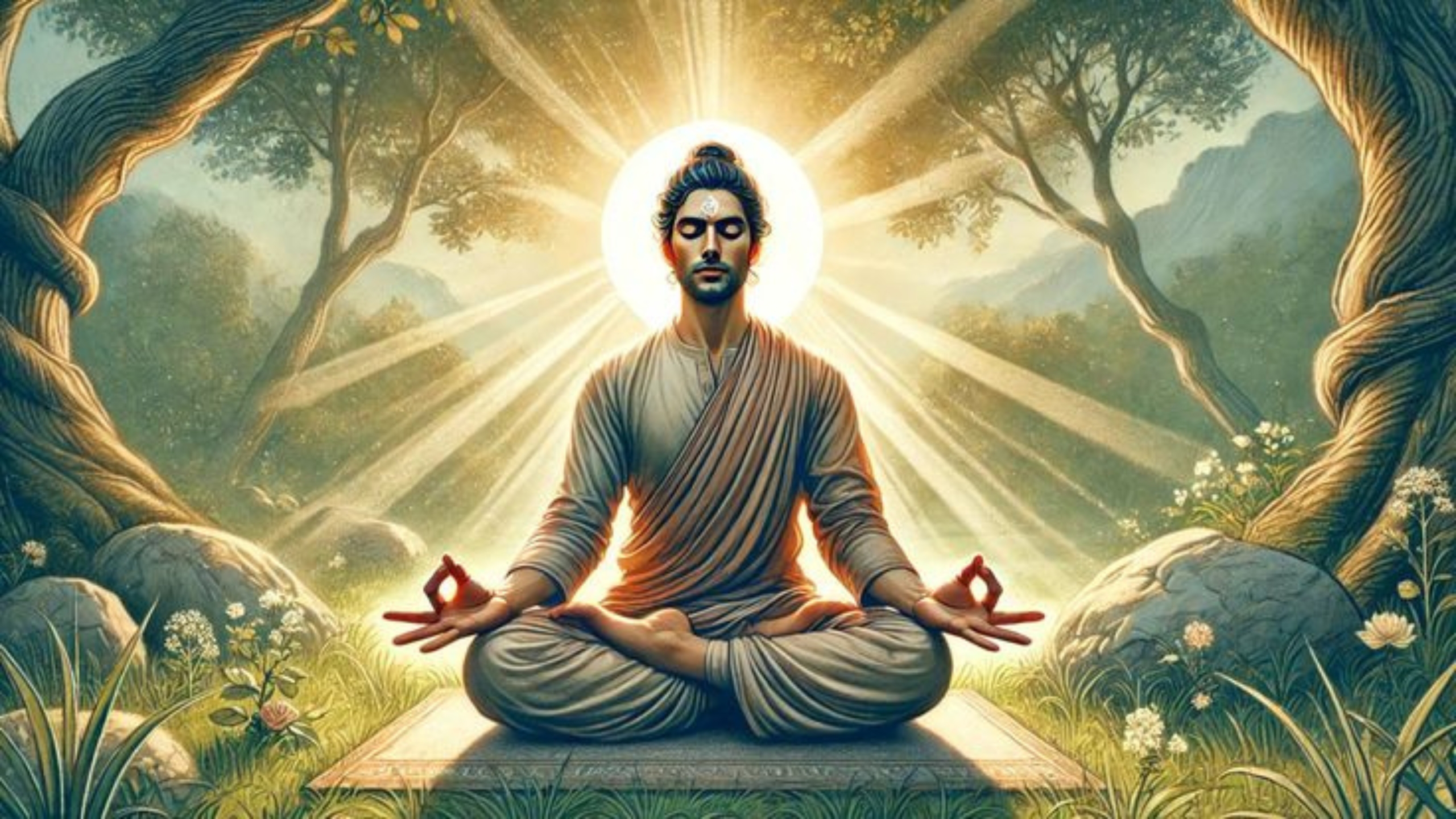
- Meditate on Om, the nature of self, etc.
- Internalize the teaching that ordinary elements (fire, water, speech, etc.) can be paths to realizing Brahman.
Compare with other Upanishads / later Vedanta
-
- For example, compare with Brihadaranyaka Upanishad’s aham brahmasmi; compare how different Upanishads treat the Self, liberation, etc.
Apply ethically / practically
-
- See how truthfulness, integrity, and ethical conduct are not “add-ons” but integral to the spiritual life in this Upanishad. Click Here To Chandogya Upanishad.
Why Study It
Reasons why Chandogya Upanishad is especially important and valuable:
- It is rich in depth and breadth: among the longest, many stories and teachings, symbolic and philosophical layers.
- The teaching tat tvam asi is central to many Vedantic paths; understanding it deeply helps one dissolve the sense of separation and realize one’s true nature.
- The Upanishad weaves together ritual, myth, philosophy, metaphysics, and practice — so it helps one see how doctrine and lived life are connected.
- It cultivates moral/ethical virtues (truthfulness, humility, earnestness of seeking) through stories and examples.
- It offers insight into the nature of knowledge, consciousness, the world, and the self — which are evergreen questions for philosophy, comparative religion, and personal spiritual growth.
- Helps in inner transformation: moving from superficial religiosity to internalization of the teachings. Click Here To Chandogya Upanishad.
Conclusion
Chandogya Upanishad stands as a profound and foundational text in the Vedantic tradition. Rooted in the ritualistic background of the Sama Veda, it journeys inward — through narrative, symbolism, dialogue, and meditation — toward the realization that the individual Self is not separate but is of the same essence as Brahman. Its teachings such as tat tvam asi are not mere statements but invitations to recognize and live the unity of all existence. Studying it with attention to both its symbolic depth and practical application can guide one from ignorance to insight, from external ritual to inner freedom, from the sense of “I” limited to body and mind to an awareness of one’s true self.
Join Our Classes:
The Upanishads are more than just ancient texts—they are timeless guides to living with clarity, balance, and inner peace. Our classes make their profound wisdom easy to understand and apply in everyday life. Join us to explore these teachings and discover a new way of seeing yourself and the world!