Introduction
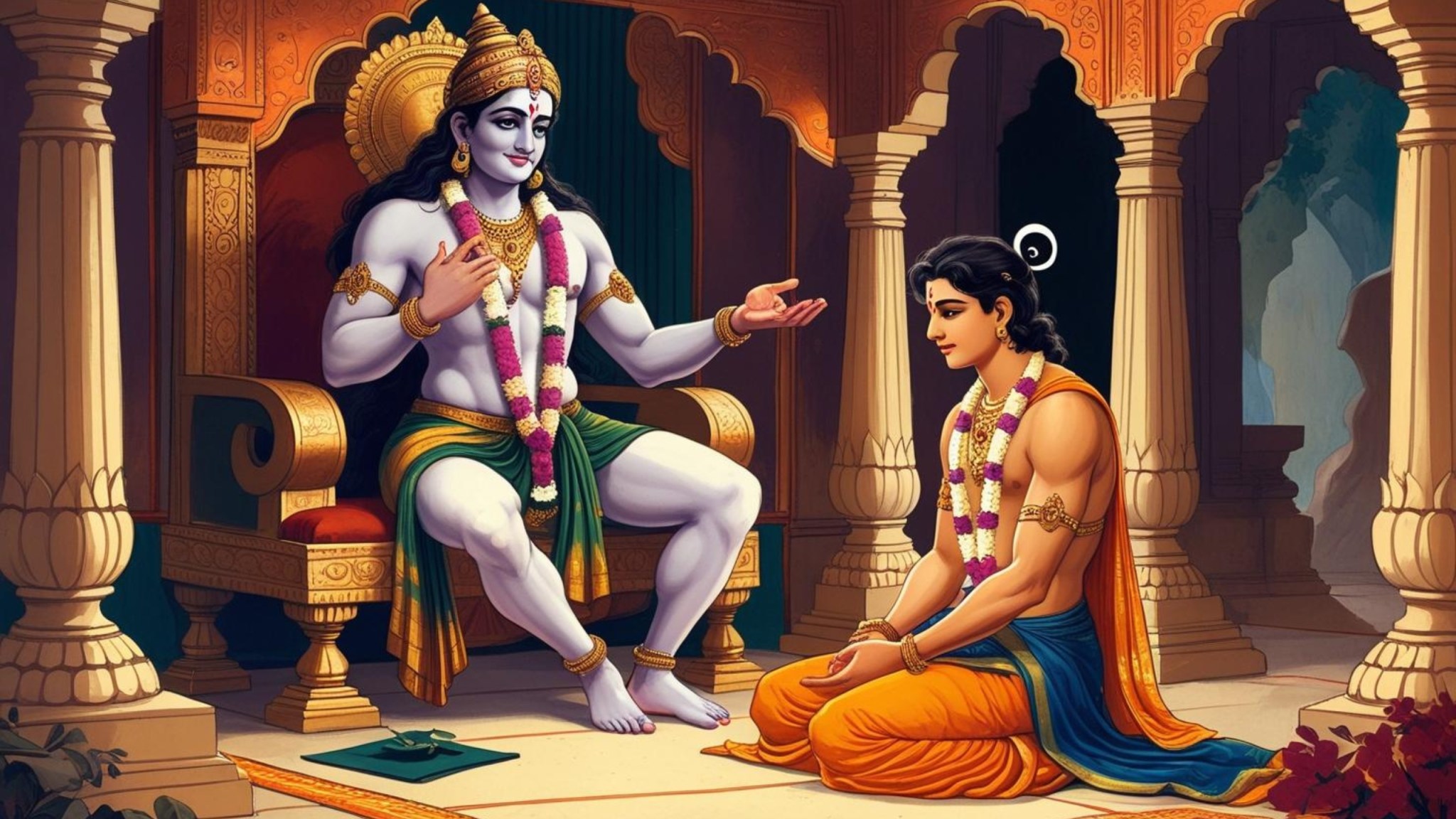
The Śvetāśvatara Upanishad is one of the principal Upanishads and is associated with the Krishna Yajurveda. It is unique in its devotional tone and philosophical synthesis, often regarded as the first Upanishad to explicitly introduce a personal aspect of the divine along with the impersonal Brahman. The text derives its name from the sage Śvetāśvatara, who is traditionally credited as its teacher. Composed in poetic verses, it consists of six chapters (adhyāyas) and around 113 mantras. The Upanishad explores deep questions about the origin of the universe, the nature of the Self, the role of time, karma, and the divine, and emphasizes meditation and devotion as paths to realization. Unlike purely monistic texts, it bridges philosophy with theism, presenting Brahman both as the impersonal Absolute and as a personal God (Īśvara). Click Here To More Detail.

Themes
From the summary in the text, here are the main themes of the Śvetāśvatara Upanishad:
The Cause of the Universe
It examines the origin of creation, rejecting chance, time, and matter as ultimate causes, and concludes that Brahman/Īśvara is the supreme source and sustainer of all.
The Unity of Brahman and Ātman
The Upanishad teaches that the Self (Ātman) is one with the supreme Brahman, and realizing this unity leads to liberation (mokṣa).
Personal God and Devotion
Distinctively, it presents a personal aspect of the divine — Rudra or Śiva is described as the supreme deity, the inner controller of all beings, and the ultimate refuge. This devotional emphasis foreshadows later theistic traditions.
Yoga and Meditation
The text emphasizes the discipline of yoga — meditation, concentration, control of senses, and purification of the mind — as the means to attain knowledge of the Self and union with Brahman.
Knowledge and Liberation
It highlights that true knowledge of Brahman destroys ignorance (avidyā) and bondage, leading the soul beyond birth and death into immortality. Click Here To Svetasvatara Upanishad.

How to Study It
To study the Śvetāśvatara Upanishad effectively, here are some steps:
Read multiple commentaries
Compare Advaita Vedānta, Shaiva, and Bhakti interpretations to see how the text has been understood differently.
Reflect on cosmological questions
Study how the Upanishad addresses the origin of the universe and how it points to a divine principle as the source.
Practice meditative verses
Use passages on yoga and inner discipline as guides for meditation and self-control.
Compare with other Upanishads
Contrast its devotional and theistic elements with the more impersonal focus of texts like the Mandukya or Kena.
Apply its ethical-spiritual vision
Cultivate devotion, humility, discipline, and the recognition of Brahman in all beings. Click Here To Svetasvatara Upanishad.
Why Study It
Studying the Śvetāśvatara Upanishad is valuable because:
- It introduces a harmonious blend of philosophy, meditation, and devotion.
- It presents a theistic interpretation of Brahman, laying foundations for later Shaiva, Vedānta, and Bhakti traditions.
- It emphasizes yoga as a practical path to realization, influencing both Hindu and later yogic philosophies.
- Spiritually, it inspires both devotion and self-discipline, balancing personal God-consciousness with non-dual insight.
- Philosophically, it deepens our understanding of the relationship between cause, soul, and the ultimate reality. Click Here To Svetasvatara Upanishad.
Conclusion
The Śvetāśvatara Upanishad is a profound synthesis of philosophical inquiry, yogic discipline, and devotional theism. While affirming the unity of Ātman and Brahman, it uniquely emphasizes a personal God as the source and sustainer of the cosmos. It integrates action, meditation, and devotion into a comprehensive spiritual vision. By guiding the seeker to see Brahman both as transcendent and immanent, impersonal and personal, it offers a holistic path toward liberation. Its enduring message is that through knowledge, yoga, and devotion, one can realize the divine presence within and beyond all.
Join Our Classes:
The Upanishads are more than just ancient texts—they are timeless guides to living with clarity, balance, and inner peace. Our classes make their profound wisdom easy to understand and apply in everyday life. Join us to explore these teachings and discover a new way of seeing yourself and the world!