Overview of Brahmanda Valli
Brahmanda Valli, the second chapter of the Taittiriya Upanishad, delves into the nature of the universe and the Self, guiding the seeker from outer observances to inner realization. It emphasizes that the ultimate reality, Brahman, pervades all creation and is the source, sustainer, and goal of everything. This section introduces the Panca Kosha Viveka—the five sheaths of human existence (annamaya, pranamaya, manomaya, vijnanamaya, anandamaya)—which serve as a framework for understanding the layers of the self. Through meditation, reflection, and ethical conduct, one progresses from the gross material world to subtle mind and intellect, finally reaching the blissful sheath that reflects the eternal Self. The chapter stresses that realization of Brahman brings liberation, peace, and fulfillment of all desires. Brahmanda Valli thus bridges practical disciplines with the deeper knowledge of the Self, preparing the seeker for direct experience of the ultimate reality. For More Information Click Here
Theme and Teachings of Brahmanda Valli
The central theme of Brahmanda Valli is the understanding of the Self through the study of the universe and the five sheaths of existence. It teaches that Brahman, the ultimate reality, is both immanent and transcendent, pervading all creation while remaining beyond it. The Upanishad emphasizes self-inquiry, guiding the seeker to recognize the layers of existence—from the physical body (annamaya) to the blissful essence (anandamaya)—as progressively subtler reflections of the Self. Ethical living, meditation, and discernment help purify the mind, making it capable of perceiving the unity behind apparent multiplicity. The chapter also highlights that true fulfillment comes not from external wealth or sensory pleasures but from realizing the eternal, blissful nature of Brahman within. Brahmanda Valli thus bridges the preparatory disciplines of Siksa Valli with the inner journey toward self-realization and liberation.
Verse-by-Verse Summary of Brahmanda Valli
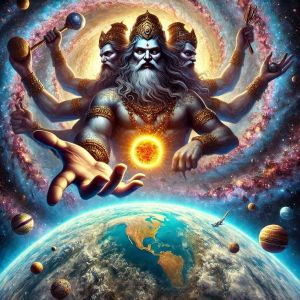
Anuvaka 1 – Brahman is described as the ultimate source of creation, sustenance, and dissolution; all beings originate, exist, and return to it.
Anuvaka 2 – The seeker is taught that understanding the Self is the highest goal, beyond material possessions or sensory pleasures.
Anuvaka 3 – Introduces the Panca Kosha (five sheaths) model: gross body (annamaya), life-force (pranamaya), mind (manomaya), intellect (vijnanamaya), and bliss (anandamaya).
Anuvaka 4 – Guidance on meditation and reflection: by discerning the layers of the self, the seeker progresses from the gross to the subtle.
Anuvaka 5 – Ethical conduct and discipline are emphasized as prerequisites for perceiving the unity of the Self within the sheaths.
Anuvaka 6 – Illustrates how the subtle sheath of intellect (vijnanamaya) enables recognition of Brahman through wisdom and discrimination.
Anuvaka 7 – The bliss sheath (anandamaya) is introduced as the closest reflection of the eternal Self; experiencing it leads to inner joy and contentment.
Anuvaka 8 – Meditation on Om and the unity of all beings reinforces the non-dual nature of reality, dissolving fear and attachment.
Anuvaka 9 – Concludes that realization of Brahman through understanding and meditation brings liberation, peace, and fulfillment; the seeker merges with the ultimate reality. For More Information Click Here

Shankaracharya’s Insights on Brahmanda Valli
According to Adi Shankaracharya, Brahmanda Valli teaches that true knowledge arises from understanding the unity of the Self and the universe. He explains that the five sheaths (Panca Kosha) represent layers of human existence, with the outer sheaths being gross and the inner sheaths progressively subtler, culminating in the blissful anandamaya kosa, which reflects the eternal Self. Shankaracharya emphasizes that meditation, ethical living, and self-discipline purify the mind, making it capable of realizing Brahman. He interprets the Upanishad’s guidance to discern the Self in all layers as a method to transcend identification with body, life-force, mind, and intellect. The meditation on Om and recognition of Brahman in all beings are seen as practical tools to remove ignorance, fear, and attachment. Ultimately, Shankaracharya highlights that Brahmanda Valli bridges preparatory practices with direct realization, showing that knowledge, bliss, and liberation are inherent in understanding one’s own Self. For More Information Click Here
Conclusion of Brahmanda Valli
Brahmanda Valli emphasizes the transition from external discipline to inner realization, guiding the seeker to understand the Self through the universe and the five sheaths of existence. It teaches that Brahman, the ultimate reality, pervades all layers of life—from the gross body to the blissful essence—and that true fulfillment comes from recognizing this unity. Meditation, ethical living, and discernment help purify the mind, making it fit for perceiving the eternal Self. Shankaracharya highlights that this chapter bridges preparatory practices with direct knowledge, showing that liberation, inner peace, and bliss are attained by realizing one’s inherent identity with Brahman. In essence, Brahmanda Valli prepares the seeker to transcend the material and mental planes, moving steadily toward ultimate self-realization.
Join Our Classes:
The Upanishads are more than just ancient texts—they are timeless guides to living with clarity, balance, and inner peace. Our classes make their profound wisdom easy to understand and apply in everyday life. Join us to explore these teachings and discover a new way of seeing yourself and the world!