Introduction
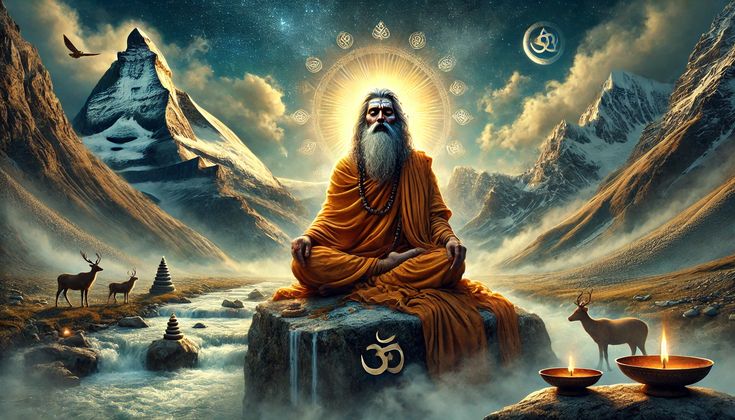
This mantra from the Katha Upanishad (second chapter, first section, fourth mantra) carries profound insights from Lord Yama, the divine teacher of death, who reveals the eternal truth of the Self (Atma). It emphasizes that our real identity is not the body, mind, or ego, but the witnessing consciousness (sakshi) that observes the three states of waking, dreaming, and deep sleep. While the body and mind are transient and perishable, the Atma is unborn, immortal, changeless, and self-luminous. The teaching clarifies that our ordinary identity (“aamar” or reflected consciousness tied to ego) must transcend its limitations to recognize the original consciousness (Atma) — the divine light present in all beings. This realization brings liberation (moksha), freedom from grief, and an abiding sense of peace. Meditation on this mantra allows practitioners to detach from false identifications and abide in their true, eternal nature. Click Here To More Detail.

Themes
Witnessing Consciousness (Sakshi)
- The Atma is the impartial observer of waking, dream, and deep sleep.
- It is untouched by experiences yet enables them to occur.
Distinction Between Reflected and Original Consciousness
- The ego-based self (“aamar”) is temporary and bound to body-mind.
- The original Atma is eternal, beyond change and mortality.
Atma as Spiritual Light
- Consciousness is self-luminous, illuminating all mental and sensory experiences.
- It is the source of awareness, requiring no external proof.
Inert Nature of Mind and Senses
- Mind and senses function only because of Atma’s illumination.
- By themselves, they are powerless and impermanent.
Freedom from Grief and Desire
- Desires and sorrows arise from ignorance and limitation.
- Realization of Atma dissolves ignorance, leading to inner equanimity.
Atma as Individual and Universal Self
- The same consciousness exists in the smallest ant and the entire cosmos.
- Atma = Brahman, pointing to non-duality and interconnectedness.
Meditation as a Path to Realization
- Meditation on Atma shifts awareness from ego to witness.
- Practice leads to peace, self-knowledge, and liberation. Click To Access For Video.

Keywords
- Atma: The eternal, unchanging Self.
- Sakshi: Witness consciousness.
- Ahamkara (Ego): False identification with body-mind.
- Aamar: Reflected, limited consciousness tied to the body.
- Brahman: The Supreme Consciousness, identical with Atma.
- Jagrat: Waking state.
- Swapna: Dream state.
- Sushupti: Deep sleep state.
- Moksha: Liberation through Self-realization.
Why Study
- To understand the difference between ego-based identity and the eternal Self.
- To learn how consciousness is the unchanging witness behind experiences.
- To overcome ignorance, desires, and suffering by realizing the higher Self.
- To practice meditation based on Upanishadic wisdom, not just rituals.
- To live fearlessly by knowing the Self is unborn and immortal. Click To Access For Video.
Benefits
- Freedom from Ignorance – Clarity about the true nature of self.
- Liberation from Fear of Death – Atma is immortal, beyond birth and death.
- Inner Peace – Identifying with Atma ends the cycle of grief and craving.
- Spiritual Strength – Knowledge of the eternal Self gives stability.
- Emotional Equanimity – Reduces attachment to transient body-mind experiences.
- Universal Love – Awareness of Atma as universal fosters compassion and unity.
- Self-Realization – Leads to moksha, the ultimate goal of human life.
How Many Times to Study/Practice Daily
- Beginners – Once daily (10–15 minutes): Read the mantra, reflect on the witness (sakshi) behind your thoughts.
- Intermediate – Twice daily (morning & evening, 20–30 minutes): Chant, meditate, and contemplate Atma as light.
- Advanced – Three times daily (sunrise, midday, evening; 30+ minutes): Meditate deeply on the three states (waking, dream, deep sleep) and recognize the unchanging witness in all.
👉 The key is not duration but awareness and sincerity. Each practice deepens detachment from ego and strengthens identification with the Self. Click To Access For Video.
Conclusion
The fourth mantra of the Katha Upanishad reveals the profound truth that the Atma is the eternal witness (sakshi) of all experiences. Unlike the body and mind that are ever-changing, the Atma is immortal, unborn, and self-luminous. By distinguishing between the false self (ego and reflected consciousness) and the true Self (Atma), practitioners move beyond grief, ignorance, and desire.
Through meditation and contemplation, one internalizes this teaching and abides in the serene, auspicious nature of the Self. This realization unites the individual with the universal, dissolving all illusions of separateness.