The Path of Renunciation and Self-Realization in Advaita Vedanta
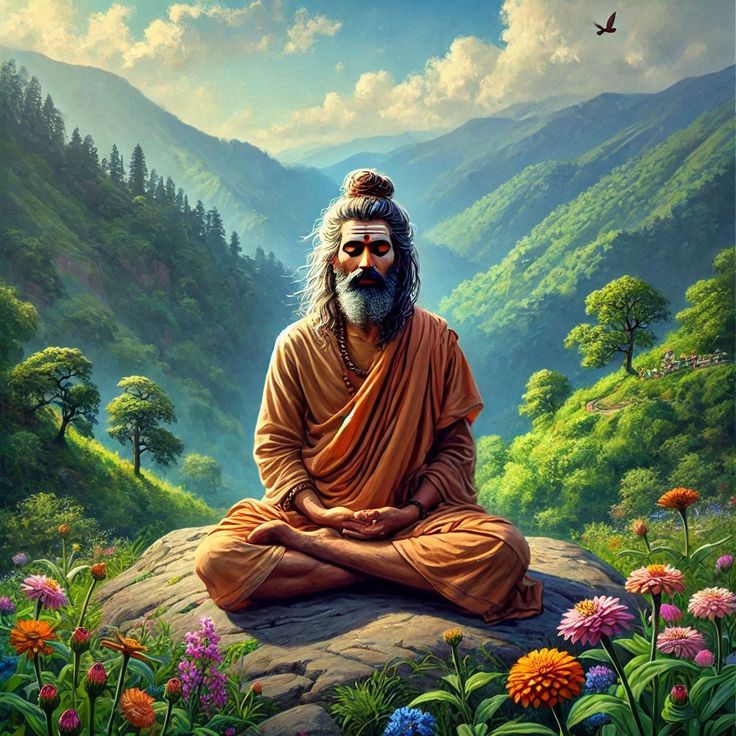
The Yajnavalkya Upanishad expounds the essence of Advaita Vedanta through the teachings of Sage Yajnavalkya, emphasizing renunciation and inner realization as the means to liberation. It teaches that the Self (Atman) is eternal, formless, and identical with Brahman, untouched by body, mind, or sensory experience. The text rejects dependence on rituals and external practices, asserting that true knowledge arises from discrimination between the real and the unreal. It highlights vairagya, or inner detachment, as essential for freedom while living in the world. Liberation is presented as direct experiential realization of one’s true nature through wisdom and inner stillness. Thus, the Upanishad guides seekers toward non-dual awareness and lasting freedom through self-knowledge. For More Information Click Here

From Renunciation to Liberation: The Fourfold Teaching of the Yajnavalkya Upanishad
The Yajnavalkya Upanishad contains four chapters, with a total of about 101 verses (the exact count may vary slightly across manuscripts). The Upanishad is structured to guide a seeker step-by-step from renunciation to complete Self-realization.
- Chapter 1 explains the nature and discipline of sannyasa (renunciation), stressing withdrawal from ritualism, ego, and worldly identity as the foundation for spiritual pursuit.
- Chapter 2 focuses on knowledge of the Self, clearly distinguishing the imperishable Atman from the body, senses, and mind, and asserting its oneness with Brahman.
- Chapter 3 describes the Absolute Self, emphasizing non-duality, formlessness, and the transcendence of all opposites such as birth and death, bondage and freedom.
- Chapter 4 presents the state of the liberated sage, portraying one who abides in pure awareness, free from fear, desire, and rebirth.
Together, the four chapters form a coherent Advaitic teaching that moves from outer renunciation to inner realization and culminates in steadfast liberation through Self-knowledge.
Key Verses on Renunciation, Self-Knowledge, and Liberation
- Verse : “The Self is neither born nor does it die; it does not grow, decay, or perish. Knowing this Self, the wise one is freed from sorrow.”
- Meaning : This verse affirms the eternal and changeless nature of the Atman.
- Verse : “That which is beyond name, form, and action—unseen, ungraspable, and pure—is the Supreme Reality.”
- Meaning : It emphasizes Brahman as formless and beyond sensory perception.
- Verse : “He who sees the Self in all beings and all beings in the Self attains supreme peace.”
- Meaning : This highlights non-dual vision as the mark of realization.
- Verse : “Renunciation is not abandoning actions alone, but abandoning the sense of ‘I’ and ‘mine.’”
- Meaning : A key teaching on inner detachment rather than external withdrawal.
- Verse : “The knower of the Self remains unaffected by pleasure and pain, honor and dishonor, just as space remains untouched.”
- Meaning : This describes the state of the liberated sage (jivanmukta).
These verses collectively reflect the Upanishad’s core themes: Advaita (non-duality), renunciation, Self-knowledge, and liberation through direct realization. For More Information Click Here
Self-Knowledge and Inner Renunciation as the Path to Liberation
The core teaching of the Yajnavalkya Upanishad is that liberation arises through direct knowledge of the Self, not through rituals or external practices. It declares the Atman to be eternal, formless, and identical with Brahman, beyond body, mind, and senses. The Upanishad emphasizes renunciation as inner detachment from ego and possessiveness rather than mere outward abandonment. Discrimination between the real and the unreal is presented as essential for true wisdom. One who realizes the Self remains unaffected by pleasure and pain, honor and dishonor. Thus, the text firmly establishes non-dual awareness as the path to lasting freedom.

Shankaracharya’s Advaitic Interpretation of the Yajnavalkya Upanishad
Shankaracharya views the Yajnavalkya Upanishad as a clear exposition of pure Advaita, emphasizing jnana alone as the means to liberation. He highlights its strong rejection of ritualism when pursued without Self-knowledge. According to him, renunciation taught here is internal—giving up ego, doership, and identification with the body. The Upanishad’s description of the Self as formless and actionless aligns fully with Shankara’s nirguna Brahman doctrine. He interprets its teachings as guidance for sannyasins who seek direct realization rather than gradual practice. The realized sage described in the text exemplifies jivanmukti—liberation while living. Thus, Shankara sees the Upanishad as a concise manual of non-dual realization through Self-knowledge alone. For More Information Click Here
Conclusion
The Yajnavalkya Upanishad stands as a profound exposition of Advaita Vedanta, guiding seekers from renunciation to direct Self-realization. It consistently teaches that freedom is attained not through rituals or external observances, but through knowledge of the formless, eternal Self. By emphasizing inner detachment, discrimination, and non-dual awareness, the text offers a clear spiritual path for earnest aspirants. Shankaracharya’s insights further illuminate its message, affirming jnana as the sole means to liberation. Ultimately, the Upanishad leads the seeker to abiding peace through realization of the oneness of Atman and Brahman.
Join Our Classes:
The Upanishads are more than just ancient texts—they are timeless guides to living with clarity, balance, and inner peace. Our classes make their profound wisdom easy to understand and apply in everyday life. Join us to explore these teachings and discover a new way of seeing yourself and the world!