Raja Yoga and Kundalini Awakening as the Path to Self-Realization
The Yoga Chudamani Upanishad presents a comprehensive yogic path aimed at attaining Self-realization through disciplined practice and inner awakening. It emphasizes Raja Yoga, integrating ethical discipline, posture, breath control, and meditation. The Upanishad teaches that control of prana and mind leads to mastery over the senses and inner purification. It highlights the role of kundalini and the subtle nadis in spiritual ascent. Liberation is described as the union of individual consciousness with supreme awareness. Ultimately, the text affirms that steady yogic practice culminates in non-dual realization of the Self. For More Information Click Here

Sama Veda’s Yoga Chudamani Upanishad: Raja Yoga and Kundalini Ascent to Self-Realization
The Yoga Chudamani Upanishad is a Yogic Upanishad traditionally associated with the Sama veda. It consists of a single chapter containing approximately 121 verses (minor variations may exist across manuscripts). The Upanishad presents a continuous instruction on Raja Yoga and spiritual awakening, integrating ethical, physical, and meditative disciplines. The chapter progresses systematically: it begins with ethical discipline (yama and niyama) and proper posture (asana) for meditation, then explains breath control (pranayama) and mastery over the mind and senses. It elaborates on the awakening and ascent of kundalini energy through the subtle nadis and cakras, culminating in inner illumination. The Upanishad concludes with Self-realization, describing liberation as the union of individual consciousness with supreme awareness. In essence, the single chapter integrates preparation, practice, and the ultimate goal of yogic sadhana.

Key Verses on Ethical Discipline, Kundalini Awakening, and Self-Realization
- On ethical preparation: “One who observes yama and niyama, and maintains purity of body and mind, lays the foundation for meditation.”
- Meaning: Moral discipline and inner purity are essential for successful yogic practice.
- On posture (asana): “Sitting steadily in a firm posture, the yogi fixes the mind inward and ceases distraction.”
- Meaning: Physical stability supports mental concentration and inward focus.
- On breath control (pranayama): “By regulating the prana, the mind becomes tranquil and the senses come under control.”
- Meaning: Mastery over breath leads to control of the mind and sensory impulses.
- On kundalini awakening: “The dormant kundalini rises through the nadis, illuminating the chakras and awakening inner consciousness.”
- Meaning: Spiritual energy ascends the subtle channels, purifying and illuminating the mind and awareness.
- On meditation and concentration: “Fixing the mind on the inner light, the yogi attains steadiness and transcends dualities.”
- Meaning: Meditation on the inner Self leads to equanimity and realization of non-duality.
- On liberation: “By merging the individual consciousness with the supreme Self, one attains freedom beyond birth and death.”
- Meaning: The ultimate goal of yoga is union with Brahman, resulting in liberation (moksa).
These verses encapsulate the core yogic path of preparation, practice, energy awakening, meditation, and Self-realization. For More Information Click Here
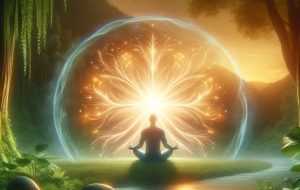
Mastery of Mind, Kundalini Awakening, and Union with the Supreme Self
The Yoga Chudamani Upanishad teaches that liberation is attained through disciplined yogic practice combining ethical conduct, posture, breath control, and meditation. It emphasizes mastery over the mind and senses as essential for spiritual progress. The text highlights the awakening of kundalini energy and its ascent through the subtle nadis and chakras to illuminate consciousness. Meditation on the inner Self leads to steady awareness and transcendence of dualities. True sadhana integrates inner purification, concentration, and energy control to prepare for realization. Ultimately, the Upanishad affirms that union with the supreme Self brings liberation from all bondage. For More Information Click Here

Conclusion
The Yoga Chudamani Upanishad concludes by presenting a complete roadmap for spiritual liberation through Raja Yoga. It integrates ethical discipline, mastery over the body and breath, meditation, and the awakening of kundalini energy as essential steps. The Upanishad emphasizes that inner purification, control of the mind and senses, and steady focus on the Self lead to the dissolution of dualities. Liberation is achieved when individual consciousness merges with the supreme, non-dual reality. In essence, the text highlights that consistent yogic practice culminates in Self-realization and ultimate freedom.
Join Our Classes:
The Upanishads are more than just ancient texts—they are timeless guides to living with clarity, balance, and inner peace. Our classes make their profound wisdom easy to understand and apply in everyday life. Join us to explore these teachings and discover a new way of seeing yourself and the world!