Introduction
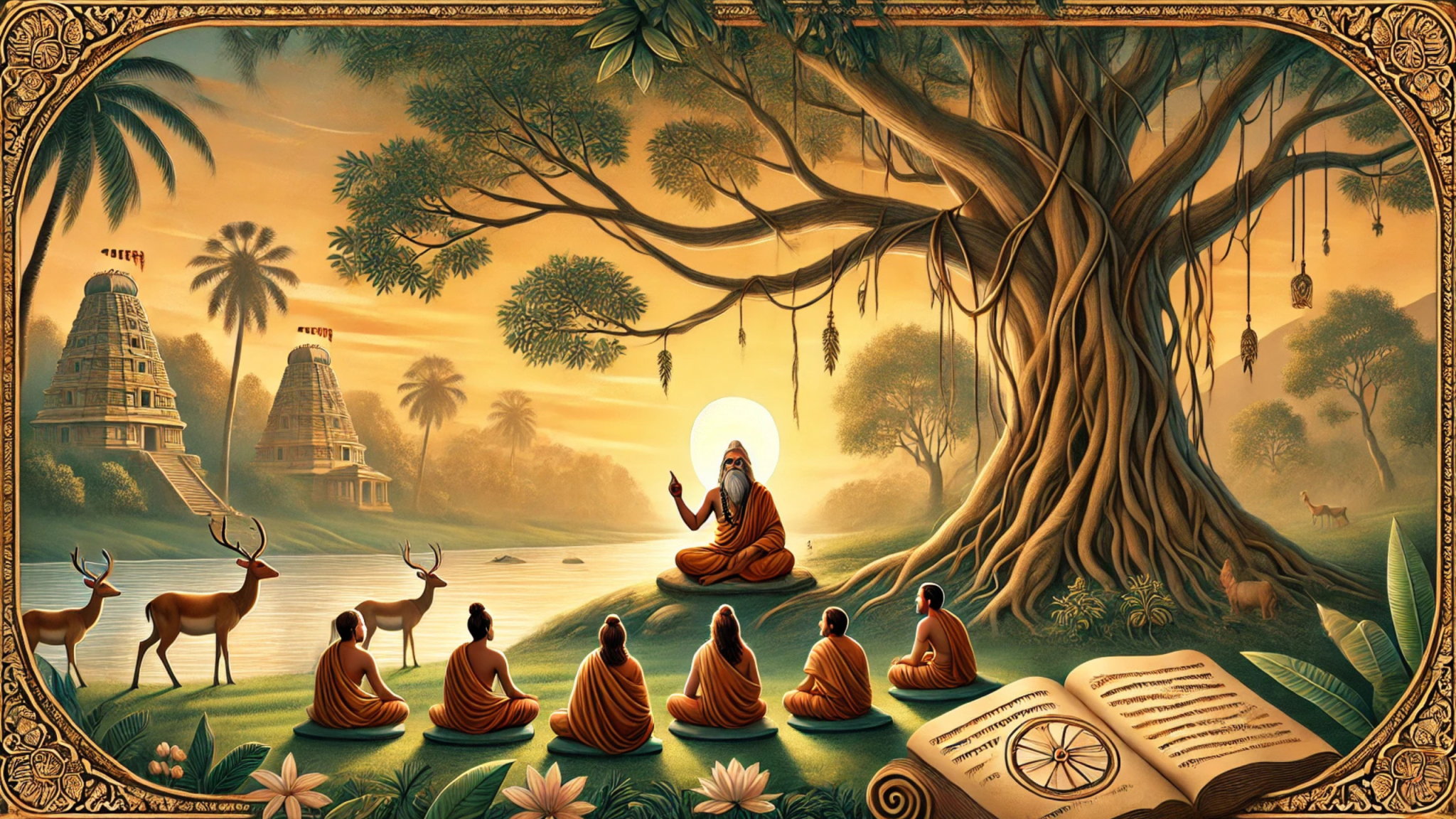
Vichāra Sāgara—“Ocean of Enquiry”—Volume 9 is a collection of structured satsanga-style dialogues and contemplative pointers, crafted for seekers mature in Śravaṇa–Manana (scriptural hearing and inquiry). Rather than analytic debate (tarqa) alone, this volume emphasizes Pūjita-vichāra—inquiry done with devotion and humility—inviting the aspirant to dwell in nididhyāsana, the deep absorption of Self-truth. It aligns with the Advaitic mahāvākya: “Aham Brahmāsmi”, urging internalization over intellectual argument Click Here To Access more other text.

Purpose of Study
This volume is intended for seekers who:
- Have systematically practiced śravaṇa and manana in prior chapters.
- Wish to cultivate devotion (bhakti) alongside purity of intellect (śraddhā) in their Vichāra practice.
- Seek to exit conceptual confusion by merging inquiry with heartfelt trust.
- Want to transition from knowing about Brahman to being as Brahman.
Recommended Study Method
Read with Guidance
Study under a teacher or with commentary—preferably one emphasizing devotional enquiry. Focus on understanding, not just memorizing Vedanta Students.
Reflect and Question
Pause after each dialogue or topic.
- Am I approaching this with humility, or arrogance?
- Can I settle into the subtle emotional openness (bhāvanā) underlying these teachings?
Daily Contemplation
Choose 1–2 dialogues or vichāras per session:
- Recite key statements aloud/as a mantra.
- Let them echo silently.
- Rest in the sense of trust and surrender uncovered.
Integrate through Repetition
Revisit this volume cyclically. Each reading uncovers deeper devotional enquiry and new subtleties in shifting from doubt to absorption.
Practice in Life
Keep a vichāra journal—especially noting when the probing mind meets spontaneous devotion. Use these insights in satsanga, japa (mantra repetition), and śānti dhyāna (meditative rest).

Selected Verses & Their Meanings
Verse 122
Sanskrit (Avarta 122):
(Excerpted conversational instruction)
Transliteration: —
Meaning: The qualified seeker (uttama adhikārin) is one who holds śraddhā (faith) in the scriptures and the teacher, recognizing the mind’s limitations in grasping the Self.
Insight: This verse affirms that intellectual knowledge alone is insufficient. Without obedient faith in the guidance of śāstra and ācārya, the mind remains entangled. Trust becomes the ground wherein enquiry ripens into realization.
Verse 129
Sanskrit (Avarta 129):
(Excerpted dialogue)
Transliteration: —
Meaning: True happiness never arises from external objects; it’s revealed when one abides as the Self free of “I”-thought.
Insight: A subtle pointer: joy is not to be found in experience or states, but in the very absence of “I am the experiencer.” Real happiness dawns with the cessation of the knower–known duality.
Verse 135
Sanskrit (Avarta 135):
(Question & Answer format)
Transliteration: —
Meaning: The natural sorrow of ignorance is not real sorrow but illusory—avaiding it is giving up a phantom.
Insight: Like mist in the sun, sorrow dissolves once ignorance is understood. The questioner is encouraged to see that the world’s reflections produce sorrow in the mind that thinks “I am separate.”
Verse 140
Sanskrit (Avarta 140):
(Refutation of other schools)
Transliteration: —
Meaning: If the world and Self are different, then the world is also real and indivisible—but this contradicts the experience of change and futility in the world.
Insight: This verse dismantles duality by refuting any ontology that upholds an independently existing world. The world’s nature is contradictory if taken as real and separate—it must be mithyā (illusory), leaving only Brahman.

Selected Highlights & Meanings
Dialogue Example from Volume 9
(Based on PDF notes)
- Śraddhā with Inquiry (Pūjita Vichāra):
“Do vichāra only with śraddhā and bhakti.” This establishes that enquiry becomes transformative not through logic alone, but when suffused with devotion and humility Vedanta Students. - **Triadic Role of Guru–Śishya**:
The text affirms the traditional teaching structure:
śravaṇa → vichāra → absorption—supported by a living lineage, not mere book study Click view PDF. - Spiritual Proposition (Pratijñā):
“Jñānam, mokṣa sādhanam prāpnōti”—with devotion-meets-enquiry, liberation begins right in the hearing itself is Click view PDF.
Practice Tips
-
Begin each session with a devotional phrase drawn from the text such as,
“Guru prāsādāt tāḍa mātraḥ…”
to evoke humility. -
Journal Prompts:
-
Where am I relying primarily on mental conviction vs. heartfelt surrender?
-
What shifts when vichāra is done as worship rather than argument?
-
-
Cross‑Study with passages from Ātma Bodha and Drg‑drśya Viveka, noting how devotion deepens the enquiry already established there Click view PDF.
Benefits of Studying Volume 9
- Cultivates Śraddhā‑Bhakti in serious inquiry.
- Reinforces elders’ tradition: Guru‑guided reflection rather than casual debate.
- Smoothes the path from intellect (jñāna) into living realization (śānti and niṣṭhā).

Comparison with Other Texts
Why Compare Prakaraṇa Granthas?
In Advaita Vedānta, prakaraṇa granthas (introductory or intermediate explanatory texts) are not just philosophical documents—they are pedagogical tools, each designed to serve a specific stage in the seeker’s spiritual evolution.
Comparing such texts helps the sādhaka to:
- Understand the unique function of each grantha in unfolding Self-knowledge.
- Assess their own level of preparedness—beginner, intermediate, or advanced.
- Navigate the full map of Advaitic sādhanā:
śravaṇa (listening) → manana (reflection) → nididhyāsana (absorption). - Avoid getting stuck in one phase by moving progressively from theory to realization.
Each grantha complements the others—not by repetition but through nuanced emphasis.
Ātma Bodha – The Instructional Primer
- Author: Ādi Śaṅkarācārya
- Nature: Foundational and metaphor-rich
- Audience: Beginners and those revisiting basics
Overview:
Ātma Bodha is often the first entry point into Advaita for new seekers. With simple analogies (e.g., rope–snake, pot–space), it conveys:
- The difference between Self and not-Self
- The temporary role of karma and upāsanā (devotional practices)
- The need for mental purification before realization
Function: It sets up the mental framework needed for subtler inquiry later on.
Drg Drśya Viveka – The Path of Discrimination
- Author: Attributed to Vidyāraṇya or Bhāratī Tīrtha
- Nature: Analytical and discriminative
- Audience: Intermediate seekers grounded in śravaṇa–manana Click view PDF.
Overview:
This text introduces the powerful method of viveka (discrimination):
- The Seer (Drg) is distinct from the Seen (Drśya)
- All seen objects (including thoughts) are changing and therefore not-Self
- The Seer is the unchanging witness consciousness (Sākṣī)
Function:
It trains the seeker to detach from identification with the body–mind and abide as pure awareness. It acts as a bridge from knowledge to living insight.
Vichāra Sāgara – The Ocean of Inquiry
- Author: Niścaldās (traditional author of the Hindi–Sanskrit original)
- Nature: Dialogic, technical, layered
- Audience: Intermediate to advanced aspirants
Overview:
Vichāra Sāgara is a comprehensive manual of Advaita Vedānta using dialogue between Guru and disciple. It includes:
- Deep analysis of adhyāsa (superimposition)
- Classifications of seekers and qualifications
- Refutations of other philosophical schools
- Techniques for vivarta vāda (illusion theory)
Function:
It provides contextual and logical robustness, ensuring the seeker’s understanding is not only sincere but precise and doubt-free Click view PDF.
Vedānta Dindimā – The Final Declaration
- Author: Unknown; handed down in oral Advaita tradition
- Nature: Declarative and meditative
- Audience: Advanced seekers established in śravaṇa and manana
Overview:
Unlike analytical texts, Vedānta Dindimā doesn’t explain—it declares. Each verse is a contemplative pointer (nididhyāsana-mantra) that:
- Affirms Self-knowledge with conviction
- Dismantles viparīta bhāvanā (contrary habitual tendencies)
- Leads to abidance (niṣṭhā) in pure awareness
Function:
This is a text for daily contemplation, not debate. It assumes the seeker is already convinced of non-duality and ready to live it fully.
Volume 9 deepens the journey by marrying intellectual clarity with devotional openness—allowing the aspirant to shine in Self-awareness beyond mere understanding Click view PDF.

Conclusion
Vichāra Sāgara Volume 09 is not just a text—it’s a devotional vessel guiding you from cerebral insight into the luminous field of steadfast realization. Read it not once but repeatedly, letting each devotional enquiry dismantle subtle resistance and anchor you in the silence of being.