The Absolute Self: Beyond Duality, Form, and Worldly Attachments
Chapter 3 of the Maitreya Upanishad delves into the nature of the Self as absolute, formless, and beyond all dualities. It explains that the Self is eternal, infinite, and pure, untouched by birth, death, or worldly experiences. The text emphasizes that liberation arises from direct experiential knowledge of the Self, rather than rituals, learning, or external acts. Meditation, introspection, and dispassion are highlighted as the means to realize this ultimate reality. The chapter also stresses the unity of all beings, revealing that the Self pervades everything and transcends distinctions. Ultimately, it guides the seeker to abide in the Self, attaining supreme bliss, immortality, and freedom from all suffering. For More Information Click Here
Realization of the Eternal, Formless, and Non-Dual Self
Verse 1: The teacher declares that the Self is beyond body, mind, and senses, eternal, pure, and untouched by worldly experiences.
Verse 2: The Self is formless, infinite, and unchanging; it cannot be grasped by perception, speech, or intellectual understanding alone.
Verse 3: Meditation, dispassion, and introspection are essential to realize the Self, which exists beyond birth, death, and decay.
Verse 4: The wise renounce identification with the body and sense-objects, focusing inward to recognize the eternal Self within themselves.
Verse 5: The Self is the source of all beings; recognizing this unity dissolves distinctions, dualities, and attachments in the mind.
Verse 6: External rituals, sacrifices, and observances cannot reveal the Self; liberation arises only through direct experiential knowledge and discrimination.
Verse 7: The Self is beyond all qualities, forms, and limitations; it is absolute consciousness, blissful, and self-luminous.
Verse 8: Ignorance binds beings to the cycle of birth and death; knowledge of the Self destroys ignorance and grants freedom.
Verse 9: The mind, purified through meditation and detachment, reflects the Self clearly, revealing the eternal, imperishable reality within.
Verse 10: One who realizes the Self perceives all beings as manifestations of the same essence, abandoning distinctions and divisions.
Verse 11: The Self is neither material nor mental; it is beyond intellect, speech, and sensory perception, yet directly experienced by the enlightened.
Verse 12: Detachment from worldly desires and renunciation of fruits of actions purify the mind and prepare it for Self-realization.
Verse 13: The Self is eternal, infinite, and formless; it is the substratum of the universe, beyond all dualities and limitations.
Verse 14: Meditation and introspection on the Self destroy fear, attachment, and ignorance, leading the seeker to liberation and supreme bliss.
Verse 15: The wise recognize the Self as the ultimate reality, neither born nor dying, beyond space, time, and causation.
Verse 16: The Self is beyond good and evil, beyond pleasure and pain; realization of this truth grants equanimity and freedom.
Verse 17: Knowledge of the Self leads to immortality; the soul, freed from worldly bondage, abides in blissful awareness forever.
Verse 18: The Self is indivisible, non-dual, and self-existent; perceiving it dissolves illusions, dualities, and misconceptions about reality.
Verse 19: Renunciation, meditation, and self-discipline enable the seeker to experience the Self directly, beyond the limitations of mind and senses.
Verse 20: The Self is infinite consciousness, beyond all objects and phenomena; realization brings liberation, peace, and freedom from suffering.
Verse 21: One who attains Self-knowledge transcends dualities, fear, and ignorance, abiding in eternal bliss and supreme awareness.
Verse 22: The Self is the ultimate cause of all creation; understanding its nature reveals the impermanence of worldly forms.
Verse 23: Meditation on the Self leads to wisdom, dispassion, and the recognition that all beings share the same eternal essence.
Verse 24: The Self is unconditioned, beyond all limitations; realization transforms the seeker, granting immortality, freedom, and bliss beyond description.
Verse 25: Chapter 3 concludes that abiding in the eternal, formless Self, through meditation and introspection, leads to liberation and supreme joy.
Experiential Realization of the Eternal, Formless Self for Liberation
Chapter 3 emphasizes that the Self is eternal, formless, and beyond all dualities, untouched by body, mind, and worldly experiences. Liberation arises through direct experiential knowledge of this absolute Self, not through external rituals or intellectual learning. Meditation, introspection, and detachment from desires are essential to purify the mind and realize the Self. Recognizing the unity of all beings dissolves distinctions, attachments, and fear. The chapter teaches that the Self is the source of bliss, immortality, and supreme awareness. Ultimately, abiding in the Self grants freedom from ignorance, suffering, and the cycle of birth and death. For More Information Click Here
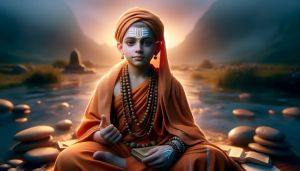
Shankaracharya’s Commentary: Non-Duality and Direct Realization of the Eternal Self
Shankaracharya interprets Chapter 3 as emphasizing the non-dual, formless, and eternal nature of the Self (Atman). He explains that the Self is beyond the body, mind, senses, and intellect, and cannot be known through ordinary perception, rituals, or scriptures alone. Liberation arises from direct experiential knowledge (anubhava) of the Self, achieved through meditation, introspection, and detachment from worldly desires. Shankara highlights that recognizing the unity of all beings and the imperishable nature of the Self dissolves dualities, fear, and ignorance. The chapter underscores that the Self is blissful, eternal, and the source of all existence, and realization of this truth grants freedom, immortality, and supreme bliss. For More Information Click Here

Conclusion – Chapter 3, Maitreya Upanishad
Chapter 3 establishes that the Self is eternal, formless, and beyond all dualities, untouched by the body, mind, and worldly experiences. It emphasizes that liberation arises through direct experiential knowledge, not through rituals or intellectual learning. Meditation, introspection, and detachment from desires purify the mind and enable realization of the Self. Recognizing the unity of all beings dissolves fear, ignorance, and attachment. The chapter highlights that the Self is the source of immortality, supreme bliss, and freedom from worldly bondage. Ultimately, abiding in the Self grants eternal peace, liberation, and unbounded joy.
Join Our Classes:
The Upanishads are more than just ancient texts—they are timeless guides to living with clarity, balance, and inner peace. Our classes make their profound wisdom easy to understand and apply in everyday life. Join us to explore these teachings and discover a new way of seeing yourself and the world!