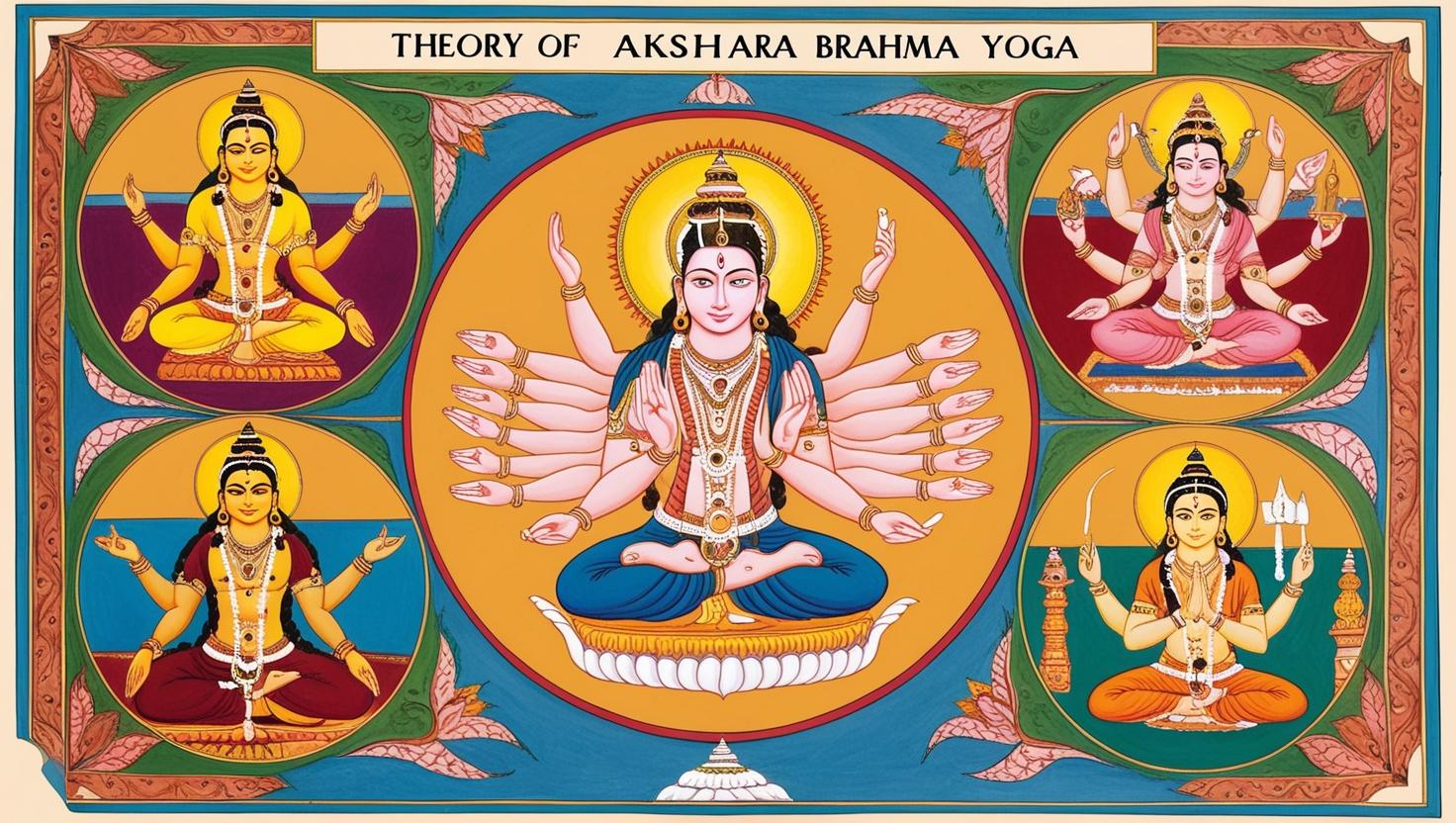
The Divine Provider of Nourishment and Spiritual Fulfillment
The Annapurna Upanishad is a minor Shakta Upanishad that glorifies Goddess Annapurna, the divine provider of food and nourishment, as the source of all abundance and sustenance. It emphasizes that the Goddess feeds both the body and the soul, symbolizing material and spiritual fulfillment. The text highlights the importance of devotion, meditation, and recitation of mantras dedicated to Annapurna to attain prosperity, health, and spiritual well-being. It describes her benevolent form, adorned with symbols of nourishment and generosity, and presents her as the embodiment of Brahman who sustains the universe. The Upanishad teaches that offering food with reverence and receiving it as her grace purifies the mind and cultivates gratitude. Ultimately, it underscores that realizing Annapurna’s divine essence leads to liberation, abundance, and bliss For More Information Click Here

Structure and Spiritual Essence of the Annapurna Upanishad
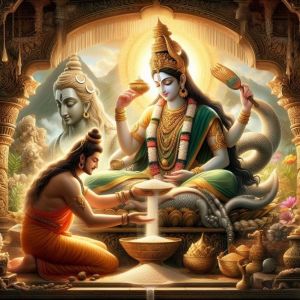
The Annapurna Upanishad is a long philosophical scripture associated with the Atharva Veda that explores the highest knowledge of the Self (Brahmavidya) through a dialogue between sages Ribhu and Nidagha. It consists of five chapters and a total of 337 verses.
Simple explanation of its chapters:
- Chapter 1: Nidagha seeks instruction from Ribhu, and the Upanishad introduces Devi Annapurna as a divine guide who reveals the eternal, non-dual Supreme Reality and the nature of Brahman.
- Chapter 2: Explores attachment and non-attachment, teaching how clinging to the body and objects binds one to samsara, and how true non-attachment leads to inner peace and unity with Brahman.
- Chapter 3: Describes the yogic realization of the Self, illustrating how sages withdraw their senses and tame the restless mind through introspection and meditation to abide in peace.
- Chapter 4: Expounds on the nature of liberation, the dissolution of the mind and latent impressions, and the attainment of complete freedom beyond duality, time, and mental constructs.
- Chapter 5: Presents advanced teachings on the Self as unborn, non-dual, and beyond all categories, describing the final state of liberation, where desire, objectivity, and mental activity cease.
This structure shows how the text moves from devotional invocation of the Goddess to rigorous Vedantic-Yoga philosophy, guiding the seeker from devotion through discrimination and meditative realization to ultimate liberation.

Key Verses and Spiritual Insights of the Annapurna Upanishad
- “He who knows the Self within, free from birth and death, attains liberation.”
- Meaning: Realization of the eternal, unborn Self leads to freedom from the cycle of samsara.
- “Devi Annapurna is the source of all nourishment, both material and spiritual.”
- Meaning: The Goddess sustains life and consciousness, providing both physical sustenance and spiritual wisdom.
- “Non-attachment to the body and objects purifies the mind and leads to peace.”
- Meaning: True freedom comes from letting go of worldly clinging and realizing the impermanence of external things.
- “Through meditation, withdrawal of the senses, and control of the mind, the yogi abides in the Self.”
- Meaning: Yogic practices help stabilize the mind, enabling direct experience of the Self beyond sensory distractions.
- “The Self is unborn, infinite, and non-dual; knowing it, all desires and mental fluctuations cease.”
- Meaning: Understanding the non-dual, eternal nature of the Self dissolves attachment, desire, and mental restlessness, leading to liberation.
These verses highlight the core teachings of the Annapurna Upanishad: devotion to the Goddess, non-attachment, meditation, yogic discipline, and realization of the Self as the ultimate path to liberation. For More Information Click Here
Core Teachings and Philosophical Essence of the Annapurna Upanishad
The Annapurna Upanishad teaches that Devi Annapurna, the Divine Mother, is the source of all nourishment, both material and spiritual, and the embodiment of Brahman. It emphasizes that devotion, meditation, and disciplined practice purify the mind and awaken spiritual knowledge. The text highlights the importance of non-attachment to the body and worldly objects, guiding the seeker toward inner peace and freedom from bondage. Yogic practices, withdrawal of the senses, and concentration enable direct realization of the Self. Understanding the Self as unborn, infinite, and non-dual dissolves desires, attachments, and mental fluctuations. Ultimately, the Upanishad presents devotion, ethical discipline, and meditative realization as the path to liberation, prosperity, and bliss. For More Information Click Here
Conclusion
In conclusion, the Annapurna Upanishad emphasizes the Divine Mother as the ultimate source of nourishment and the embodiment of Brahman. It teaches that devotion, meditation, and disciplined practice purify the mind and cultivate spiritual knowledge. Non-attachment to the body and worldly objects, combined with yogic practices and concentration, enables the seeker to realize the eternal, non-dual Self. Understanding the Self dissolves desires, attachments, and mental fluctuations, leading to inner peace and freedom. The Upanishad integrates devotion, ethical discipline, and meditative realization as a holistic path. Ultimately, it presents a guide to attaining liberation, prosperity, and lasting bliss.
Join Our Classes:
The Upanishads are more than just ancient texts—they are timeless guides to living with clarity, balance, and inner peace. Our classes make their profound wisdom easy to understand and apply in everyday life. Join us to explore these teachings and discover a new way of seeing yourself and the world!