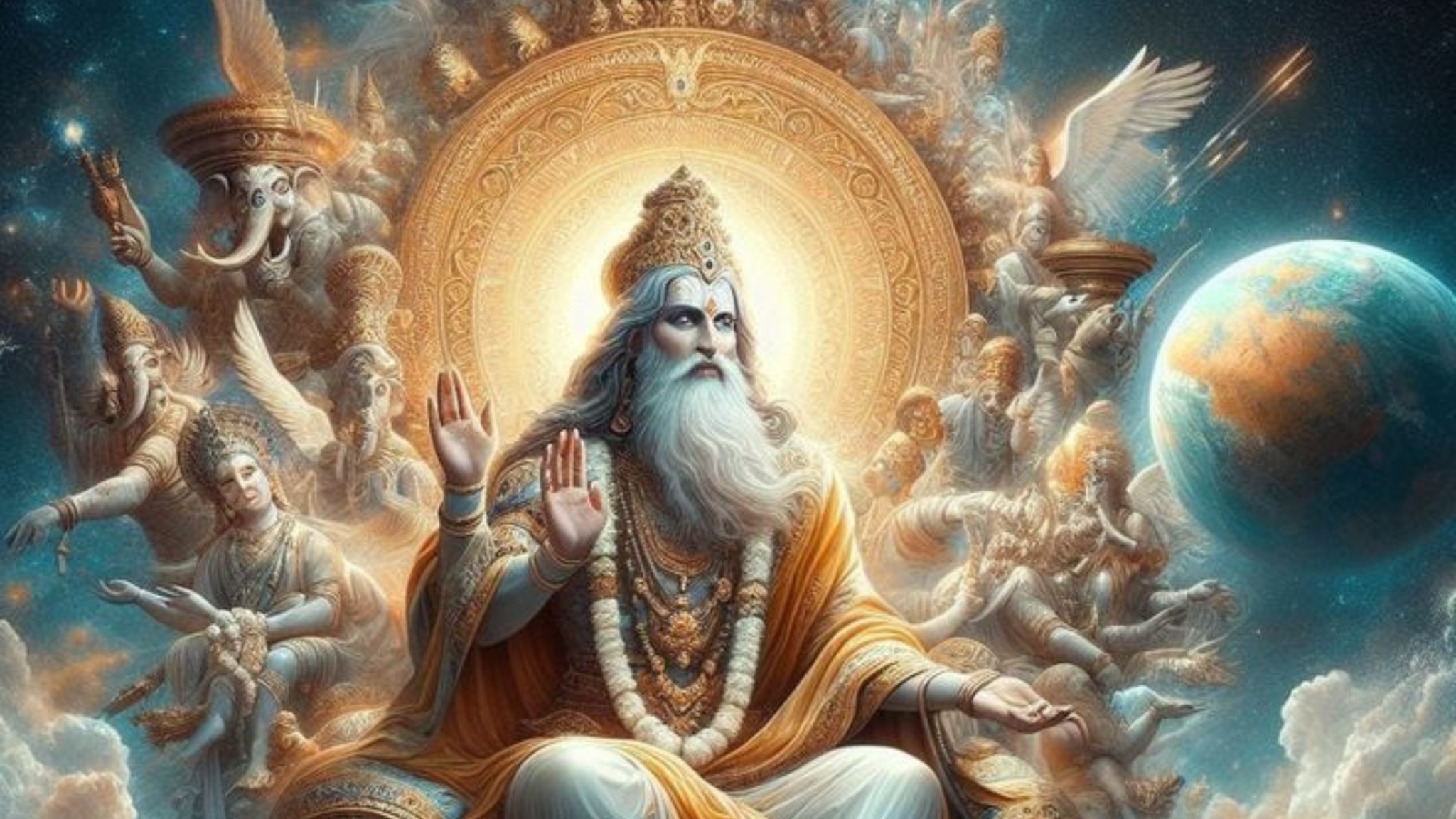
Introduction to Selected Verses from Volume 5
Volume 5 of Notes of a Seeker of Self Realisation brings timeless wisdom straight from the Upanishads to seekers today. Each selected verse sheds light on the nature of the Self, consciousness, and the path to inner clarity. The explanations make profound truths easy to understand and apply in daily life. Through these insights, readers are guided toward detachment, self-awareness, and spiritual growth. Explore these verses to deepen your understanding and experience of the eternal Self. For More Information Click Here

Overall Theme and Structure of Notes of a Seeker of Self Realisation – Volume 5
Volume 5 continues the journey of spiritual inquiry, focusing on practical understanding and inner transformation for realizing the Self. It emphasizes discriminative knowledge (Viveka) and detachment (Vairagya) as key tools for liberation, while guiding seekers through the subtleties of mind, ego, and consciousness. The text is structured as a series of reflective notes and explanations on selected Upanishadic verses, practical instructions, and insights from the teacher, helping aspirants bridge intellectual understanding with experiential realization.
The structure typically includes:
- Introduction to key spiritual concepts – Clarifying the nature of Atma, mind, and ignorance.
- Verse-by-verse commentary – Insights from the Upanishads, illustrating the seeker’s path.
- Practical guidance – Instructions on meditation, self-inquiry, and renunciation.
- Reflections and clarifications – Common doubts addressed, reinforcing the application of Vedantic principles in daily life. For More Information Click Here

Selected Verses and Their Insights from Volume 5
1. Chandogya Upanishad – Chapter 6, Verse 2.1
Verse:
Sadeva somyedamagra asit
(In the beginning, this universe was only existence.)
Explanation:
This verse emphasizes the non-dual nature of reality. Before creation, only pure existence (Sat) existed. The multiplicity we perceive is a manifestation of this singular reality.
2. Panchadasi – Chapter 6, Verse 4
Verse:
Svatas cidantar yami tu
(The Self is self-luminous and the source of consciousness.)
Explanation:
This verse asserts that the Self (Atman) is inherently luminous and the ultimate source of all consciousness. It is not dependent on any external light or perception.

3. Taittiriya Upanishad – Chapter 2, Verse 5.2
Verse:
Tasyaisa eva sarira atma
(The Self is the inner essence of the body.)
Explanation:
Here, the Upanishad teaches that the Self is not separate from the body but is its innermost essence. Recognizing this unity leads to self-realization.
4. Mandukya Upanishad – Mantra 6
Verse:
Esa Sarvesvarah esa
(This is the Lord of all, this is the Self.)
Explanation:
This verse identifies the Self (Atman) with the Supreme Lord (Ishvara), indicating that realizing the Self is equivalent to realizing the divine presence in all.
5. Gita – Chapter 2, Verse 16
Verse:
Nasato vidyate bhavah
(The unreal has no existence.)
Explanation:
Lord Krishna explains that the transient world is unreal, and only the eternal Self is real. Discerning this truth leads to liberation. For More Information Click Here

Author’s Reflections and Insights on Volume 5
In Volume 5, the author provides personal reflections to help seekers internalize the teachings of the Upanishads. Emphasizing self-inquiry and direct experience, these insights clarify complex concepts such as the nature of consciousness, the mind, and detachment. The author guides aspirants on practical ways to integrate spiritual understanding into daily life, bridging theory and lived experience. These reflections encourage deep introspection and foster a steady journey toward self-realization. For More Information Click Here
Importance of Volume 5
Volume 5 of Notes of a Seeker of Self Realisation is crucial for seekers because it bridges deep philosophical insights with practical guidance. It helps aspirants understand the subtleties of the mind, ego, and consciousness, while emphasizing self-inquiry and detachment as essential tools for liberation. By studying this volume, one gains clarity on how to integrate spiritual wisdom into daily life and move steadily toward self-realization.
“The Self is not something to be attained; it is to be realized within, beyond all thought and doubt.”

Conclusion
Notes of a Seeker of Self Realisation – Volume 5 serves as a guiding light for aspirants on the spiritual path. Through its selected verses, explanations, and the author’s reflections, it bridges timeless Upanishadic wisdom with practical application. The volume emphasizes self-inquiry, detachment, and inner clarity as essential steps toward realizing the eternal Self. Studying and reflecting on these teachings empowers seekers to cultivate awareness, peace, and steady progress on the journey of self-realization.
“Realization is not a distant goal; it is the unveiling of what has always been within.”