Brahmananda Valli – Anuvaka 6 with Sankara Bhasya
Anuvaka 6 of the Brahmananda Valli declares the essential oneness of the individual Self and the cosmic Self. The Self within the human being and the presence in the sun are revealed to be non-different and identical as Brahman. Sankaracharya emphasizes this as a profound mahavakya (great saying), pointing to the truth of Advaita. The verse eliminates all notions of duality between the inner and outer worlds. It teaches that the same pure consciousness shines both as the perceiver and the perceived. Realizing this unity, the seeker attains liberation by knowing the Self as all. For More Information Click Here
Sanskrit Mantra:
“sa yaścāyam puruṣe | yaścāsāvāditye | sa ekaḥ ||”
Translation:
He who is here in the person (puruṣa), and he who is there in the sun (āditya) — he is one and the same.
Sankara’s Commentary Summary:
1. The Oneness of the Inner Self and the Cosmic Self:
Sankara explains that the individual self (jīva) and the cosmic Self (āditya-puruṣa) are not two separate entities, but one and the same Brahman. The statement breaks the illusion of duality by asserting non-difference (abheda) between:
-
yaḥ ayam puruṣe – the Self that resides within this body,
-
yaḥ asau āditye – the cosmic presence perceived in the sun.
This reinforces the Advaita (non-dual) doctrine that all apparent multiplicity is merely superimposed on the one Reality.
2. The Role of Direct Experience:
Sankara emphasizes that realization is not about worshipping the sun as a deity apart from oneself, but recognizing that the inner Self is the same as the cosmic principle. Both are Brahman—unborn, undying, pure consciousness.
He writes: “ātmanā hi sarvam idaṁ vyāptam iti yathāvastu jñānam”,
meaning: “True knowledge is knowing that the Self pervades all this.”
3. A Teaching for Final Realization:
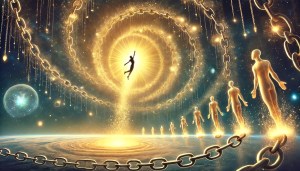
This mantra is meant to complete the seeker’s inner journey by collapsing the last remnant of externality. Even the grandeur of the sun is not apart from the Self, and this realization dissolves all distinction between the knower and the known.
Sankara links this with earlier anuvakas that showed Brahman as the origin of all. Now it is shown that the seeker and that Brahman are not two.
Key Philosophical Points:
- There is only one Self, appearing as both the individual and the cosmic form.
- The mantra directly teaches identity of jīvātman and paramātman.
- Sankara stresses abheda-jñāna (non-difference) as the highest wisdom.
- The teaching aims to remove the last vestiges of separateness, leading to liberation (moksa).
Sankaracharya’s Teaching in Anuvaka 6: The Non-Dual Oneness of Self and Cosmos
In Anuvaka 6 of the Brahmananda Valli, Adi Sankaracharya highlights the non-dual identity of the individual Self (jīvātman) and the cosmic Self (paramatman). When the Upanishad says, “He who is here in the person and he who is there in the sun is one”, Sankara asserts that this is not a poetic metaphor, but a direct statement of truth (mahavakya). He teaches that the Self within the body and the principle manifest as the sun are not two different realities, but one and the same Brahman, free of all division. This recognition dissolves the illusion of separateness between inner and outer, between self and world. By understanding this oneness (abheda-jñāna), the seeker transcends limited identity and attains liberation (moksa). For Sankara, this anuvaka serves as a culminating pointer—that all that appears different is, in truth, the one indivisible Self. For More Information Click Here

Conclusion
In conclusion, Anuvaka 6 guides the seeker to the final dissolution of duality, affirming that the Self within and the cosmic principle are one undivided reality. Sankaracharya underlines that true liberation lies in this recognition—not in worshipping external deities but in knowing the Self as Brahman. This identity is not figurative but an absolute truth, removing all boundaries between the individual and the universe. The mantra serves as a culminating insight, aligning the seeker’s understanding with the non-dual vision of the Upanishads. Through this knowledge, the journey inward is complete. The knower becomes one with limitless existence and bliss.
Join Our Classes:
The Upanishads are more than just ancient texts—they are timeless guides to living with clarity, balance, and inner peace. Our classes make their profound wisdom easy to understand and apply in everyday life. Join us to explore these teachings and discover a new way of seeing yourself and the world!