Brahma Sutra Bhaṣyam – Volume 2
Author: Adi Saṅkaracarya
Text: Commentary (Bhaṣya) on the Brahma Sutras of Badarayaṇa
Structure: Volume 2 traditionally covers the Second Adhyaya (Chapter), which contains two Pādas (sections). Click Here To Access more other text.
Structure of the Brahma Sutras:
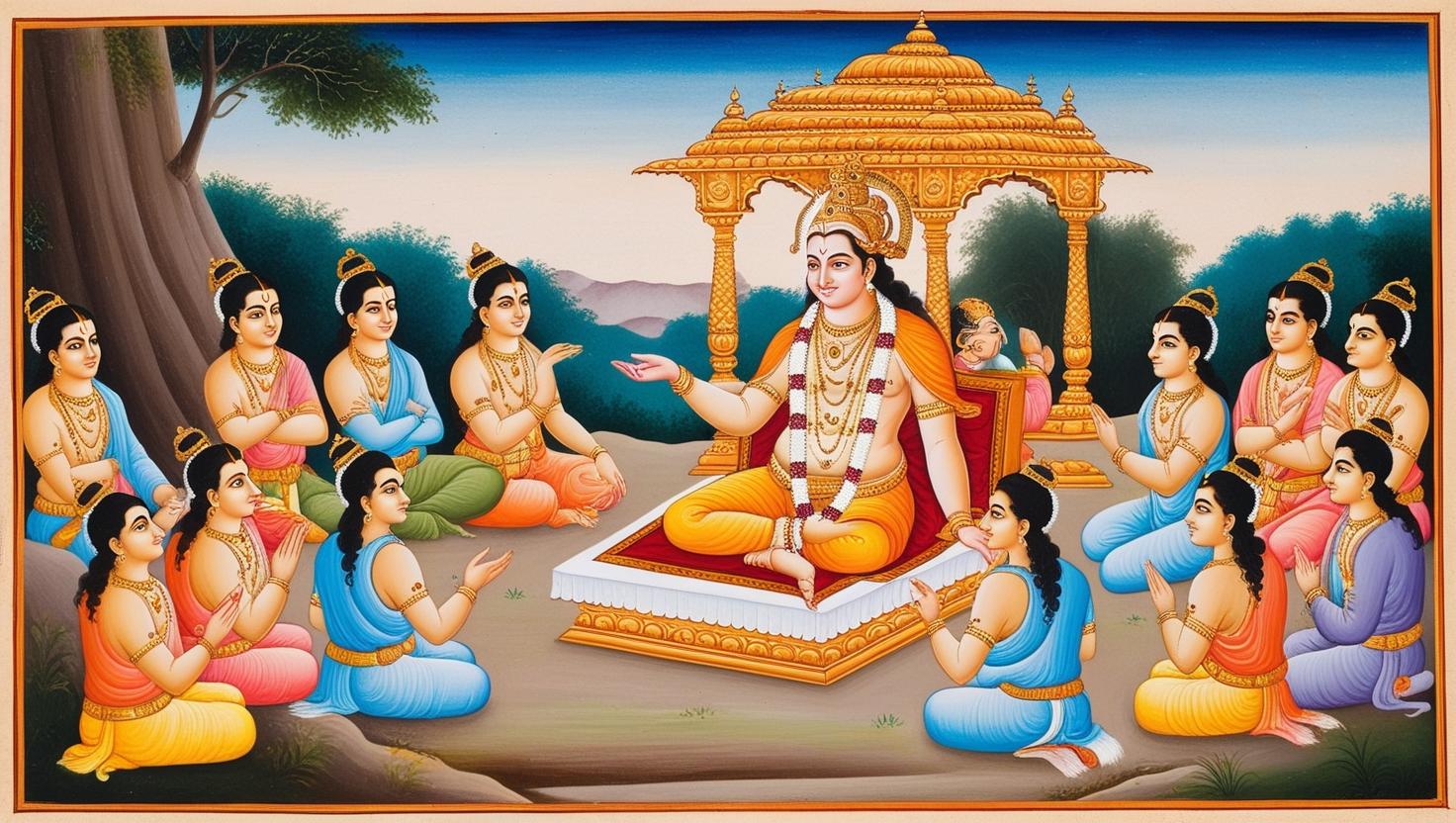
The Brahma Sutras, authored by Badarayaṇa (Vyasa) and commented upon masterfully by Adi Śaṅkarācārya, systematically present the essence of Vedanta philosophy. They are divided into four chapters (Adhyayas), each with four pādas (quarters), totaling 555 concise aphorisms (sūtras).
Chapter 1 – Samanvaya Adhyāya (Harmony of Teachings)
Theme: All Upaniṣads teach one non-dual Brahman
Purpose: To establish that Brahman alone is the consistent, central teaching of the Upaniṣads.
Explanation:
This chapter clarifies the unity of Vedāntic vision. Despite coming from different branches (śākhās) of the Vedas, all Upaniṣads harmoniously point to Brahman, the non-dual, infinite consciousness as the ultimate reality. Misinterpretations suggesting other central themes (like prāṇa, elements, etc.) are addressed and corrected.
Sections:
- Pada 1: Brahman is the one consistent subject of all Vedāntic texts.
- Pada 2–4: Detailed analysis of multiple Upaniṣadic passages affirming non-dual Brahman.
Takeaway: Vedānta is not pluralistic in its core message—it is unified and focused solely on Brahman.
Chapter 2 – Avirodha Adhyaya (No Contradiction)
Theme: Refutation of non-Vedāntic philosophies
Purpose: To defend Advaita Vedānta against rival systems like Sāṅkhya, Nyāya, Vaiśeṣika, Buddhism, and Jainism.
Explanation:
This chapter shows that no philosophical system outside Vedānta can logically or scripturally account for the nature of reality. Śaṅkara uses deep logic and scriptural support to dismantle opposing views, affirming that only the Upaniṣadic vision of Brahman as non-dual consciousness holds ground.
Sections:
-
Pada 1: Refutation of objections raised from within Vedāntic interpretations (internal consistency).
-
Pada 2: Refutation of external philosophical systems (Sāṅkhya, Nyāya, Buddhism, etc.).
Takeaway: Only Brahman as taught by Vedānta provides a coherent, self-evident, and scripturally validated account of reality.

Chapter 3 – Sadhana Adhyaya (Means or Practice)
Theme: Means to attain knowledge and liberation
Purpose: To explain the spiritual practices required for realization of Brahman.
Explanation:
Having established that Brahman is the one reality, and that no other system is valid, this chapter addresses the crucial question: What must a seeker do to attain Self-realization? This includes discussions on meditation (upāsanā), ethical conduct, qualifications of a seeker, and the role of karma and bhakti.
Sections:
-
Pada 1–2: Nature and types of upasana (meditative worship of Brahman).
-
Pada 3: Spiritual qualifications for the seeker (Sraddha, viveka, vairagya, etc.).
-
Pada 4: Relationship between karma (action) and jnana (knowledge).
Takeaway: Liberation arises not from mere action but from Self-knowledge, supported by purified living, devotion, and meditation.
Chapter 4 – Phala Adhyaya (The Result: Liberation)
Theme: Nature and experience of liberation (mokṣa)
Purpose: To explain what happens after realization—the state of the jīvanmukta and the final release from rebirth Click view PDF.
Explanation:
This final chapter describes the fruit (phala) of Self-knowledge: mokṣa, or complete liberation from ignorance and bondage. It also clarifies questions such as whether the realized soul attains a form, how liberation manifests, and what happens to the individual upon death Vedanta Students.
Sections:
-
Pada 1–2: The nature of liberation in life (jīvanmukti) and after death (videhamukti).
-
Pada 3: Resolution of doubts regarding the state of the liberated soul.
-
Pada 4: Affirmation that Self-knowledge alone is sufficient for ultimate freedom.
Takeaway: Mokṣa is the direct, experiential knowledge of one’s identity with Brahman—free from all limitations Click view PDF.

Context: Structure of Brahma Sutras
The Brahma Sūtras are organized into four chapters (Adhyāyas), each with four Pādas (quarters). Here’s the philosophical breakdown:
Volume 2 = Chapter 2: Avirodha Adhyāya
It aims to refute all non-Vedantic philosophies that conflict with non-duality (Advaita Vedānta).
Chapter 2 Overview: Avirodha – “Non-Contradiction”
This chapter has two pādas, and each pāda tackles specific schools of philosophy or apparent contradictions.
Pada 1: Refutation of Objections Based on Perception & Logic
Key Topics:
Refutation of Sankhya:
- Dualism between Puruṣa (soul) and Prakṛti (matter) is incompatible with Vedānta.
- Śaṅkara shows that Brahman is both the material and efficient cause of the universe (Abhinna-nimitta-upādāna-kāraṇa).
Refutation of Vaiseṣika & Nyaya:
- These schools propose atomism, plurality, and God as separate from the world.
- Saṅkara argues that multiplicity arises from avidyā (ignorance), not reality.
Doctrine of Karma:
-
-
Karma cannot be the ultimate cause; it needs conscious oversight (Brahman).
-
Theory of Creation:
-
-
Sruti texts declare creation from Brahman alone, not atoms or unconscious matter.
-
Main Thesis: Logical objections (tarka) and perception (pratyakṣa) cannot override śruti (scripture), which alone reveals Brahman Click view PDF.
Chapter 2, Pada 2 – Refutation of Philosophical Systems
The second pada of the Avirodha Adhyāya deals with detailed philosophical critique of major non-Vedāntic schools. The aim is to establish Advaita Vedānta’s supremacy by:
- Refuting views that contradict the Upaniṣads
- Showing that only Brahman is the non-dual, ultimate reality
- Emphasizing that scripture (śruti) is the highest authority, while logic is secondary
1. Refutation of the Sāṅkhya Philosophy
Core View of Sāṅkhya:
- Universe originates from Prakṛti, a primordial unconscious material cause.
- Puruṣa (consciousness) is passive and plural.
Sankara’s Refutation:
- The Upaniṣads declare Brahman (a conscious principle) as both the material and efficient cause of the universe.
- Unconscious Prakṛti cannot give rise to an intelligent, ordered cosmos.
- Dualism of Sāṅkhya contradicts the non-duality (Advaita) taught by the Upaniṣads.
2. Refutation of the Yoga School
Core View of Yoga (Patañjali’s system):
- Accepts Īśvara (God) as a special Puruṣa, untouched by karma.
- Emphasizes control of the mind through eightfold practice (aṣṭāṅga yoga).
Sankara’s Refutation:
- While Yoga is closer to Vedānta than other schools, its concept of Īśvara as a separate being is dualistic.
- Advaita sees Īśvara and jīva as one in essence (Brahman).
- Practices of Yoga are helpful, but final liberation needs knowledge (jñāna), not just mental discipline.
3. Refutation of the Vaiśeṣika School
Core View of Vaiśeṣika:
- The world is composed of eternal atoms (aṇu).
- God is separate and only causes the combination of atoms.
Śaṅkara’s Refutation:
- Atoms, being inert, cannot assemble themselves into an intelligent design.
- This model leads to plurality and impermanence, contradicting Vedāntic unity.
- Śruti declares Brahman as both the material and intelligent cause, not an external assembler.
4. Refutation of the Nyāya School
Core View of Nyāya:
- Emphasizes logical reasoning and inference as the main method to understand truth.
- Accepts plurality, God as separate, and real external objects.
Śaṅkara’s Refutation:
- Nyāya’s excessive reliance on logic (tarka) is flawed, as Brahman is beyond intellect.
- Only śruti (revealed scripture) can reveal the truth of the Self.
- Logical proofs are useful but incapable of reaching non-dual truth Click view PDF.
5. Refutation of Buddhist Doctrines
Different Schools of Buddhism Refuted:
- Madhyamaka (Nihilism): Everything is void (śūnya).
- Yogācāra (Idealism): Only consciousness exists; no external world.
- Sautrāntika / Vaibhāṣika (Momentariness): All things are momentary; no permanent Self.
Śaṅkara’s Refutation:
- Denial of Self (ātman) contradicts the direct experience of consciousness.
- The Upaniṣads repeatedly affirm the eternal ātman as the basis of knowledge and liberation.
- Voidness (śūnyatā) leads to nihilism, which is logically and ethically unstable.
- If everything is momentary, then memory, karma, or spiritual practice make no sense.
6. Refutation of Jain Philosophy
Core View of Jainism:
- Many souls (jīvas) exist, each with individual existence.
- The doctrine of anekāntavāda (non-absolutism): reality is multi-faceted and cannot be captured by one view alone.
Śaṅkara’s Refutation:
- Multiple eternal souls contradict the Upaniṣadic teaching of non-duality.
- If every truth is partial, then even non-duality must be partial—which leads to contradiction.
- True knowledge must be definitive and not merely relative or partial.
7. Summary of Refutations: The Triumph of Advaita
After methodically analyzing and rejecting the above systems, Śaṅkarācārya reasserts the Vedāntic view:
- Brahman alone is real (satyaṁ)
- The world is mithyā (apparently real, but not absolutely)
- The individual self (jīva) is non-different from Brahman
Liberation (mokṣa) is attained not by ritual, meditation, or logic alone—but through self-knowledge (ātma-jñāna) as revealed by the Upaniṣads Click view PDF.
Final Thought
The second pāda of the Brahma Sūtra Bhāṣya is a philosophical battleground. Ādi Śaṅkarācārya, with razor-sharp logic and deep scriptural insight, defeats every major school of Indian philosophy that does not conform to the non-dual vision of the Upaniṣads.
For the serious seeker, it shows that:
- Truth is one. Paths may differ, but only the knowledge of Brahman liberates.
Important Concepts Introduced:
- Ajāti-vāda: “No real creation ever occurred”—the world is Mithyā (neither real nor unreal).
- Avidyā: Ignorance is the root of apparent duality.
- Vivarta-vāda: Apparent transformation, like rope mistaken for a snake.
Philosophical Significance of Volume 2
- Clarifies why Advaita is the only internally consistent, Upaniṣad-aligned system.
- Uses śruti-based reasoning to resolve conflicts with logic-based schools.
- Establishes non-duality (Advaita) as not just mystical but rational.
How to Study Volume 2
Preparatory Study:
- Begin with Tattva Bodha and Ātma Bodha
- Then study Volume 1 of Brahma Sūtra Bhāṣya to understand Brahman’s nature
Study Method:
- Read Sanskrit + Translation side-by-side
- Note the School Refuted in each sūtra
- Track the Logic Used: Is it based on śruti, reason, or experience?
- Apply to Real Life: How do these refutations help clarify your understanding of the Self?
Sample Sūtras from Volume 2 (Select Examples)
“Na Janmaadi Anyaat”
- The world does not originate from anything other than Brahman.
Śaṅkara’s View: Brahman alone is the ultimate cause, not Prakṛti, atoms, or karma.
Refutation of Buddhism
- Denies the momentariness of reality and asserts the existence of an eternal Self Click view PDF.

Conclusion
Volume 2 of the Brahma Sūtra Bhāṣya is a masterful philosophical defense of Advaita Vedānta. It demonstrates the inadequacy of other schools in explaining the oneness of reality and confirms that scripture (śruti), guided by proper reasoning, is the highest pramāṇa (means of knowledge) Know More About Chapter 1 –( Adhikaranam 1 ) – Vol – 3 Introduction.