Brahma Sutra Bhaṣya – Volume 4:
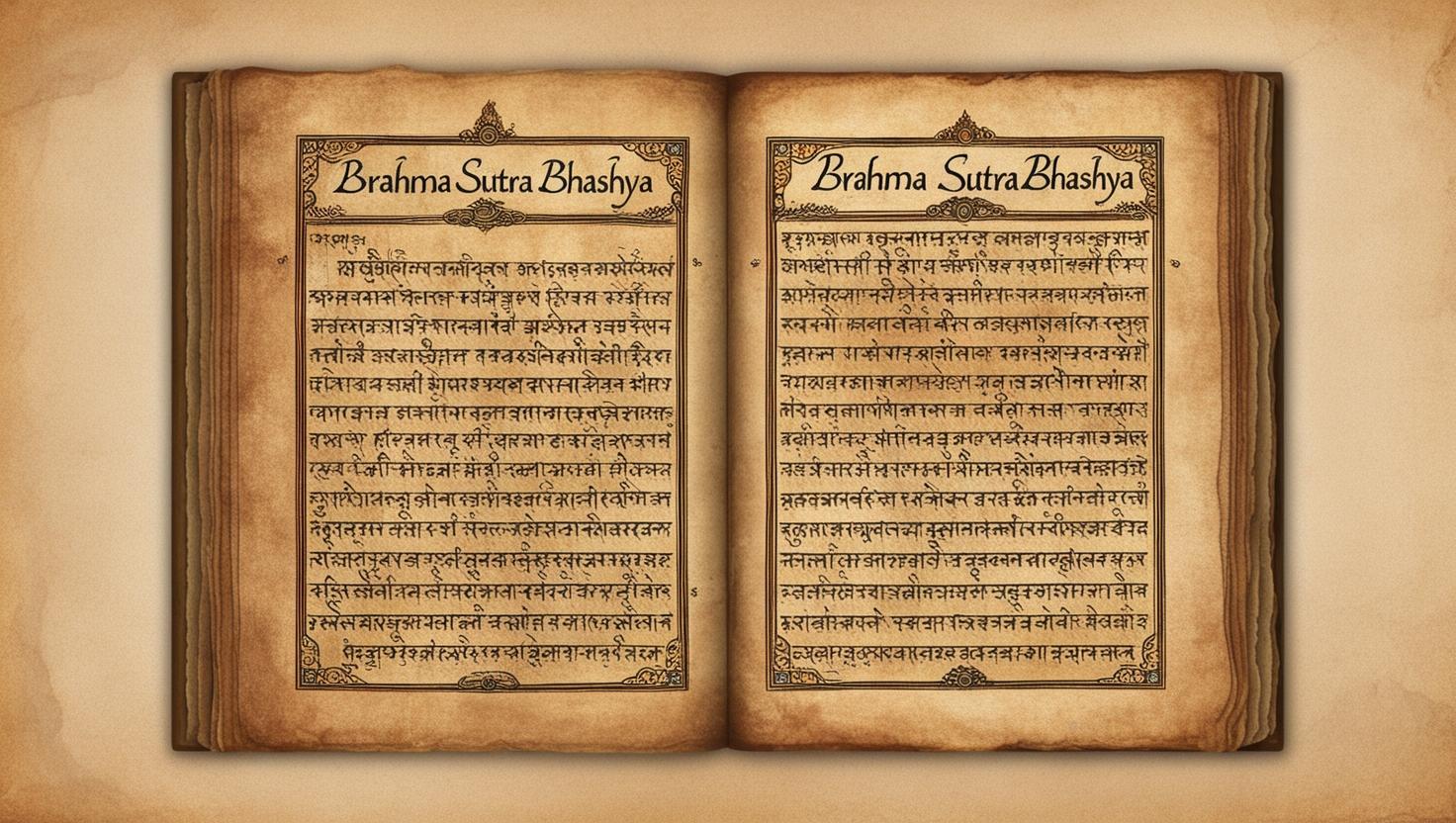
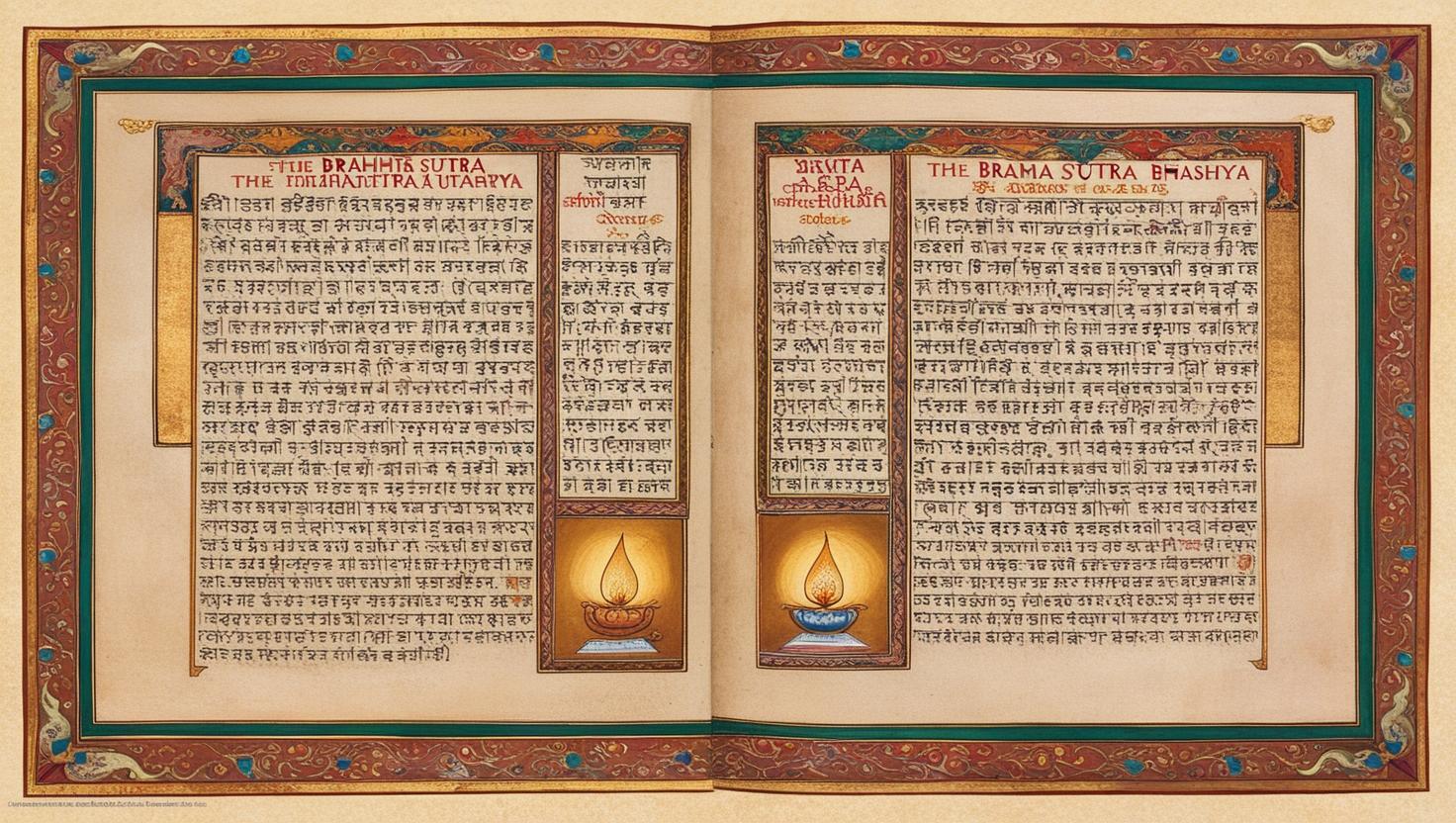
Volume 4 of Sri Sankaracarya’s Bhāṣya on the Brahma Sūtras delves into the culmination of Vedantic inquiry, focusing on the realization of Brahman and the nature of liberation (mokṣa). This volume, also known as the Phala Adhyāya (Chapter on the Result), is structured into four sections (pādas) and comprises 78 sūtras distributed across 38 adhikaraṇas (topics) Click Here To Access more other text.
Section I: Preparatory Practices and Meditation
Key Themes:
- Repetition of Meditations: Emphasizes the importance of consistent meditation practices to internalize the knowledge of Brahman.
- Identity of the Self with Brahman: Affirms that the individual self (jīva) is not different from Brahman, and realization of this identity leads to liberation.
- Superimposition of the Higher on the Lower: Discusses the method of meditating on symbols (like the sun or mind) as representations of Brahman, highlighting that the symbol is to be viewed as Brahman and not vice versa .
- Meditation Practices: Addresses various aspects of meditation, including posture, place, and duration, emphasizing that meditation should continue until death for those seeking liberation Click view PDF.
Section II: The Process of Liberation
Key Themes:
- Merging of Organs at Death: Explains that at the time of death, the senses and mind merge into the self, preparing for the soul’s journey towards liberation.
- Destruction of Past Actions: Asserts that true knowledge of Brahman destroys all accumulated past actions (karma), freeing the individual from the cycle of birth and death.
- No New Acquisition: Clarifies that liberation is not about acquiring something new but realizing one’s true nature as Brahman .
Section III: Nature of the Liberated Soul
Key Themes:
- Attainment of Lordly Powers: States that the liberated soul attains all divine powers except the power of creation, preservation, and destruction, which remain exclusive to Īśvara (the Supreme Lord) .
- Freedom from Suffering: Describes the liberated soul as free from grief, delusion, and suffering, existing in a state of bliss and pure consciousness Click view PDF.
Section IV: Final Realization and Ultimate Liberation
Key Themes:
- Realization of the Highest Brahman: Emphasizes that the ultimate goal is the realization of Nirguṇa Brahman (Brahman without attributes), transcending all dualities and distinctions.
- Uniform Liberation: Affirms that liberation is the same for all realized souls, irrespective of their paths or practices, as it is the realization of one’s true nature as Brahman.
Why Study the Brahma Sutra Bhaṣya?
Foundational Text of Advaita Vedānta:
-
-
Along with the Upaniṣads and Bhagavad Gītā, the Brahma Sūtras form the “Prasthāna Traya” — the core scriptures of Vedānta.
-
Sankaracarya’s commentary systematizes non-dualism (Advaita) using rigorous logic and scriptural interpretation Click view PDF.
-
Resolves Apparent Contradictions:
-
-
Harmonizes conflicting Upaniṣadic statements (e.g., “ātman is one” vs. “ātman is many”) and shows they all point to Brahman.
-
Disarms Opposing Philosophies:
-
-
Refutes rival schools like Sāṅkhya, Nyāya, Buddhism, Jainism, etc., defending non-dualism using their own logic and premises.
-
Leads to Liberation (mokṣa):
-
-
Not theoretical—it’s a practical roadmap. It answers: Who am I? What is this world? What is the ultimate reality? Realizing Brahman ends sorrow and the cycle of rebirth.
-
Sharpens Discrimination (viveka):
-
-
Through deep reasoning, it cultivates clarity between real (sat) and unreal (asat), Self and not-Self.
-
Preserves Sanātana Dharma:
-
-
Sankaracarya’s Bhāṣya has safeguarded Vedāntic wisdom for over a millennium, setting the standard for spiritual reasoning in India Click view PDF.
-
How Many Study It?
-
Traditionally: Only advanced students of Vedānta, especially those who have mastered Sanskrit and studied the Upaniṣads, take up the Brahma Sūtra Bhāṣya.
In Monastic Settings (Āśramas):
- Integral part of study in Advaita Vedānta gurukulams like:
- Chinmaya Mission
- Ramakrishna Math
- Arsha Vidya Gurukulam
- Sringeri Sharada Peetham
- Often studied after years of preparatory study of Bhagavad Gītā and Upaniṣads Click view PDF.
Today:
- Thousands of seekers worldwide, including scholars, sannyāsins, and serious householders, are studying it—either through live classes, recordings, or translated commentaries.
- Online platforms like Vedanta Academy, Vedanta Students, and Sanskrit institutions offer access in Sanskrit, English, and other languages.
Time to Study?
Depending on depth and pace:
- Introductory overview: 3–6 months
- Detailed guided study (with Bhāṣya): 2–3 years or more
- Traditional gurukula path (with oral explanation, logic, debates): 5–7 years Click view PDF.

Conclusion
Volume 4 of the Brahma Sūtra Bhāṣya serves as a profound guide for spiritual aspirants, detailing the path from disciplined practice and meditation to the ultimate realization of non-dual Brahman. Śrī Śaṅkarācārya meticulously elucidates the process of liberation, addressing potential misconceptions and emphasizing that true knowledge leads to the dissolution of ignorance and the attainment of eternal bliss. This volume not only reinforces the core tenets of Advaita Vedānta but also provides practical insights for those seeking to transcend the cycle of birth and death.