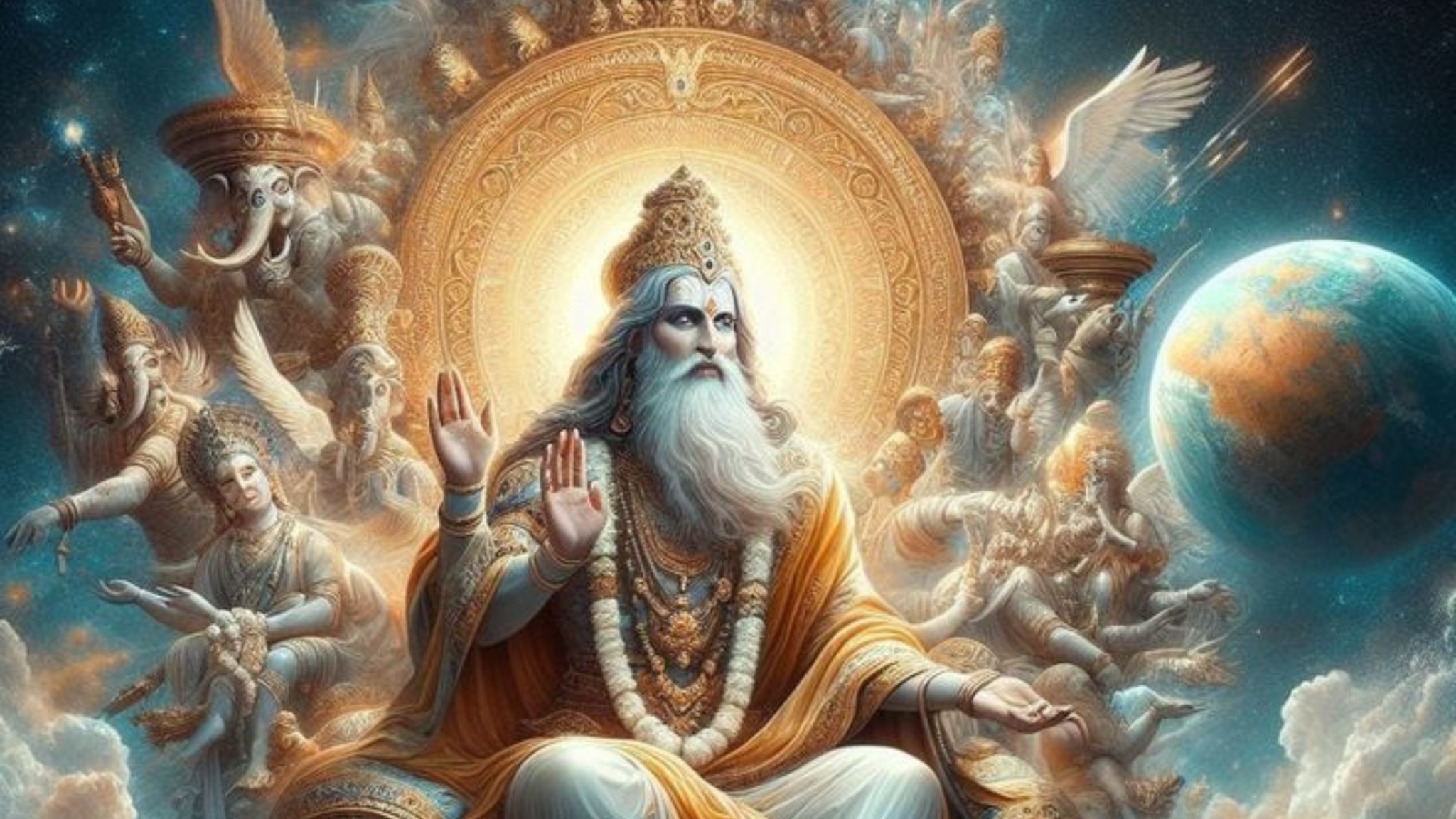
Chandogya Upanishad – Chapter 5 Overview
Chapter 5 of the Chandogya Upanishad explores the symbolic connection between food, breath, mind, and the Self. It teaches that food nourishes the body, breath sustains life, and the mind directs actions, all of which are rooted in Brahman. The chapter uses analogies and symbolic meditations to show the interdependence of physical and spiritual existence. By contemplating food and breath as sacred, the seeker learns to see them as expressions of the divine order. It emphasizes that true nourishment comes from knowledge of the Self, not merely physical sustenance. Ultimately, Chapter 5 reveals the path from outer sustenance to inner realization. For More Information Click Here
Theme of Chapter 5
The central theme of Chapter 5 is the interdependence of food, breath, and mind, showing how they sustain both body and spirit. Through symbolic meditations, it presents them as sacred manifestations of Brahman, guiding the seeker to see the divine in everyday sustenance.
What Chapter 5 Teaches Us
This chapter teaches that while food nourishes the body and breath sustains life, the mind governs all—and beyond mind lies the Self (Atman), which is the ultimate source. By meditating on food, breath, and mind as interconnected aspects of Brahman, seekers rise above dependence on the material world and recognize the Self as the true nourishment that leads to liberation.
Essence of Chapter 5
Food, breath, and mind are sacred supports of life, but the Self (Atman) is the ultimate sustainer, the true nourishment beyond all dependence. For More Information Click Here

Section-wise Summary of Chapter 5
- Khanda 1 – Introduces the importance of food as Brahman, teaching that food sustains life and must be revered.
- Khanda 2 – Explains the connection between food and breath; breath depends on food, and food is sanctified through breath.
- Khanda 3 – Establishes mind as superior to food and breath, for it directs their use and enables knowledge.
- Khanda 4 – Shows that understanding (Vijnana) arises from mind, leading toward higher wisdom.
- Khanda 5 – Declares the Self (Atman) as the ultimate basis of food, breath, and mind.
- Khanda 6 – Uses symbolic meditation on food as speech, breath as life, and mind as bliss, linking them to the Self.
- Khanda 7 – Explains that by knowing the Self, one transcends hunger, thirst, sorrow, and fear.
- Khanda 8 – Concludes that all nourishment—physical, mental, and spiritual—culminates in the Self, which is eternal and blissful.

Sankaracharya’s Insights on Chapter 5
Sankaracharya explains that Chapter 5 uses the symbols of food, breath, and mind to gradually guide the seeker inward, toward the realization of the Self. While food and breath are vital for sustaining life, they remain limited and perishable. The mind, though superior, also depends on deeper reality for its existence. According to Sankara, these meditations (upasanas) are preparatory disciplines—they purify and steady the seeker but do not reveal the final truth. The highest teaching of this chapter is that all nourishment, whether physical or mental, ultimately depends on Atman (Brahman). By recognizing this, the seeker transcends material dependence and discovers the Self as the eternal source of strength, bliss, and liberation. For More Information Click Here

Conclusion
Chapter 5 of the Chandogya Upanishad shifts the seeker’s attention from the outer act of eating and breathing to the inner realization of the Self as true nourishment. Through symbolic meditations, it shows how food supports breath, breath supports mind, and mind points to the Self, which transcends them all. Sankaracharya clarifies that these contemplations are not ends in themselves but preparations for Self-knowledge, guiding seekers to recognize Brahman as the eternal sustainer. Thus, the chapter transforms ordinary acts of living into spiritual disciplines, leading the aspirant from dependence on the material to freedom in the Self.
Join Our Classes:
The Upanishads are more than just ancient texts—they are timeless guides to living with clarity, balance, and inner peace. Our classes make their profound wisdom easy to understand and apply in everyday life. Join us to explore these teachings and discover a new way of seeing yourself and the world!