Unveiling the Self through Kathopanishad – Volume 8 with Shankara’s Wisdom
The Kathopanishad is one of the most profound texts of Vedanta, presenting the dialogue between young Nachiketas and Lord Yama on the mystery of the Self. In this eighth volume, Sankara’s bhashyam (commentary) unveils the subtle truths hidden in verses that explore non-duality and the realization of Brahman. It highlights how ignorance creates the illusion of difference, while true knowledge reveals the oneness of existence. Through metaphors like the crystal and the thumb-sized Self within the heart, the Upanishad guides seekers inward. Sankara explains that only a disciplined mind, guided by guru and sastra, can perceive the Self beyond time and space. This volume is a key step for aspirants seeking liberation through understanding the eternal Atman. For More Information Click Here

Teachings from Kathopanishad – Volume 8: Non-Duality and Realization of the Self
Chapter 2 – Section 1 – Verse 10
This verse is a powerful mahavakya-like declaration. It says that one who perceives even the slightest difference between “here” (this world) and “there” (Brahman/Atman) falls into the cycle of death again and again. Sankara, in his bhasya, clarifies that difference is born out of avidya (ignorance). Just as a crystal appears colored when placed near an object, consciousness appears as though divided because of limiting adjuncts (upadhis). But in reality, the Self is one and indivisible. Liberation is possible only when this non-dual vision is realized.
Chapter 2 – Section 2 – Verse 1
Here, the Upanishad emphasizes that the Self (Atman) is not subject to birth or death. It is eternal, unborn, and beyond all transformations. Sankara explains that though the body and mind undergo change, the Atman remains untouched. Recognizing this eternal Self frees a seeker from fear of mortality.

Chapter 2 – Section 2 – Verse 2
The verse describes the Atman as subtler than the subtlest and greater than the greatest, yet dwelling within the heart of every being. Sankara’s commentary stresses that it is only through a purified intellect that one can perceive this subtle reality. The Self is both immanent (within) and transcendent (beyond all).
Chapter 2 – Section 2 – Verse 3
The teaching here is that the Self is realized not by much learning, nor through intellectual brilliance, but only by the one whom the Self chooses. Sankara interprets this as divine grace manifesting through a prepared mind, devotion, and the guidance of the guru. Self-knowledge requires humility and surrender, not ego-driven effort.
Chapter 2 – Section 2 – Verse 4
This verse reassures the seeker: once the Self is realized, all doubts vanish, and sorrows are transcended. Sankara explains that realization is the immediate knowledge (aparokṣa jnana) of one’s own true nature. Just as light dispels darkness instantly, Self-knowledge destroys ignorance and grants liberation here and now. For More Information Click Here

Sankaracharya’s Message: Realizing the Eternal Self
In Volume 8 of the Kathopanishad with Shankara Bhashyam, Adi Sankaracharya is guiding seekers to the heart of Advaita Vedanta. His message can be summarized like this:
-
Difference is Ignorance – When we see duality, thinking “I am separate, the world is separate, Brahman is separate,” we remain bound in samsara. True vision is non-duality.
-
The Self is Eternal – Atman is not born, does not die, and is never affected by the body or mind. It is pure, timeless consciousness.
-
The Self is Subtle but Ever-Present – Though subtler than the subtlest and greater than the greatest, it is seated in the heart of every being as the witnessing consciousness.
-
Grace and Readiness are Essential – Intellectual brilliance alone cannot give Self-knowledge. It comes through a purified mind, humility, devotion, and the blessings of guru and Sastra.
-
Realization Removes All Doubts – The moment the Self is realized, ignorance disappears instantly, like darkness vanishing before light, leaving the seeker free from sorrow and rebirth.
In short, Sankaracharya is telling us that the Atman is Brahman itself, and recognizing this truth here and now is liberation (moksa). For More Information Click Here
The Significance of Kathopanishad – Volume 8 in Spiritual Study
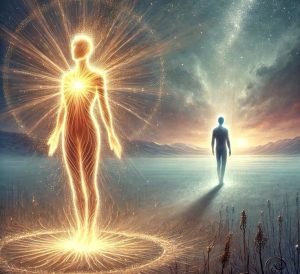
This volume is a profound guide for seekers of truth, revealing the essence of Advaita Vedanta through the Kathopanishad. Sankaracharya’s commentary explains complex metaphysical concepts in a clear and practical way. It emphasizes the path to Self-realization by understanding the eternal, subtle, and ever-present Atman. The text bridges philosophical knowledge with practical guidance, showing how ignorance binds us to the cycle of birth and death. It also highlights the role of a purified mind, devotion, and guru’s guidance in attaining liberation. Overall, it is an essential resource for anyone striving to realize the oneness of existence and transcend worldly dualities. For More Information Click Here

Conclusion
In conclusion, Volume 8 of the Kathopanishad with Sankaracharya’s commentary illuminates the path of self-realization with clarity and depth. It teaches that the Atman is eternal, subtle, and ever-present, and that perceiving non-duality is the key to liberation. Through metaphors, guidance on the mind, and the role of divine grace, Sankara shows how ignorance is dispelled and true knowledge dawns. This timeless wisdom encourages seekers to look inward, recognize their own nature, and transcend the cycle of birth and death. By understanding and experiencing these teachings, one moves closer to the ultimate freedom—moksa.
Join Our Classes:
The Upanishads are more than just ancient texts—they are timeless guides to living with clarity, balance, and inner peace. Our classes make their profound wisdom easy to understand and apply in everyday life. Join us to explore these teachings and discover a new way of seeing yourself and the world!