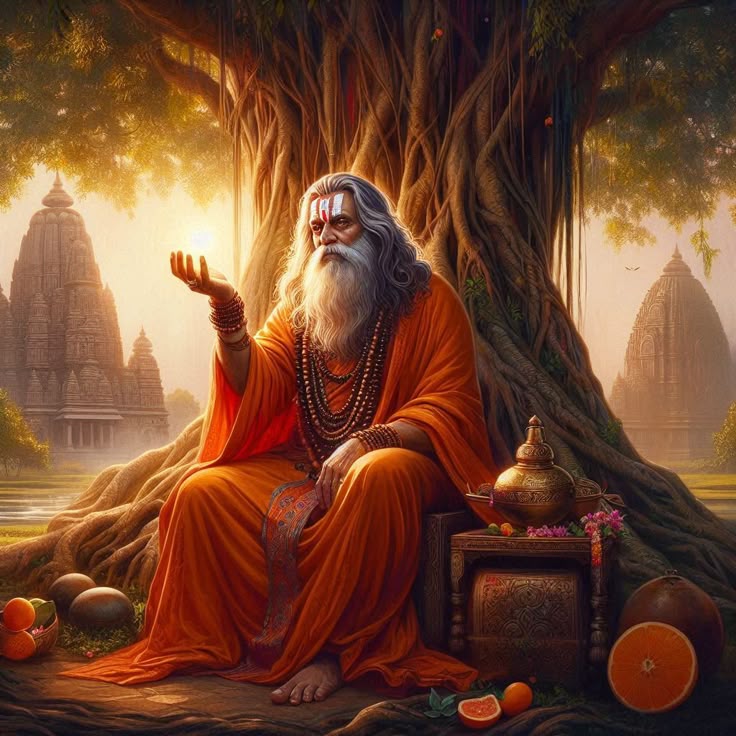
Kena Upanishad — Bhāṣya Volume 01 – Introduction
Volume 01 of the Kena Upanishad Bhāṣya explains the deeper meaning of the Upanishad’s opening verses. It focuses on the question “By whom is the mind directed? By whom does life force function?” and shows that the supreme reality (Brahman) is the unseen source behind all mental, sensory, and life activities. The Bhāṣya teaches that Brahman cannot be known by the senses or mind alone but must be realized through discrimination, introspection, and inner awareness. It explains how the text moves from external inquiry into a direct understanding of reality beyond dualities. Click Here To Access more other text.

Clear Question & Answer Format (10 Q&A)
What is the focus of the Kena Upanishad Bhāṣya Volume 01?
Answer:
It explains the meaning of the opening question “By whom is the mind directed?” showing that the supreme essence behind mind, senses, and life is Brahman — the ultimate reality beyond all perception.
👉 Life Connection:
Instead of thinking thoughts or actions come purely from the mind or body, this teaches that a deeper source — pure awareness — underlies everything. Click Here To Access.
What does the Bhāṣya say about the source of mind and senses?
Answer:
The Bhāṣya explains that mind and senses are instruments — they operate because of Brahman, not independently. Brahman is the unseen cause that enables all perception and action.
👉 Life Connection:
This reduces the ego that thinks “I alone decide or control everything.” It brings humility and clarity.
Why can Brahman not be known through the senses?
Answer:
Because the senses and mind are themselves objects of perception; Brahman is the subjective, unchanging awareness behind all experience and cannot be objectified. Click Here To Access.
👉 Life Connection:
This helps understand why external achievements, pleasures, or possessions alone cannot bring lasting peace — they are sensory objects, not the source of awareness.

What does the Bhāṣya say about thought and intellect?
Answer:
Thought and intellect are tools that point toward Brahman, but even they cannot know Brahman directly because they are limited and changing.
👉 Life Connection:
It teaches that thinking alone cannot solve life’s deepest questions — introspection and direct insight are required. Click Here To Access.
What role does discrimination (viveka) play?
Answer:
Discrimination helps distinguish between what is temporary (body, mind, senses) and what is eternal (Brahman). This discernment is key to realizing the Self.
👉 Life Connection:
Instead of reacting impulsively or emotionally, discrimination builds focus and reduces confusion.
How is ignorance defined in this Bhāṣya?
Answer:
Ignorance is mistaking the body, mind, or external world as the ultimate reality instead of recognizing the Self as pure awareness.
👉 Life Connection:
This is why people feel incomplete, insecure, or constantly anxious — because they identify with transitory things. Click Here To Access.
What does the text indicate about prayer and devotion?
Answer:
The Bhāṣya shows that true prayer is not mere words but intent that arises from inner awareness — a heartfelt seeking of the source of all understanding.
👉 Life Connection:
Instead of performing rituals without reflection, heartfelt intention brings deeper peace and clarity.

How does the Bhāṣya describe ignorance and knowledge?
Answer:
Ignorance is absence of awareness of the Self; knowledge is inner insight — recognizing the Self as the basis of all experience. Click Here To Access.
👉 Life Connection:
This helps build confidence and reduces fear because awareness is constant even when circumstances change.
What is the ultimate goal according to Volume 01?
Answer:
The goal is direct realization of Brahman — recognizing that the Self is pure awareness, beyond all sensory or intellectual limitations.
👉 Life Connection:
This shifts life from external achievement to inner clarity and peace.
Why is the Bhāṣya relevant today?
Answer:
Because it explains how to go beyond surface‑level thinking and sensory distraction to find the core of self‑awareness and inner stability, addressing identity confusion, stress, and emotional imbalance. Click Here To Access.
👉 Life Connection:
Instead of being ruled by impulses, fear, or ego, this teaching helps you develop emotional resilience and deep composure.
Kena Upanishad – Final Conclusion (Bhāṣya Volume 01)
Volume 01 of the Kena Upanishad Bhāṣya explains that behind all mental activity, sensory perception, and life processes lies a single invisible foundation — Brahman. This reality cannot be known by the senses or the mind alone; it must be realized through discrimination, inner awareness, and reflection. When a seeker understands that the Self is pure awareness — the source of mind, senses, thought, and perception — fear, confusion, and emotional instability begin to dissolve. In today’s world of distraction, pressure, comparison, and identity confusion, this teaching points to lasting inner peace, clear self‑understanding, and emotional strength. True knowledge is not accumulation of facts but the direct recognition of the Self as the unchanging source of all experience.