Kena Upanishad — Bhāṣya Volume 04 – Introduction
Volume 04 of the Kena Upanishad Bhāṣya continues the deep commentary on the ultimate teaching of the Upanishad — showing that Brahman, the supreme unseen reality, is not merely the cause of senses or mind but is the very essence of consciousness and existence itself. This section emphasizes that recognizing Brahman as the ground of all experience leads to liberation (moksha). It explains how the inner awareness that knows all objects — mind, senses, thought — is itself Brahman, and that liberation comes through direct knowledge (not sensory perception or reasoning alone). Click Here To Access more other text.
Clear Question & Answer Format (10 Q&A)
What is the main focus of Kena Upanishad Bhāṣya Volume 04?
Answer:
Volume 04 explains the culmination of Self‑knowledge — that Brahman is not only the cause of perception and thought but that the Self itself is that awareness which knows all, and that liberation arises when one realizes this truth. Click Here To Access.
👉 Life Connection:
It shifts identity from reactions and roles to quiet inner awareness — reducing fear, comparison, and emotional instability.
How does the Bhāṣya describe Brahman in this section?
Answer:
Brahman is described as not only beyond senses and mind but as the inner ground of all knowing and being — the very awareness in which experience happens.
👉 Life Connection:
Instead of chasing happiness outside, this teaches that lasting peace comes from recognizing the source of awareness within.
What happens when one recognizes Brahman as awareness?
Answer:
When one recognizes awareness as the real Self, fear, ego, attachment, and ignorance dissolve — replaced by inner peace, clarity, and freedom.
👉 Life Connection:
Instead of anxiety over loss, change, or failure, one becomes stable and composed. Click Here To Access.
Why can Brahman not be grasped by the senses or mind?
Answer:
Because senses and mind are part of experience, they cannot objectively grasp the source that makes experience possible.
👉 Life Connection:
This teaches that external achievements, praise, or approval never give lasting peace — peace must come from deeper awareness.
How does the Bhāṣya explain meditation here?
Answer:
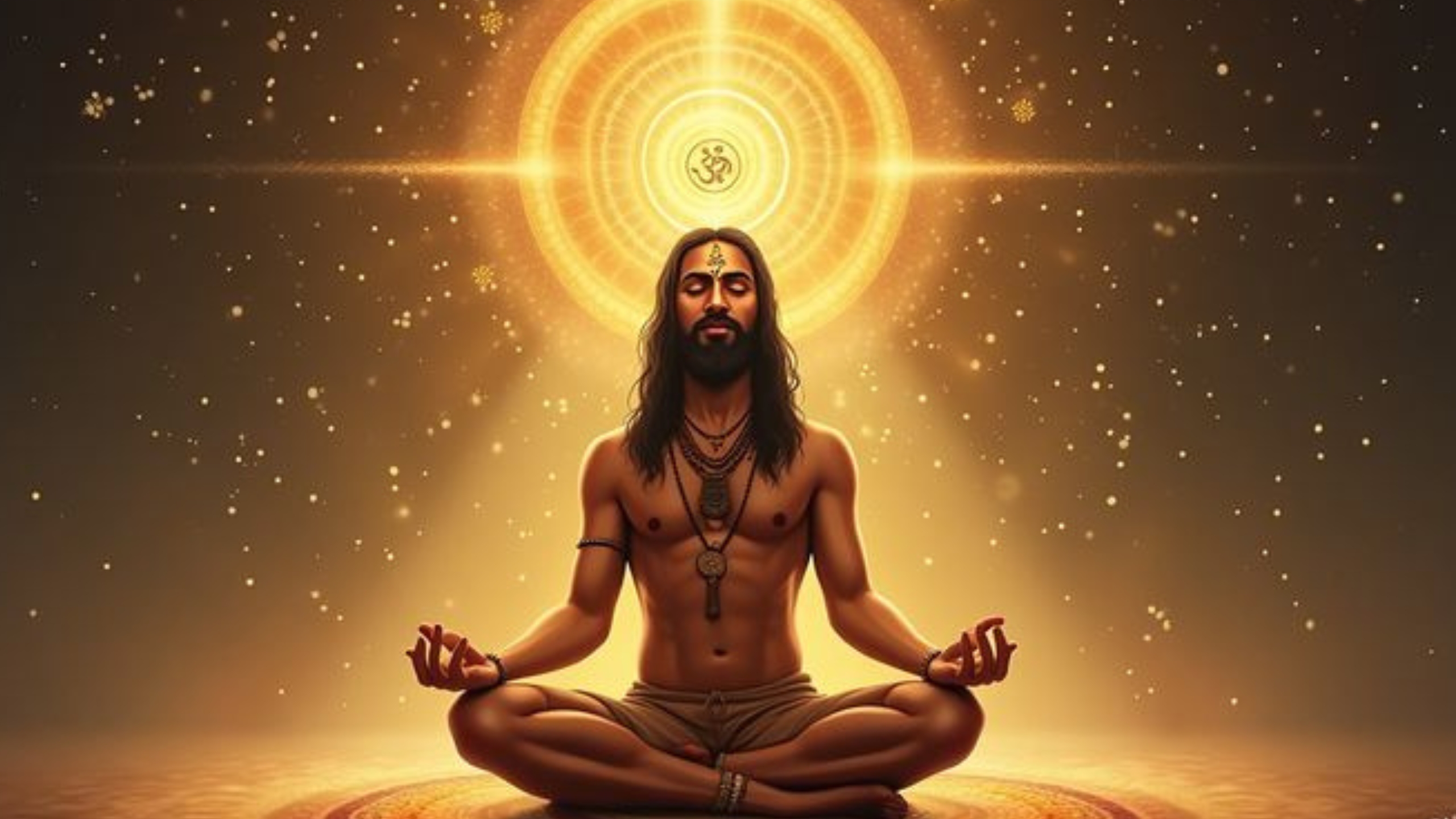
Meditation is the method of turning the attention inward, withdrawing from sensory distractions to realize the unchanging awareness behind all experiences.
👉 Life Connection:
Meditation helps reduce reactivity, improves focus, and brings emotional balance in daily life. Click Here To Access.
What is the difference between sensory knowledge and Self‑knowledge?
Answer:
Sensory knowledge is about objects and experiences. Self‑knowledge is knowing the unchanging awareness that makes all experience possible.
👉 Life Connection:
This helps separate temporary emotional states from permanent peace — inner identity becomes stronger than external circumstances.
What is the significance of silence in this section?
Answer:
Silence here refers to the quiet, changeless awareness — the Self — from which all sound, thought, and perception arise. Truly understanding this silence leads to liberation.
👉 Life Connection:
Instead of reacting to every impulse or emotion, learning to observe without judging creates clarity and calm. Click Here To Access.
How does the Bhāṣya describe ignorance (Avidya) here?
Answer:
Ignorance is identifying with thoughts, sensations, or roles instead of recognizing awareness as the unchanging Self.
👉 Life Connection:
This identification causes fear, insecurity, comparison, and emotional storm.
What transformation results from Self‑knowledge?
Answer:
Realizing Brahman as awareness transforms the seeker into a person of inner peace, maturity, compassion, clarity, and freedom from fear.
👉 Life Connection:
Instead of constantly reacting to life’s ups and downs, you learn to live with calm, strength, and purpose. Click Here To Access.
Why is Kena Upanishad Bhāṣya Volume 04 relevant today?
Answer:
It explains the true source of consciousness and identity — answering deep questions about who we are and what peace really means — providing a roadmap for emotional balance and inner harmony.
👉 Life Connection:
This teaching helps manage stress, identity confusion, existential anxiety, and emotional instability — issues common in contemporary life. Click Here To Access.
Kena Upanishad – Final Conclusion (Bhāṣya Volume 04)
Volume 04 of the Kena Upanishad Bhāṣya reveals that the true essence of life and awareness is Brahman — not an object to be seen but the unchanging witness within every experience. The mind and senses are tools of perception, but the aware Self is the source of all experience. When a seeker turns inward and recognizes this ever‑present awareness, ignorance dissolves, fear diminishes, and lasting inner peace arises. In a world full of distraction, comparison, competition, and emotional turbulence, this teaching helps individuals realize that true freedom comes from knowing oneself as awareness — beyond thoughts, roles, emotions, and identities.