Mandukya Upanishad Bhāṣya Volume 11 – Introduction, Meaning, and Life Lessons
Mandukya Upanishad Bhāṣya Volume 11 explains Gaudapada Kārikās 33–38, presenting one of the highest teachings of Advaita Vedānta — the nature of Turiya as the formless, non-dual Self.
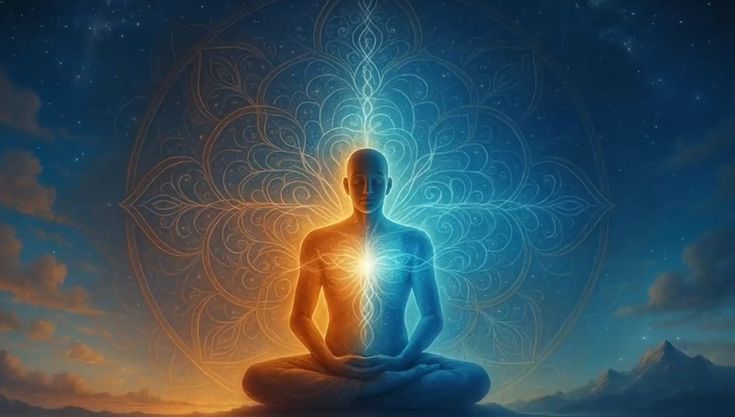
This section reveals that the Self (Ātman) has no name, form, or attributes and remains ever-pure, untouched by the world of duality.
Gaudapada clearly states that the entire world is an appearance (Maya) and that only non-dual consciousness is real and eternal.
Śaṅkarācārya’s Bhāṣya explains that realization is not about gaining something new but about recognizing the Self as the silent witness of all experiences, beyond waking, dream, and deep sleep. Click Here To Access more other text.
Mandukya Upanishad Bhāṣya Volume 11 – Clear Question & Answer Format
What is the focus of Mandukya Upanishad Bhāṣya Volume 11?
Answer:
Volume 11 explains Kārikās 33–38, focusing on the true nature of the Self (Turiya) as non-dual and formless.
👉 Life Connection:
It helps us understand that our real identity is beyond roles, labels, and personality.
What does this section say about the nature of the Self?
Answer:
The Self has no name, no form, and no attributes — it is pure, peaceful, and non-dual.
👉 Life Connection:
You are not defined by your job, success, or failures.
Why is the Self compared to a vast ocean?
Answer:
Because it is calm, infinite, and unaffected by surface disturbances.
👉 Life Connection:
Even when life is chaotic, your inner awareness can remain stable. Click Here To Access.
What does this volume teach about the world?
Answer:
The world is Maya — an appearance that seems real but is not absolutely real.
👉 Life Connection:
This reduces over-attachment to temporary problems and situations.
What is meant by “cessation of phenomena”?
Answer:
It means that in true knowledge, all appearances are understood as unreal, leaving only pure awareness (Brahman).
👉 Life Connection:
You stop overthinking and reacting to every small situation. Click Here To Access.
How does this text describe Brahman?
Answer:
Brahman is infinite, peaceful, formless, and beyond all experiences.
👉 Life Connection:
This understanding removes fear of change and uncertainty.
What is the role of the Self in relation to the world?
Answer:
The world depends on the Self, but the Self remains independent and untouched.
👉 Life Connection:
You can experience life fully without being emotionally disturbed by it. Click Here To Access.
Is the Self a cause or effect?
Answer:
No. The Self is neither cause nor effect — it is the eternal witness beyond all change.
👉 Life Connection:
This removes fear of birth, death, and loss.
Why is duality repeatedly negated?
Answer:
Because multiplicity is only an illusion — the truth is non-duality (Advaita).
👉 Life Connection:
This reduces comparison, jealousy, and emotional conflict.
What is the ultimate realization taught here?
Answer:
The ultimate realization is that you are the ever-present witness (Ātman), not the changing experiences.
👉 Life Connection:
This brings deep confidence, clarity, and inner peace. Click Here To Access.

Mandukya Upanishad Bhāṣya Volume 11 – Final Conclusion
Mandukya Upanishad Bhāṣya Volume 11 presents the highest vision of Advaita Vedānta, revealing that the true Self (Ātman) is formless, infinite, and non-dual consciousness (Turiya). It is not affected by the world, experiences, or changes — it remains ever-pure and peaceful.
Gaudapada’s Kārikās clearly show that the world of multiplicity is only an appearance (Maya), and the only reality is non-dual awareness. Śaṅkarācārya’s commentary guides the seeker to shift attention from the changing world to the unchanging witness.
In today’s world — filled with stress, comparison, and identity confusion — this teaching offers a powerful transformation:
you are not your thoughts, emotions, or roles; you are the awareness behind them.
When this truth is understood, fear, insecurity, and emotional instability naturally reduce. Life becomes more balanced, peaceful, confident, and meaningful, rooted in the knowledge of one’s true nature.