Mundak Upanishad – First Mundaka: Distinguishing Higher and Lower Knowledge
The first Mundaka of the Mundak Upanishad distinguishes higher knowledge (Para Vidya) from lower knowledge (Apara Vidya), explaining that rituals, scriptures, and worldly learning provide only limited understanding. True liberation arises from realizing the eternal Brahman, which is beyond mind, senses, and material pursuits. Using metaphors like rivers merging into the ocean, the Upanishad illustrates how the individual soul merges with the Self. It emphasizes the importance of a guru, devotion, and deep introspection to attain spiritual wisdom. This chapter inspires seekers to turn inward, abandoning superficial knowledge, and focus on the eternal reality that leads to ultimate freedom and bliss. For More Information Click Here
Core Theme of Mundak Upanishad – First Mundaka
The primary theme of the first Mundaka is the distinction between higher knowledge (Para Vidya) and lower knowledge (Apara Vidya). While lower knowledge encompasses ritualistic practices, scriptures, and worldly learning, higher knowledge leads to the realization of the eternal Brahman—the ultimate reality beyond the mind, senses, and material world. It emphasizes self-inquiry, meditation, and guidance from a guru as essential for spiritual awakening.
Significance of Chapter 1 in Spiritual Awakening
Chapter 1 lays the foundation for the entire Upanishad by guiding seekers to look beyond superficial learning and worldly pursuits. It inspires turning inward, cultivating devotion and discernment, and striving for liberation (Moksha). This chapter is significant because it sets the stage for understanding the supreme reality, showing that true freedom comes from knowledge of the eternal Self rather than from external rituals or intellectual achievements.
Verse-by-Verse Summary of Mundak Upanishad – First Mundaka
Verse 1: Introduces the purpose of the Upanishad: to teach the knowledge of the Supreme Brahman, which leads to liberation.
Verse 2: Distinguishes between lower knowledge (Apara Vidya)—rituals, worldly learning—and higher knowledge (Para Vidya), which reveals the eternal Self.
Verse 3: Even scholars or ritualists who lack realization cannot attain true liberation.
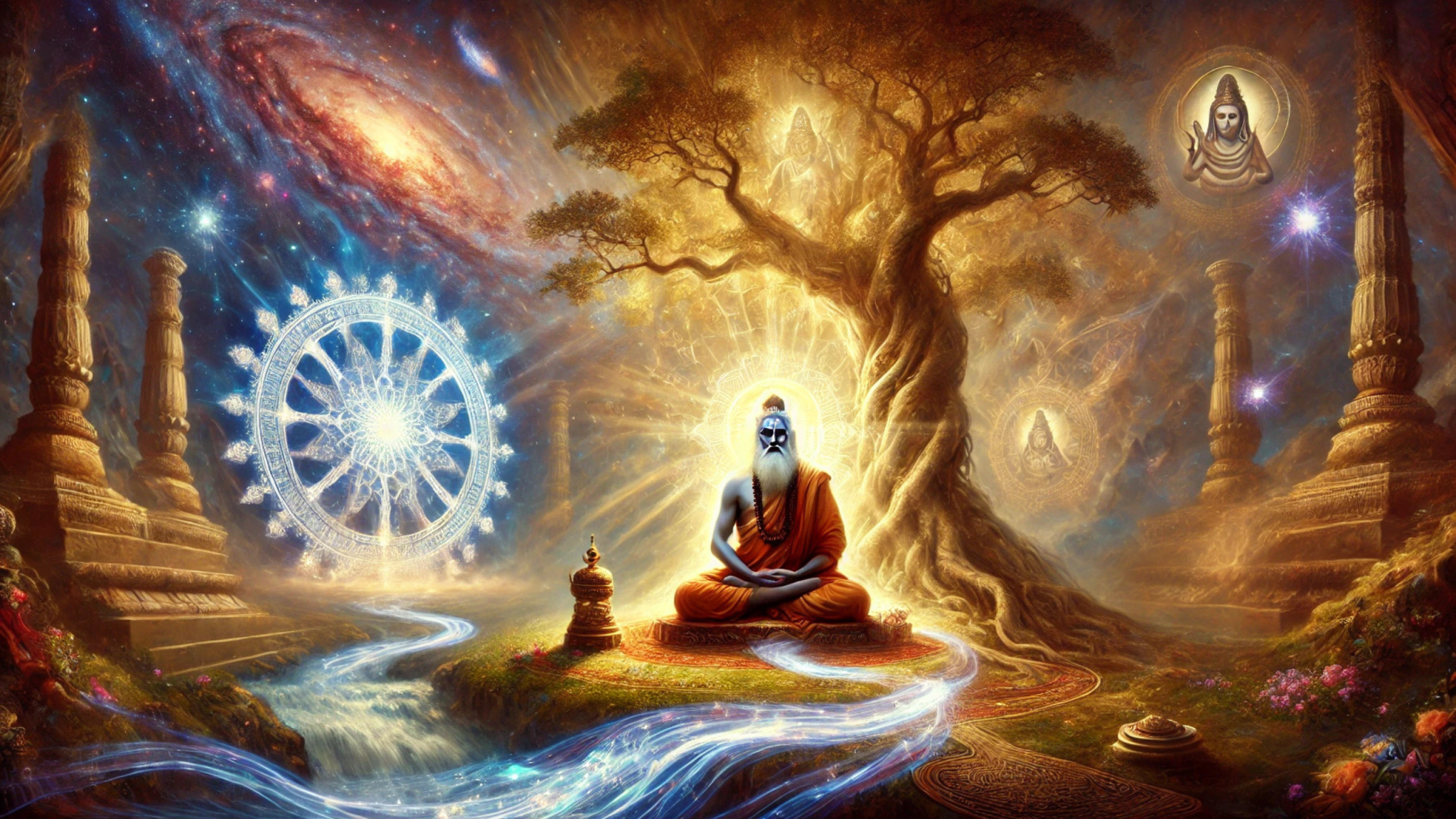
Verse 4: Uses the metaphor of rivers flowing into the ocean to describe how individual beings merge into the supreme Self.
Verse 5: Encourages seekers to renounce superficial knowledge and focus on meditation and inner wisdom.
Verse 6: States that Brahman is beyond speech, mind, and senses, and cannot be known through ordinary learning.
Verse 7: Introduces the importance of a guru who guides the seeker toward spiritual knowledge.
Verse 8: Highlights the virtues of devotion, humility, and persistent inquiry in the pursuit of higher knowledge.
Verse 9: Warns against attachment to material wealth, rituals, and sensory pleasures.
Verse 10: Describes how the wise, free from desires, are united with the eternal Brahman.
Verse 11: Emphasizes that understanding Brahman leads to immortality, while ignorance leads to bondage.
Verse 12: Illustrates Brahman as the hidden power behind creation, sustenance, and dissolution of the universe.
Verse 13: States that Brahman is omnipresent, eternal, and beyond dualities like pleasure and pain.
Verse 14: Encourages contemplation on the eternal Self, which grants liberation from sorrow and ignorance.
Verse 15: Explains that the mind, when purified and focused, can perceive the Self within.
Verse 16: Compares the knowledge of Brahman to finding a hidden treasure through deep meditation and guidance.
Verse 17: Highlights that worldly knowledge is limited, but higher knowledge liberates from the cycle of birth and death.
Verse 18: Advises cultivating detachment, inner discipline, and seeking the company of the wise.
Verse 19: Describes the joy and bliss experienced by those who realize Brahman, free from worldly attachments.
Verse 20: Depicts Brahman as the ultimate cause of creation, sustaining all beings, yet remaining unattached and beyond worldly dualities.
Verse 21: Encourages seekers to meditate on Brahman with single-minded devotion, as such contemplation leads to liberation and freedom from fear.
Verse 22: Concludes that those who attain Brahman dwell in eternal bliss, liberated from sorrow, ignorance, and the cycle of birth and death.

Shankaracharya’s Insights – First Mundaka
- Higher vs. Lower Knowledge: Shankara emphasizes the distinction between Apara Vidya (worldly knowledge) and Para Vidya (knowledge of Brahman). Rituals, intellectual learning, and material pursuits alone cannot lead to liberation; only realization of Brahman grants freedom.
- Supremacy of Brahman: Brahman is unchanging, eternal, omnipresent, and beyond all senses and mind. Shankara stresses that understanding this supreme reality is the ultimate goal of human life.
- Role of the Guru: A qualified teacher (guru) is essential to guide the seeker, as Brahman cannot be realized through study or reasoning alone.
- Detachment and Renunciation: Shankara highlights that detachment from worldly desires, ego, and sensory pleasures is necessary for spiritual progress.
- Meditation and Self-Inquiry: He stresses inner reflection, meditation, and contemplation as the path to directly experience the Self, beyond dualities and mental constructs.
- Metaphors and Illustrations: Shankara interprets the Upanishad’s metaphors—like rivers merging into the ocean—to signify the soul’s ultimate union with Brahman.
- Ultimate Liberation: By realizing Brahman, the soul attains Moksha, freedom from the cycle of birth and death, and eternal bliss. Ignorance, on the other hand, leads to bondage.
- Practical Guidance: Shankara emphasizes humility, devotion, and persistent inquiry, encouraging seekers to focus on inner awakening rather than superficial knowledge.

Conclusion
The first Mundaka of the Mundak Upanishad lays the foundation for spiritual awakening by clearly distinguishing higher knowledge (Para Vidya) from lower knowledge (Apara Vidya). It teaches that true liberation comes not from rituals, scriptures, or worldly learning, but from realizing the eternal Brahman through introspection, meditation, and guidance from a guru. By emphasizing detachment, devotion, and self-inquiry, this chapter inspires seekers to look beyond material pursuits and turn inward, ultimately attaining eternal bliss and freedom from the cycle of birth and death. It serves as a timeless reminder that the path to ultimate knowledge is inner awakening and union with the Supreme Self.
Join Our Classes:
The Upanishads are more than just ancient texts—they are timeless guides to living with clarity, balance, and inner peace. Our classes make their profound wisdom easy to understand and apply in everyday life. Join us to explore these teachings and discover a new way of seeing yourself and the world!