Introduction
The Paiṅgala Upanishad of the Paingala Upanishad presents a clear and systematic teaching of Advaita Vedānta, focusing on the nature of the Self (Ātman), the world, and liberation (mokṣa).
This Upanishad is presented as a dialogue between the sage Yajnavalkya and his disciple Paingala, where the teacher unfolds the truth step by step.
It explains:
- The distinction between Self and non-Self
- The nature of the three bodies and states
- The process of inquiry leading to realization
👉 The central teaching is:
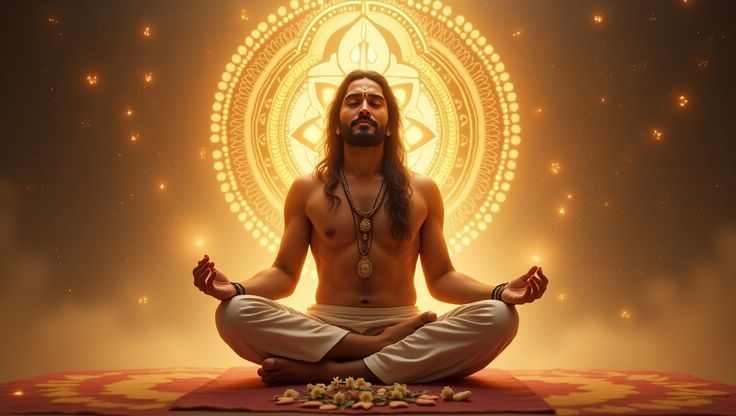
You are not the body or mind — you are the non-dual consciousness (Ātman/Brahman).
Adi Shankaracharya supports this teaching by emphasizing that knowledge alone leads to liberation through proper inquiry and understanding.
This Upanishad offers a structured and logical approach to Self-realization. Click Here To Access more other text.
Paiṅgala Upanishad – Clear Question & Answer Format
What is the focus of the Paiṅgala Upanishad?
Answer:
👉 Understanding the Self and the path to liberation through inquiry.
👉 Life Connection:
Clarity comes from systematic thinking.
Who are the teacher and student?
Answer:
- Yajnavalkya (teacher)
- Paingala (student)
👉 Life Connection:
Learning requires proper guidance. Click Here To Access.
What are the three bodies?
Answer:
- Gross body
- Subtle body
- Causal body
👉 Life Connection:
You are more than your physical identity. Click Here To Access.
What are the three states of experience?
Answer:
- Waking
- Dream
- Deep sleep
👉 Life Connection:
Experiences change, but you remain constant.
What is ignorance (avidyā)?
Answer:
Ignorance is:
👉 Identifying with the body and mind.
👉 Life Connection:
Wrong identity leads to confusion. Click Here To Access.Click Here To Access.
What is knowledge (jñāna)?
Answer:
Knowledge is:
👉 Recognizing the Self as non-dual consciousness.
👉 Life Connection:
Understanding brings clarity and confidence.
What is liberation (mokṣa)?
Answer:
Mokṣa is:
👉 Freedom from ignorance and false identification.
👉 Life Connection:
Freedom comes from understanding yourself.
What is the key teaching of the Paiṅgala Upanishad?
Answer:
👉 You are the non-dual Self — beyond body, mind, and experiences.
👉 Life Connection:
Right identity leads to peace and stability. Click Here To Access.

Paiṅgala Upanishad – Final Conclusion
The Paiṅgala Upanishad presents a clear and logical pathway to Self-realization through the method of inquiry and discrimination. Through the dialogue between Yajnavalkya and Paingala, it systematically unfolds the truth that the Self is non-dual consciousness, beyond all limitations.
Adi Shankaracharya reinforces that knowledge alone removes ignorance and reveals the ever-free nature of the Self.
In modern life, where identity is often confused with roles, thoughts, and experiences, this teaching offers a powerful shift: you are not what you experience — you are the awareness behind it. This realization brings clarity, confidence, emotional balance, and lasting inner peace, enabling a life of wisdom and freedom.