Prasno upanishad – Chapter 2 Overview
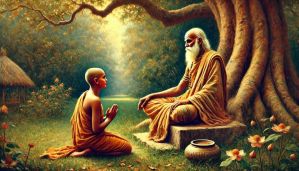
Chapter 2 of the Prasno Upanishad begins with the seeker Bhargava asking Sage Pippalada about the deities that support and enliven the body, and which among them is supreme. The sage explains that the body is sustained by deities such as space, air, fire, water, earth, speech, mind, eye, and ear, each performing essential functions. Initially, these deities debate their relative importance, but when Prana—the vital life-force—withdraws, all faculties weaken, proving their dependence on it. The chapter emphasizes that Prana is the true life-principle sustaining the body, senses, and mind, and establishes it as the supreme force. For More Information Click Here
Theme of Chapter 2
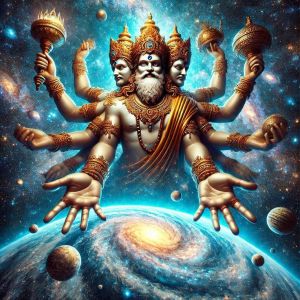
The central theme is the supremacy of Prana, the life-force that supports all faculties of the body. While various deities animate different senses and organs, they are all dependent on Prana, which unites and empowers them. This chapter highlights the vital principle that sustains life and points the seeker inward, toward understanding the inner source of all activity.
What Chapter 2 Teaches Us
This chapter teaches that life is sustained by the inner force of Prana. All faculties—mind, senses, and body functions—cannot act independently without it. It encourages seekers to look beyond the external senses and recognize the centrality of life-breath. Meditating on and honoring Prana purifies the mind, strengthens the body, and prepares the seeker for higher spiritual knowledge.
Essence of Chapter 2
Prana is the supreme power that sustains all faculties and life itself, serving as the foundation for spiritual practice and knowledge.
Verse-wise Summary of Chapter 2 (13 Verses)
Verse 1 – Bhargava asks Sage Pippalada: “Which deity governs and supports this body, and who among them is supreme?”
Verse 2 – The sage lists the deities: space, air, fire, water, earth, speech, mind, eye, and ear, each performing a vital function in the body.
Verse 3 – Each deity, proud of its role, claims supremacy over the others, arguing who is most important.
Verse 4 – Sage Pippalada directs them to see what happens if Prana begins to depart from the body.
Verse 5 – As Prana withdraws, all other faculties—mind, senses, and deities—lose their power, showing they depend entirely on life-force.
Verse 6 – When Prana returns, the faculties regain their function and strength, proving that Prana is the true support.
Verse 7 – The sage explains that all faculties are like spokes in a wheel, fixed in the hub, which is Prana.
Verse 8 – A hymn praises Prana as the giver of strength, sustainer of life, and the force behind all creation.
Verse 9 – The deities accept that Prana is supreme among them, as no one can act independently without it.
Verse 10 – Prana is shown to sustain gods, men, animals, and all beings, demonstrating its universal significance.
Verse 11 – Meditating on Prana purifies the mind and enables the proper functioning of body and senses.
Verse 12 – The sage emphasizes worship and contemplation of Prana as the key to life, strength, and spiritual progress.
Verse 13 – Chapter 2 concludes with the affirmation that Prana is supreme; it unites and sustains all faculties and is the foundation for further spiritual knowledge. For More Information Click Here
Sankaracharya’s Insights
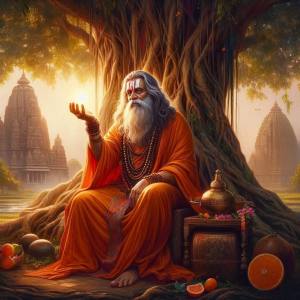
Sankaracharya explains that the debate among the deities is a teaching device, showing that all faculties depend on the life-principle, Prana. He clarifies that while Prana is supreme among conditioned manifestations, it itself is not the absolute Self (Brahman), but points toward it. By withdrawing Prana, the Upanishad demonstrates the dependence of mind, senses, and body on life-force, guiding the seeker to recognize the inner support of existence. Meditation on Prana purifies the mind and prepares it for realizing Brahman. Thus, the chapter serves as a transitional teaching, leading from external faculties to the inner reality and ultimate Self. For More Information Click Here
Conclusion
Chapter 2 of the Prasno Upanishad highlights the supremacy of Prana, the life-force that sustains all bodily and mental faculties. Through the story of the deities and their dependence, it emphasizes that life itself rests on Prana. Sankaracharya clarifies that this principle is preparatory, guiding seekers to look beyond the senses and the body toward Brahman, the eternal foundation. By honoring and meditating on Prana, one strengthens the mind and body while preparing for higher knowledge, making this chapter a crucial step in spiritual development.
Join Our Classes:
The Upanishads are more than just ancient texts—they are timeless guides to living with clarity, balance, and inner peace. Our classes make their profound wisdom easy to understand and apply in everyday life. Join us to explore these teachings and discover a new way of seeing yourself and the world!