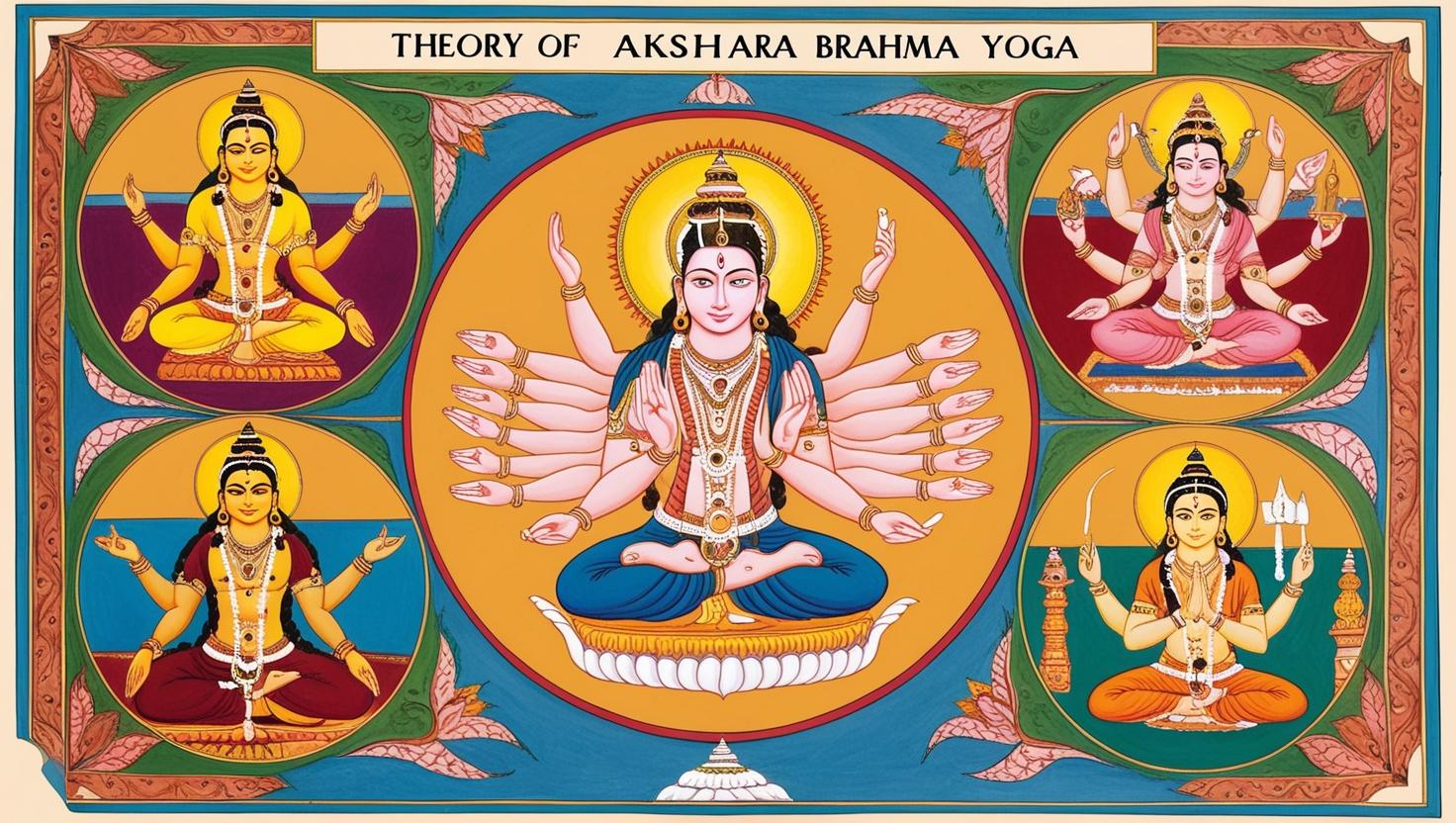
Unveiling Non-Duality: The Illusory Nature of Creation, Bondage, and Liberation
In these verses of the Advaita Prakaraṇa, Gaudapadacharya explores the core of non-dual philosophy. He boldly declares that all distinctions—such as creation, bondage, or liberation—are mere illusions born of ignorance. The ultimate truth is the one indivisible, unchanging Self that transcends waking, dreaming, and deep sleep. Concepts like seeker and liberation are dismissed as misperceptions within the illusion of duality. Just as dreams are unreal upon waking, so too is the world when true knowledge dawns. This section invites the seeker to go beyond thought, name, and form into the silence of pure awareness — the non-dual Brahman. For More Information Click Here

Mandukya Karika Chapter 3 (Advaita Prakaraṇa) – Verses 6 to 14: The Essence of Non-Duality
Verse 6
Jāgradādisu tat-tattvam, āropitaṁ hi kalpitaṁ;
Paramārthataḥ satyaṁ, tad-ekam advayaṁ vibhum.
Meaning:
The distinctions such as waking and other states are imagined and superimposed. In the ultimate sense, only the One non-dual Supreme Reality is true and all-pervading.
Explanation:
The diversity of experiences across states like waking, dream, and deep sleep are projections. Truly, only the non-dual Brahman exists beyond these appearances.
Verse 7
Na nirodho na cotpattir, na baddho na ca sādhakaḥ;
Na mumukṣur na vai muktaḥ, ity eṣā paramārthatā.
Meaning:
There is no cessation, no origination, no bondage, no seeker, no striving, and no liberation. This is the highest truth.
Explanation:
From the absolute standpoint, all concepts like bondage and liberation are invalid. The Self is ever free; dualities are imagined.
Verse 8
Ekasyārthasya kalpānām, sahasraṁ bahurūpataḥ;
Apāram aniruddhasya, naiva rūpaṁ nirūpyate.
Meaning:
Thousands of varied imaginations arise about the One reality. But the limitless and unopposed Self cannot be precisely described.
Explanation:
The mind projects many forms onto the One Brahman, yet its true nature remains beyond all definitions and conceptualization.
Verse 9
Na nirodho na cotpattir, na baddho na ca sādhakaḥ;
Na mumukṣur na vai muktaḥ, eṣā nānā viparyayāḥ.
Meaning:
There is no cessation or creation, bondage or seeker, no aspirant or liberated one — all these are delusions due to ignorance. For More Information Click Here
Explanation:
Repeated for emphasis, this verse asserts again that all distinctions are errors of perception born from ignorance (viparyaya).
Verse 10
Avidyā nāma avidyeyaṁ, dvayābhāvān nirākṛtā;
Svapnopamā hi jāgrad dṛśyāḥ, sarvāḥ prapañcataḥ.
Meaning:
This ignorance, known as avidyā, is negated because duality does not exist. The waking world, like dream, is nothing but an appearance.
Explanation:
Since there is no real duality, ignorance (avidyā) itself is baseless. All perceived multiplicity is like a dream — illusory.
Verse 11
Anādikā māyayaiva, sarvaṁ etat prapañcyate;
Tat satyaṁ yatra nānasti, tad vastu kevalam śivam.
Meaning:
The entire phenomenal world is projected by beginningless māyā. Only that is real where no duality is perceived — the one auspicious Reality.
Explanation:
Māyā projects multiplicity, but the only truth is the undivided, non-dual Reality (Brahman), where the perception of many is absent.
Verse 12
Sarvopamānām atyantaṁ, sāmyam yatra na vidyate;
Na tv evam dṛśyate kiñcit, sā yathā tattvato matiḥ.
Meaning:
That which is beyond all comparisons and where no similarity is found — when nothing is seen apart from it, that is the true understanding.
Explanation:
True realization occurs when all conceptual comparisons cease and only the indivisible Reality is perceived.
Verse 13
Yad-vastu kevalaṁ śuddhaṁ, bhāvābhāvavivarjitam;
Na hi tena vinā kiñcit, vastutattvaṁ pradarśitam.
Meaning:
The pure, singular Reality, devoid of existence and non-existence, alone is. Nothing exists apart from it — this is the ultimate truth of existence.
Explanation:
Brahman is beyond the ideas of presence or absence; it alone is real, and everything else is only a dependent appearance.
Verse 14
Ajātaṁ jaḍam atyantaṁ, bāhyābhāvēna bhasyate;
Prapañco yatra nābhāti, tat satyaṁ brahma kevalam.
Meaning:
That which is unborn and inert appears only due to the idea of externality. Where no world appears — that alone is the sole, true Brahman.
Explanation:
When the illusion of an external world is removed, the unborn and immutable Brahman shines as the only truth.

All is Brahman: Shankara’s Insights on Non-Dual Reality
Adi Shankaracharya, in his commentary on these verses, emphasizes that all distinctions—such as waking, dreaming, and deep sleep—are superimpositions upon the one indivisible Reality, Turiya, due to ignorance (avidyā) and māyā. He asserts that from the absolute standpoint, there is no creation, no bondage, no seeker, and no liberation; Brahman is ever free, changeless, and beyond all activities. The mind, bound by duality, projects countless conceptual frameworks upon the Self, yet Brahman remains untouched and indescribable, beyond all comparisons or objectification. Avidyā, though beginningless, is destroyed through true knowledge, just as the illusion of a dream vanishes on waking. The phenomenal world arises only through māyā’s projection and does not exist in truth—only the non-dual, pure, ever-existent Brahman remains. For Shankara, liberation is not a future event but the recognition of one’s already free nature. These verses reinforce his uncompromising view of Advaita Vedanta: that Brahman alone is real, the world is mithyā (illusory), and the individual self is not different from Brahman. For More Information Click Here
Conclusion
In conclusion, Adi Shankaracharya presents a bold and radical vision of Advaita, where all notions of duality dissolve in the light of Self-knowledge. He urges the seeker to transcend the illusions of birth, bondage, and liberation, recognizing them as products of ignorance. The ultimate truth lies in understanding that the Self is ever-free, unborn, and unchanging. No external effort is needed to attain it, only inner realization. When all false appearances vanish, what remains is pure, non-dual Brahman. This is the heart of Advaita—the knowledge that you are That (Tat Tvam Asi).
Join Our Classes:
The Upanishads are more than just ancient texts—they are timeless guides to living with clarity, balance, and inner peace. Our classes make their profound wisdom easy to understand and apply in everyday life. Join us to explore these teachings and discover a new way of seeing yourself and the world!