Chapter 3 Overview: The Unity of Prana and the Self
Chapter 3 focuses on the origin and nature of life-force (Prana) and its essential unity in all beings. It reveals that the vital breath, which animates the body and mind, is a direct manifestation of the universal Self. Despite the multiplicity of living forms, this life-energy remains one and the same, reflecting the underlying oneness of existence. The chapter emphasizes that realizing Prana as the Self leads to spiritual insight and liberation, helping the seeker transcend the illusion of separateness and grasp the unity of all life. For More Information Click Here

The Origin and Essence of Prana: Verses 1 to 4 of Chapter 3
Verse 1:
“From the Self was born the first living being (Prana), the breath, the vital force…”
This verse describes how the supreme Self, the ultimate reality, manifests itself as the primal life force known as Prana. Prana is the vital energy that permeates and sustains all life forms. It is the first living entity that emerges from the undifferentiated consciousness, marking the transition from mere existence to living, conscious beings. Prana is not just physical breath but a cosmic principle that animates all life.
Verse 2:
“This Prana, born from the Self, entered into the body and became its life-giver…”
Here, the Upanishad explains that Prana enters individual bodies, infusing them with life and vitality. Without this vital breath, the body is inert, lifeless matter. Prana is the inner force that enables bodily functions, movement, and sensory experiences. It is the subtle connection between the universal Self and the individual organism, bridging spirit and matter.
Verse 3:
“All beings breathe by the same Prana, which is one in essence…”
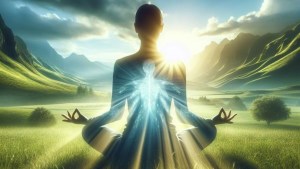
Despite the myriad forms and appearances of living beings, this verse highlights that the life force (Prana) operating within them is fundamentally one and the same. This unity indicates the essential oneness behind all diversity in the world. Whether a human, animal, or plant, the vital energy sustaining them is a singular cosmic reality, emphasizing interconnectedness and non-duality. For More Information Click Here
Verse 4:
“Those who understand Prana as the Self realize the oneness of life…”
The final verse here reveals the spiritual teaching that recognizing Prana not just as life energy but as the very Self (Atman) leads to true wisdom. This insight dissolves the illusion of separateness, helping one to perceive all life as one unified whole. Such understanding brings liberation from ignorance and the dualities of birth and death, leading to enlightenment and peace.
Adi Shankaracharya’s Insights on Life-Force and the Self in Chapter 3
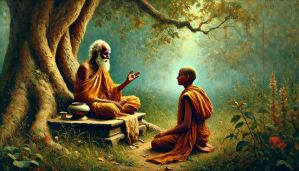
Shankaracharya interprets Chapter 3 as a profound exposition on Prana (life-force) as the subtle yet essential aspect of the Self that sustains all living beings. He explains that Prana is not different from the universal Brahman, but a manifested aspect that energizes the body and mind. According to Shankara, the Upanishad emphasizes the non-duality of life and consciousness — the apparent diversity of beings is only a superficial distinction, while the inner life-force remains one and indivisible.
Shankara also stresses that understanding Prana as the Atman dissolves the ignorance of separateness. The chapter calls for meditative realization that the vital breath and the Self are identical, which leads to liberation (moksha). The life-principle (Prana) is thus both the medium and the message — the essence that connects all life to the absolute reality.
In summary, Shankara highlights this chapter as a teaching on unity in diversity, showing that the life within all beings is the same pure consciousness, and realizing this truth is key to spiritual awakening. For More Information Click Here
Conclusion
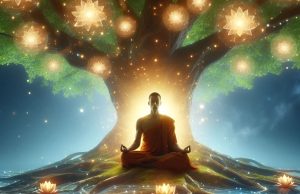
Chapter 3 of the Aitareya Upanishad reveals the essential unity of life through the vital force, Prana, as the manifestation of the universal Self. It teaches that despite the apparent diversity of living beings, the same divine life-energy animates all. Shankaracharya’s commentary deepens this understanding by affirming the non-duality of Prana and Brahman, guiding seekers to realize that their true nature transcends individuality. This chapter inspires a profound recognition of oneness, encouraging meditation on the Self as the path to liberation and spiritual freedom.
Join Our Classes:
The Upanishads are more than just ancient texts—they are timeless guides to living with clarity, balance, and inner peace. Our classes make their profound wisdom easy to understand and apply in everyday life. Join us to explore these teachings and discover a new way of seeing yourself and the world!