Brihadaranyaka Upanishad – Summary of all 6 chapters
The Brihadaranyaka Upanishad is one of the oldest and most profound Upanishads, comprising six chapters in total. Each chapter presents a unique approach to understanding the Self (Atman) and the ultimate reality (Brahman). Through dialogues, symbolic meditations, and philosophical teachings, it guides seekers from ritual knowledge to deep inner realization. The chapters cover themes like creation, inner control, renunciation, self-knowledge, meditation, and liberation. Together, they form a complete journey from the outer world to the innermost truth.
Chapter 1 – The Cosmic Sacrifice and Creation
This chapter begins with the symbolic horse sacrifice (Ashvamedha) representing the entire universe. It explores creation through sacrifice, showing how the cosmos arises from a primal act of offering. The sacred syllables and sounds are connected to different aspects of the cosmos. The vital energies, speech, and breath are seen as manifestations of the Self. Dialogues between sages highlight the role of knowledge and renunciation. The unity of the Self with the universe is repeatedly affirmed. It sets the foundation for realizing Brahman as the ultimate principle behind all. For More Information Click Here
Chapter 2 – The Inner Controller and Immortality
Chapter 2 emphasizes the Antaryamin—the Inner Controller—who resides in all beings yet remains untouched. It describes how the Self governs the elements, mind, speech, and senses from within. The teachings clarify that liberation comes from knowing this indwelling Self. The chapter also addresses death and immortality, suggesting that realization of the Self frees one from rebirth. It contains detailed debates and deep insights into karma, rituals, and the soul. The seeker is encouraged to move beyond mere ritual into meditation and knowledge. True immortality lies in Self-knowledge, not in outward rites. For More Information Click Here
Chapter 3 – Dialogues and the Nature of the Self
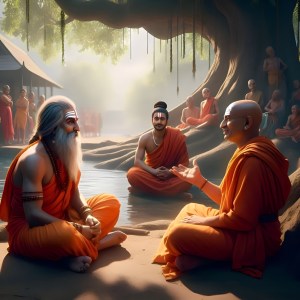
This chapter is rich with philosophical dialogue, especially between Yajnavalkya and other sages. It explores the nature of the Self through reasoning, metaphors, and logical inquiry. The famous “neti neti” (not this, not this) teaching emerges here, denying all attributes to point to the pure Self. The Self is revealed as constant, unchanging, and the witness of all experiences. Knowledge of the Self is presented as the highest goal. The dialogues emphasize renunciation and detachment from worldly attachments. Liberation comes through understanding the Self as the light behind all. For More Information Click Here
Chapter 4 – Supreme Knowledge and Liberation
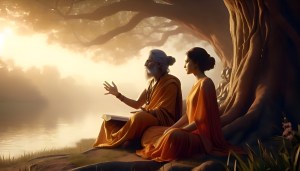
Yajnavalkya continues his teachings in this chapter, especially in his dialogue with his wife, Maitreyi. He asserts that nothing is dear for its own sake but for the sake of the Self. The imperishable Self is contrasted with perishable pleasures and knowledge. True realization is described as going beyond all dualities and distinctions. The chapter shows that love, experience, and existence all gain meaning only through the Self. It describes the journey from ignorance to wisdom and from individuality to universality. This is one of the most poetic and profound chapters on atma-jnana (Self-knowledge). For More Information Click Here
Chapter 5 – Upasana and Symbolic Meditations
Shorter and more ritualistic, Chapter 5 discusses meditative worship (Upasana) and sacred symbolism. It presents deep correspondences between natural forces, deities, and aspects of the body. Through symbolic understanding, the seeker is urged to go beyond form and ritual. It emphasizes concentration and intention behind worship. The outer rituals are guides pointing to inner truths. Each section shows how every action, when understood properly, can lead to realization. It serves as a bridge between ritual knowledge and experiential wisdom. For More Information Click Here
Chapter 6 – Unity of the Self and All Life
The final chapter focuses on internalizing the sacred—viewing food, breath, and bodily functions as divine. It explains how the Self pervades all aspects of life and is the source of all activity. Sacredness is not limited to temples but exists in daily acts like eating, breathing, and thinking. The Self is identified with Brahman, the ultimate truth beyond perception. Meditation on this unity leads to peace, purity, and freedom from sorrow. The chapter encourages the seeker to see the divine within and live in harmony. It ends with the realization that the Self alone is real and liberating. For More Information Click Here
Join Our Classes:
The Upanishads are more than just ancient texts—they are timeless guides to living with clarity, balance, and inner peace. Our classes make their profound wisdom easy to understand and apply in everyday life. Join us to explore these teachings and discover a new way of seeing yourself and the world!