The Illusion of Creation and the Reality of the Self
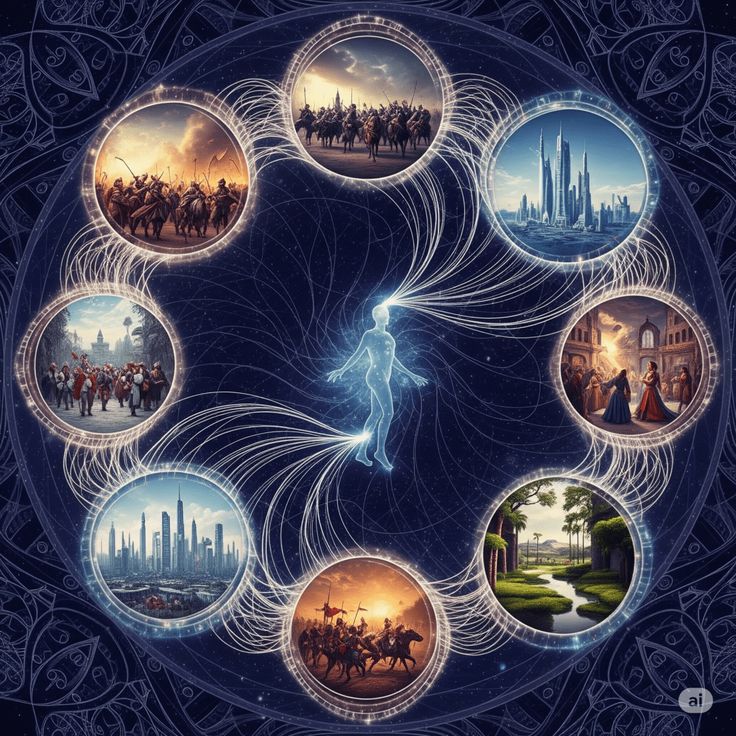
These verses (20–26) from Chapter 3 of the Mandukya Karika by Gaudapada delve into the core of Advaita Vedanta philosophy. They emphasize that the entire universe arises only in appearance and not in reality, as the Self alone exists without a second. Through powerful analogies, such as the rope-snake illusion, Gaudapada explains how ignorance leads to the mistaken perception of creation, bondage, and liberation. The Vedas and all dualistic concepts are projected upon the Self due to ignorance. For the awakened one, these distinctions vanish, revealing the Self as unborn, unchanging, and ever-free. This section firmly establishes the ultimate truth of non-duality beyond all empirical appearances. For More Information Click Here

Transcending Duality: The Self as the Sole Reality
Karika 20
Original Sanskrit:
Ātmanā hy eva lokānām utpattir na samśayaḥ |
Utpatty-abhāvād ātmaiva na dvitīyo ’sti kaścana ||
Meaning:
There is no doubt that all worlds originate from the Self alone. Since there is ultimately no real origination, the Self alone exists — there is no second.
Explanation:
All phenomena are projected from the Self, but ultimately, this projection is illusory. In truth, there is no creation, so no second entity apart from the Self exists.
Karika 21
Original Sanskrit:
Nāmarūpam na pṛthag bhāvam gacchaty eva yathā tathā |
Ubhayatra sthitaṃ jñātvā madhya-sthāḥ santy anādarāḥ ||
Meaning:
Just as name and form (nāma-rūpa) do not have independent existence, the wise who understand this reality remain neutral and unattached in both (duality and non-duality).
Explanation:
Name and form are only appearances, not truly separate from the Self. Understanding this, the wise stay detached from both dual and non-dual perceptions.
Karika 22
Original Sanskrit:
Saṃvṛtyā jayate lokaḥ paramārthena naiva tu |
Saṃvṛtyā satyavad bhāti paramārthāvad avyakṛtam ||
Meaning:
The world appears to be born only from the empirical (saṃvṛti) standpoint, not in the absolute (paramārtha) sense. Empirically it seems real, but from the highest truth, it is unmanifest.
Explanation:
Creation is only true within relative experience. In the absolute reality, nothing is born; the world is unmanifest and unreal.
Karika 23
Original Sanskrit:
Yathā rajjus tamas-tasmin dṛṣṭā sarpādhayo janaiḥ |
Tathātmani tamas-tasmin dṛṣṭā vedādayo janaiḥ ||
Meaning:
Just as people see a snake or other illusions on a rope in darkness, similarly, people project Vedas and other dualities onto the Self due to ignorance.
Explanation:
Like mistaking a rope for a snake in dim light, people superimpose various beliefs and systems on the Self, being unaware of its true nature.
Karika 24
Original Sanskrit:
Yathā rajjus tamas-tasmin sarpādhīn kalpayanti ca |
Tathātmani tamas-tasmin kalpayanty atmanaṃ janāḥ ||
Meaning:
Just as people imagine snake and the like on the rope in darkness, people imagine the individual soul and other concepts in the Self due to ignorance.
Explanation:
The illusion of individuality and plurality arises from ignorance of the Self, just as various forms are imagined on a rope misunderstood in darkness.
Karika 25
Original Sanskrit:
Ātmaiva brahmaṇo rūpaṃ yato nānyat kadācana |
Brahmaṇaś ca paraṃ rūpaṃ na vidur nāprabudhyate ||
Meaning:
The Self is indeed the very form of Brahman. There is nothing else apart from it. But its supreme form is not known by those who are not awakened.
Explanation:
The Self is Brahman. Only those who are enlightened can understand its ultimate, formless nature. Others remain ignorant.
Karika 26
Original Sanskrit:
Na nirodho na cotpattir na baddho na ca sādhakaḥ |
Na mumukṣur na vai muktaḥ ityeṣā paramārthatā ||
Meaning:
There is no cessation (nirodha), no origination (utpatti), no bondage, no seeker, no one striving, and no liberation. This is the ultimate truth.
Explanation:
In the absolute sense, all concepts — creation, bondage, and liberation — are false. Only the non-dual Self is real. This is the highest Advaita teaching. For More Information Click Here

Unity of Thought: Shankara and Gaudapada on Absolute Non-Duality
Adi Shankaracharya, though not the direct commentator of Gaudapada’s Mandukya Karika, profoundly resonated with its teachings and expanded them across his Advaita Vedanta philosophy. In verses 20–26, the Karika emphasizes the unreality of creation and the sole reality of the Self, which Shankara strongly upholds. He teaches that Brahman alone exists and that the perception of multiplicity arises from ignorance (avidya). Names and forms (nāma-rūpa) are mere superimpositions on the Self, just as ornaments are nothing but gold in various shapes. For the enlightened, the empirical world is only a provisional reality, and the absolute truth remains changeless and unborn. The rope-snake analogy, central to these verses, is frequently used by Shankara to explain how the Self is mistaken for the ego or the world. He firmly identifies Ātman with Brahman and asserts that only the awakened can perceive its formless, attributeless nature. Ultimately, echoing verse 26, Shankara affirms that in the highest truth there is no creation, no bondage, no seeker, and no liberation—only the ever-free, non-dual Self. For More Information Click Here
Conclusion
In conclusion, verses 20–26 of the Mandukya Karika present the pinnacle of Advaita philosophy—declaring the world, bondage, and liberation as mere illusions born of ignorance. Gaudapada’s radical non-dualism, echoed by Adi Shankaracharya, guides the seeker beyond conceptual frameworks to the direct realization of the Self. The use of analogies like the rope and snake reveals how misperception veils truth. When ignorance is dispelled, what remains is the unborn, unchanging, non-dual Self. There is neither creation nor destruction, only pure awareness. This profound vision urges the aspirant to go beyond appearances and abide in the Self alone.
Join Our Classes:
The Upanishads are more than just ancient texts—they are timeless guides to living with clarity, balance, and inner peace. Our classes make their profound wisdom easy to understand and apply in everyday life. Join us to explore these teachings and discover a new way of seeing yourself and the world!